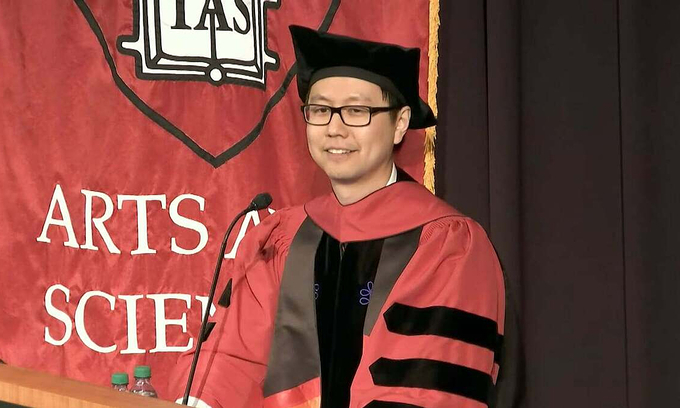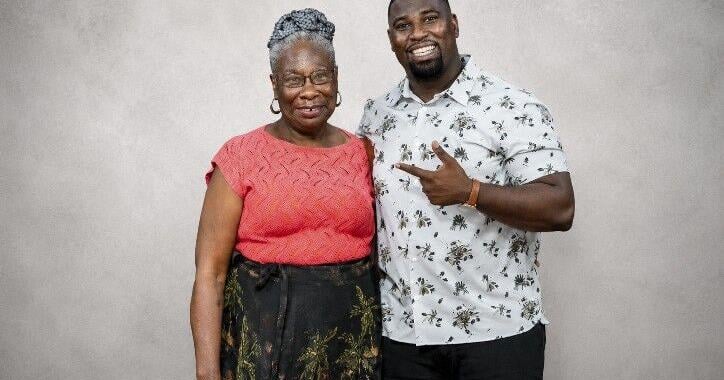
A PhD may have opened doors, but the lessons that shaped my research-and now guide how I help organisations, governments and leaders understand people-came from a woman who never finished primary school.LAST week, I graduated with a Doctor of Philosophy in Sociology from The University of the West Indies, St Augustine Campus. Yet the first scholar in my life never finished primary school.Her name was Judith Caines-Henry. She worked as a domestic worker at Texaco while my father was a laboratory technician at the Pointe-à-Pierre refinery. I grew up in Trinidad's oil belt, spending my childhood between the teak fields of Plaisance Park and the close-knit community of Brighton Village, La Brea.As a child, I wanted to become a PTSC bus driver. I still remember those solid steelblue buses winding through the teak forests of Sobo Village before sunrise as I travelled to school in San Fernando. Watching the drivers navigate steep hills and narrow roads with quiet confidence, I thought I had already found the best job in the world.My mother imagined a different future. After my CXC examinations, I wanted to work, but she insisted that I continue to Advanced Level studies, even though university seemed financially impossible. Whenever I questioned the point, she would quietly reply, 'You never know what the future holds.'She was right. In 2006, the Patrick Manning administration's expansion of the Government Assistance for Tuition Expenses (GATE) programme opened tertiary education to thousands of citizens, including me. I became the first person in my family to attend university. Last week, that journey culminated in a PhD. More importantly, it answered a question that has shaped my career: how do leaders truly understand the people they hope to influence?My first scholarThe person who first answered that question never completed primary school.My mother often distinguished between knowledge and education. 'Knowledge is what you know,' she would say. 'Education is who you become and how you impact others because of what you understand.'At the time, it sounded like parental advice.Today, I recognise it as the philosophy underpinning my research and my work.I am a product of Couva Junior Secondary School, Gasparillo Composite School and Couva Secondary School. I later received academic and research awards at The University of the West Indies and the University of Calgary. Those achievements matter, but they affirmed values first cultivated around my mother's kitchen table: curiosity, disciplined questioning, humility and respect for other people's lived experiences.My mother never studied sociology, quoted philosophers or published academic papers.Yet she instinctively understood something many organisations still struggle to appreciate: people do not always say exactly what they believe. She listened for contradictions, noticed what people avoided saying and always asked one question beyond the obvious.Long before I learned research methods, I learned how to listen.From the kitchen table to the fieldThat lesson became the foundation of my doctoral research.My informal education produced a curiosity about informal places and the people who occupy them. Rum shops, barber shops, markets, taxis, maxis and village parlours are often dismissed as ordinary spaces. Yet they function as decentralised democratic classroomsmodern extensions of the University of Woodford Square-where citizens debate ideas, test official narratives and measure leadership against lived experience.Drawing on Caribbean sociology, ethnography and discourse analysis, I examined how everyday conversations produce social meaning, reveal intent and shape political legitimacy. Inspired by Caribbean scholars such as Lloyd Best, M G Smith and Peter J Wilson, my research explored not only how institutions exercise power, but how citizens interpret, negotiate and ultimately legitimise that power through ordinary conversation.The doctorate did not teach me to value ordinary people. It gave me the theoretical language and methodological discipline to demonstrate, with academic rigour, why their voices matter.Beyond the pollsThat insight has implications far beyond academia.Businesses commission customer surveys. Governments conduct public consultations.Political parties invest heavily in polling. These tools remain indispensable, but they share an important limitation: people often provide the answer they think is expected rather than the one they genuinely hold.My mother taught me not simply to ask questions, but to ask the question behind the question.That philosophy became the cornerstone of my research methodology. Rather than treating polling as the final answer, I triangulate survey data with qualitative interviews, canvassing intelligence and discourse emerging from informal spaces. Numbers reveal patterns. Conversation explains them. The truth rarely lives in data alone; it emerges where numbers and conversation intersect.I applied this approach while analysing the 2024 United States presidential election. By interpreting polling alongside public and informal discourse, I predicted Donald Trump's Electoral College victory, his popular vote victory and Republican control of both chambers of Congress. The prediction was not based on intuition. It emerged from treating polling as evidence to be tested, contextualised and challenged rather than accepted at face value.Today, I apply the same framework to political campaigns, public institutions and businesses seeking to understand not only what people think, but why they think it.Companies lose customers because they misunderstand sentiment. Governments lose trust because they mistake compliance for confidence. Leaders often have more data than ever before, yet understand people less because they fail to listen beyond the survey.Organisations make decisions in boardrooms. Those decisions are judged in lunchrooms, WhatsApp groups, taxis, barber shops and rum shops. Leaders who ignore those conversations eventually lose the ability to influence them.The scholarship she gave meThe most profound insights are not always found in lecture theatres. They are also found around kitchen tables, on village benches and within conversations that rarely appear in academic journals. Universities gave me the theories and methodology to study society. My mother taught me where to begin looking.Today, that philosophy shapes how I advise organisations, interpret public opinion and help leaders understand the people they hope to serve. Whether the client is a business seeking to understand its customers, a government measuring public confidence or a political campaign testing its message, the principle remains the same: the best decisions are made by leaders who listen rigorously, not just frequently.I may be the first person in my family to earn a PhD, but I am not the first scholar in my family.That distinction belongs to Judith Caines-Henry.Every lecture I attended, every interview I conducted, every theory I examined and every chapter I wrote gave academic form to lessons she had already lived.The degree bears my name. The scholarship bears hers.Dr Mwale Emmanuel Henry Executive leadership advisor chief strategist, The Legacy Project LLC, Atlanta GA
The woman who never finished primary school taught me how to earn a PhD
A PhD may have opened doors, but the lessons that shaped my research-and now guide how I help organisations, governments and leaders understand people-came from a woman who never finished
1,068 words~5 min read