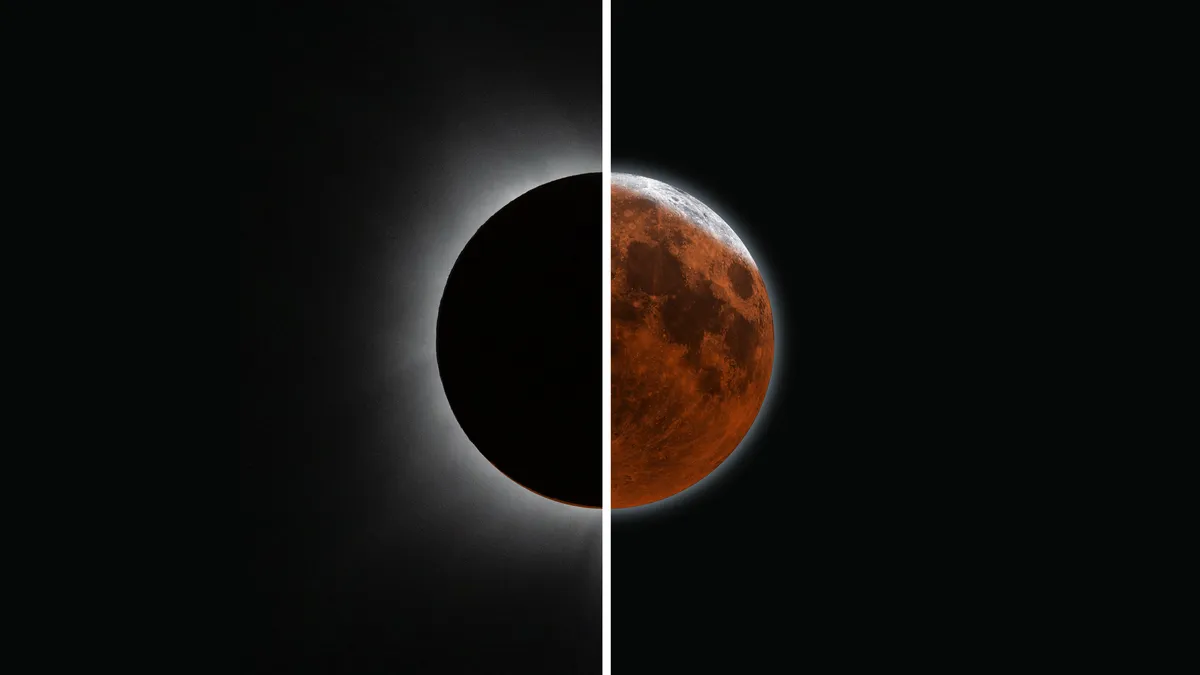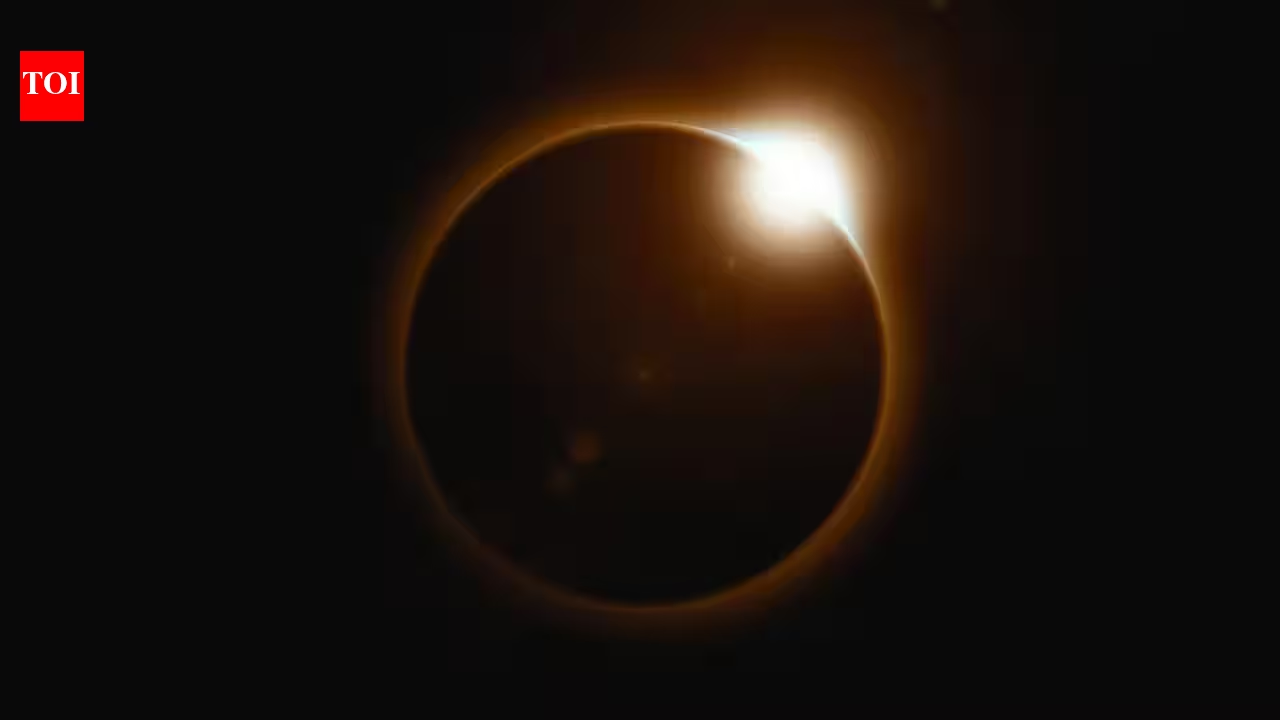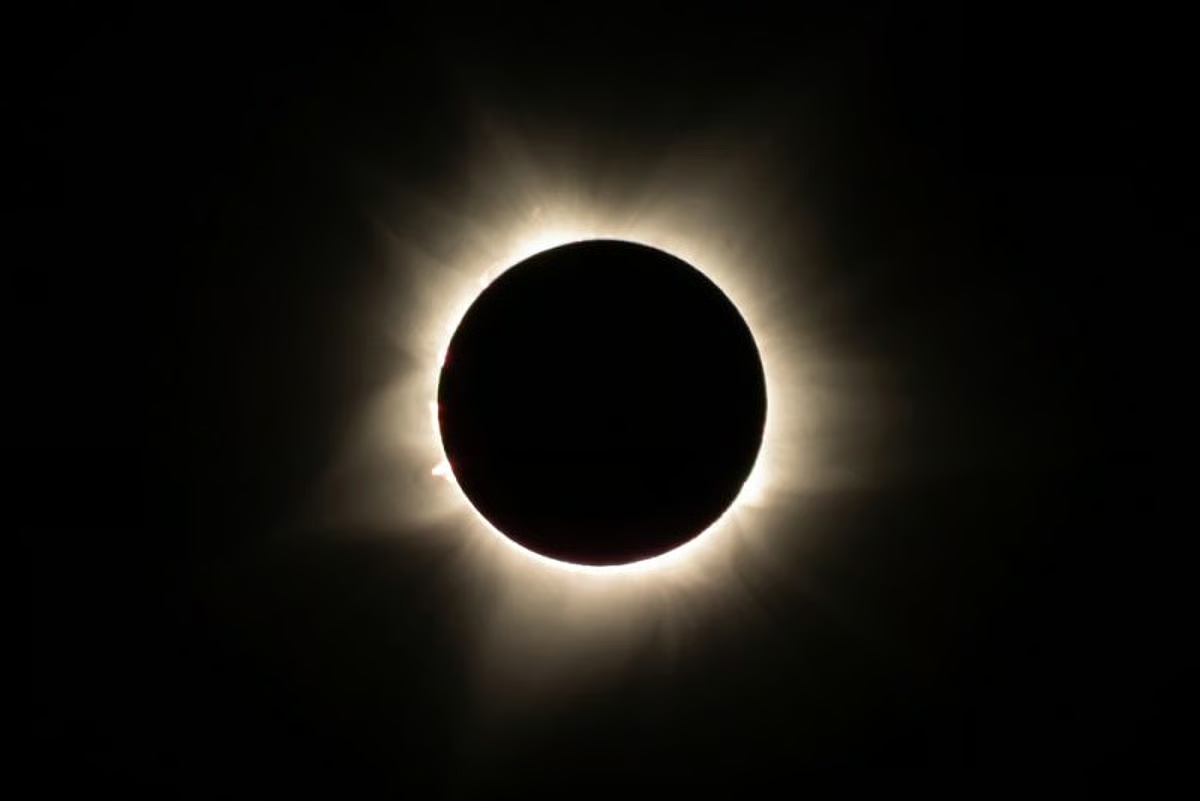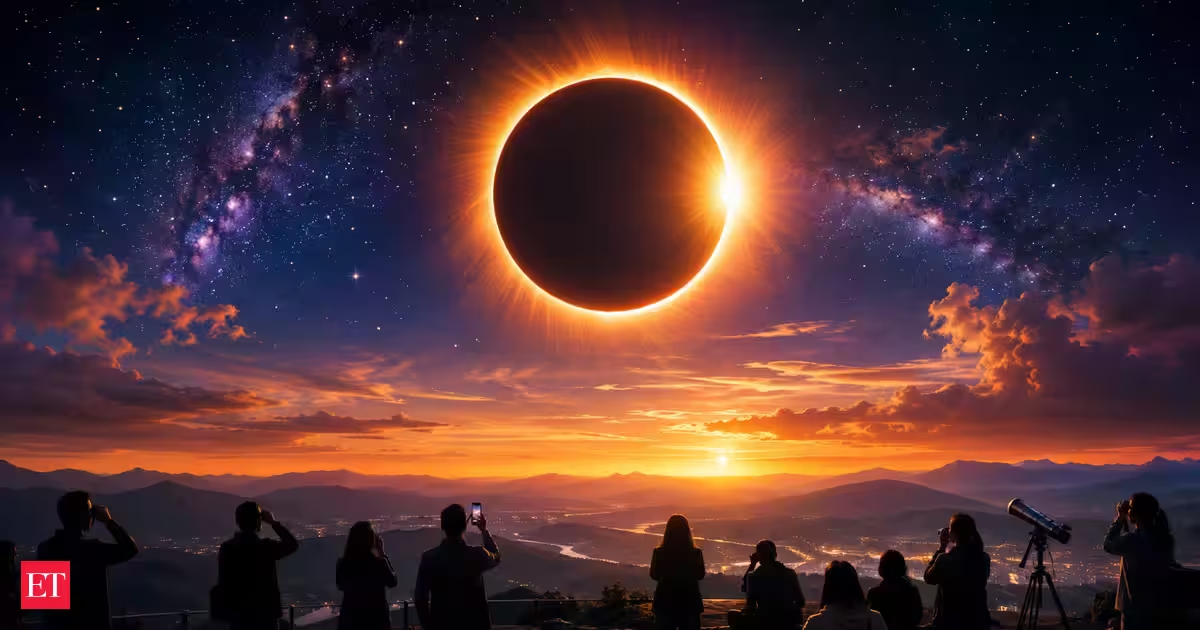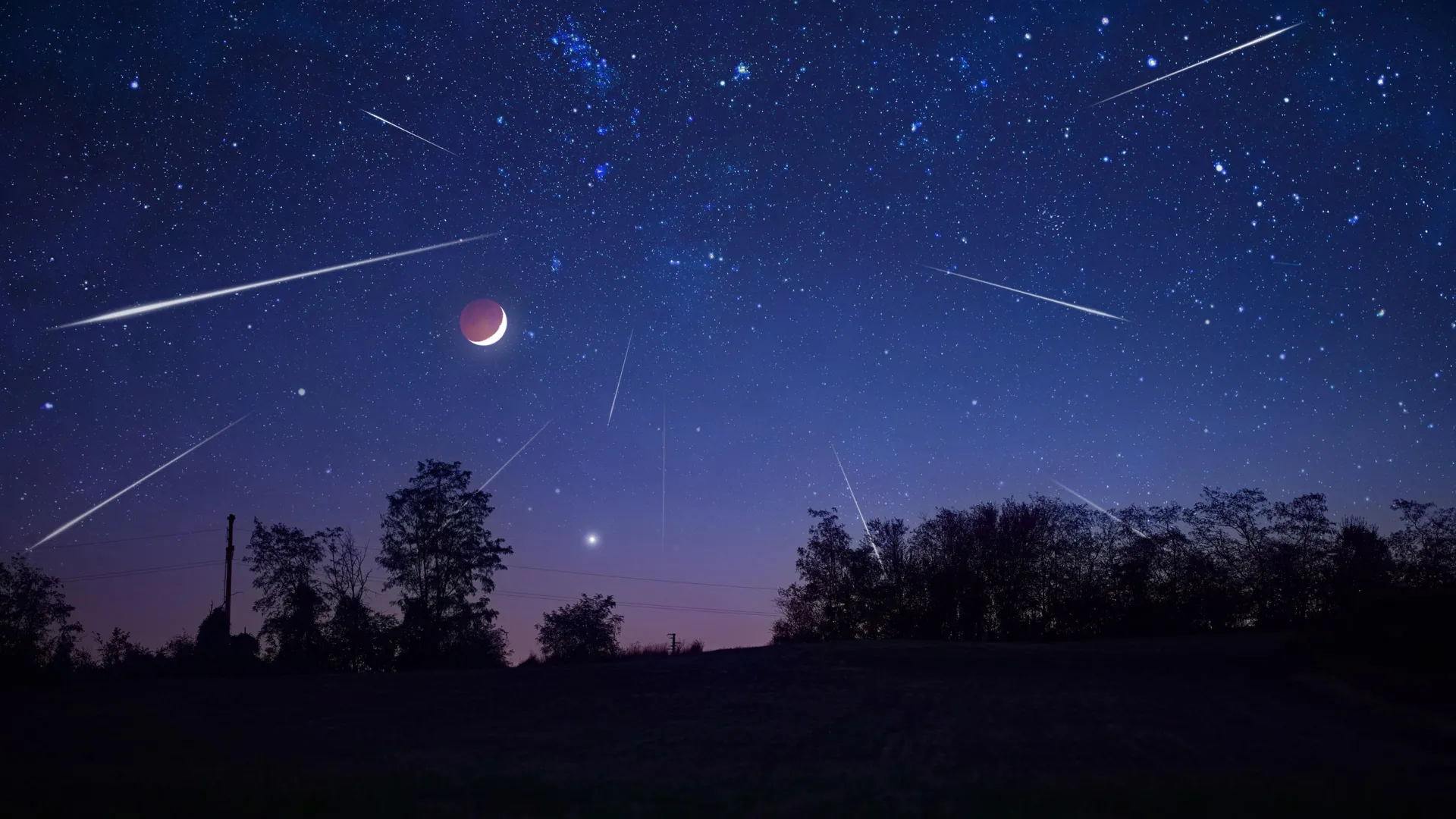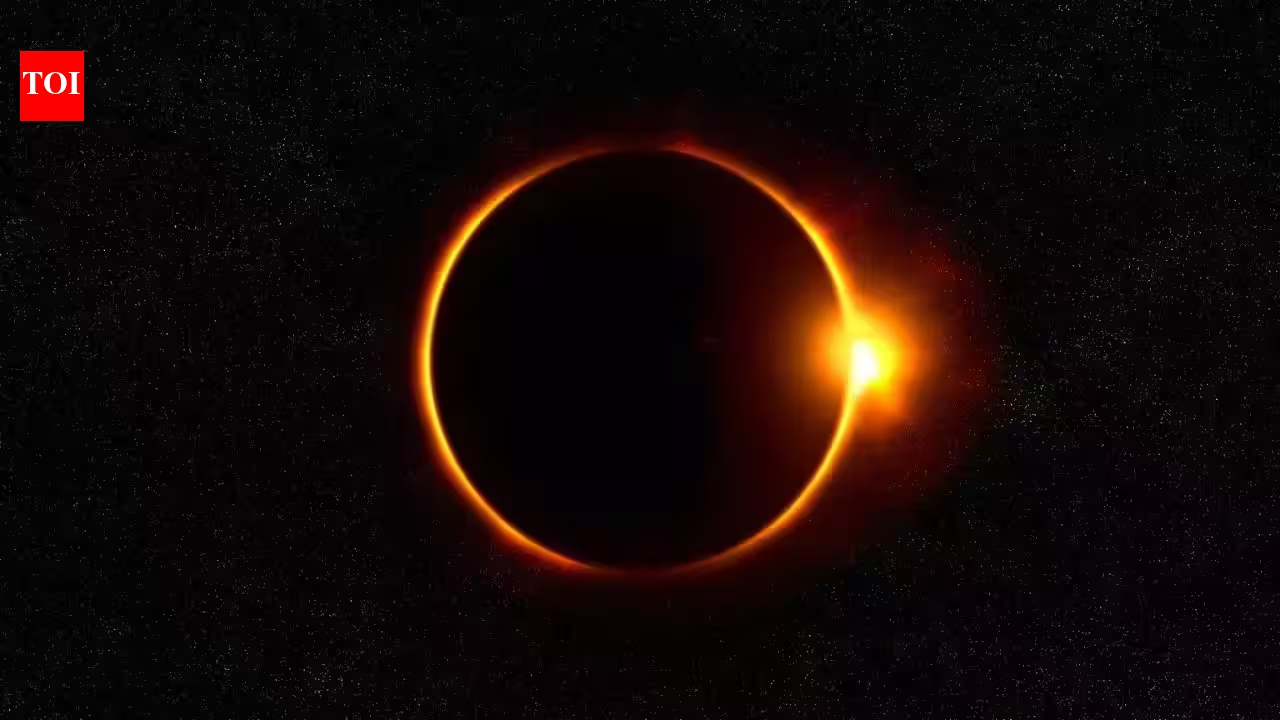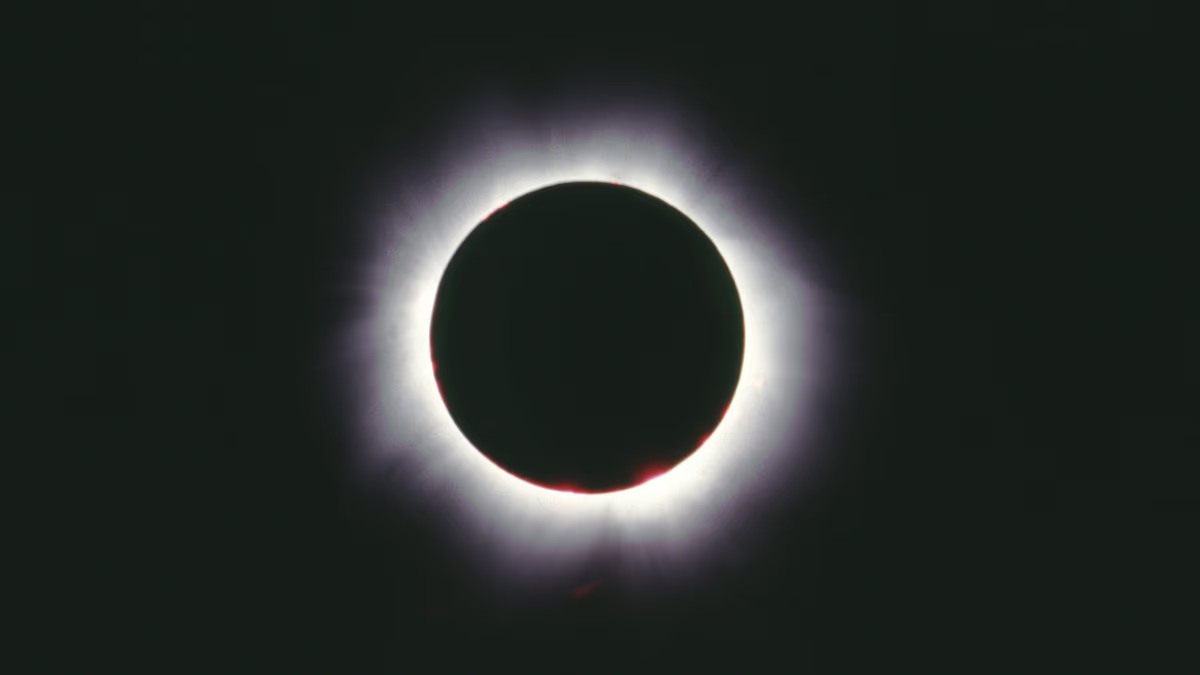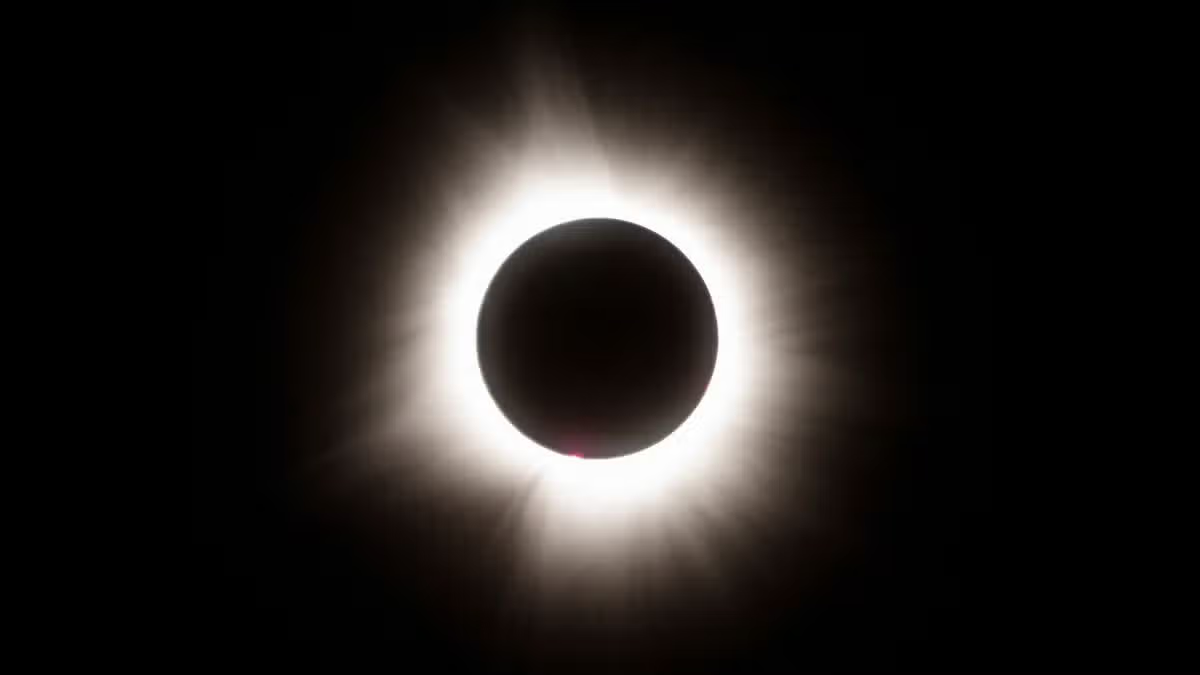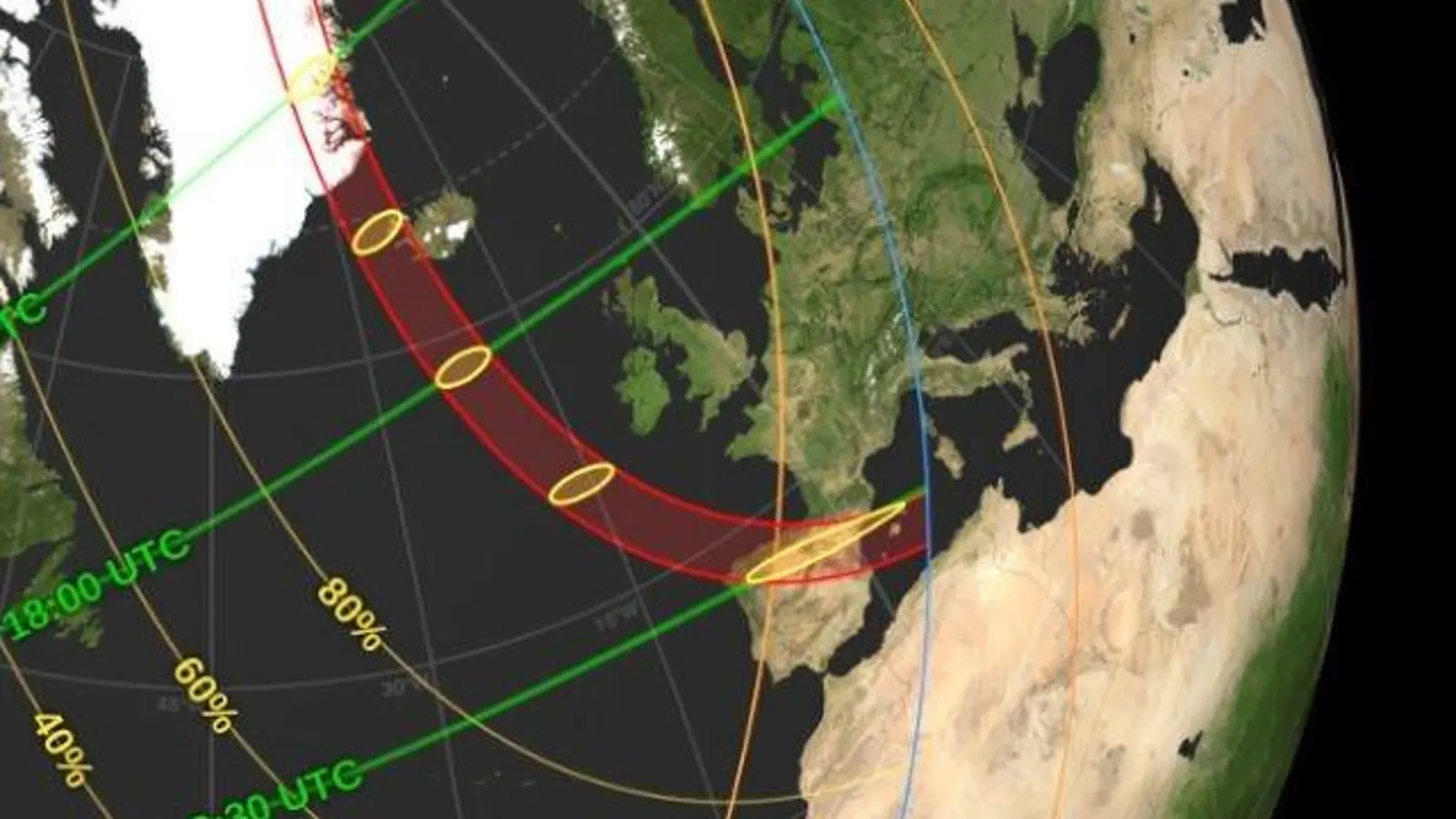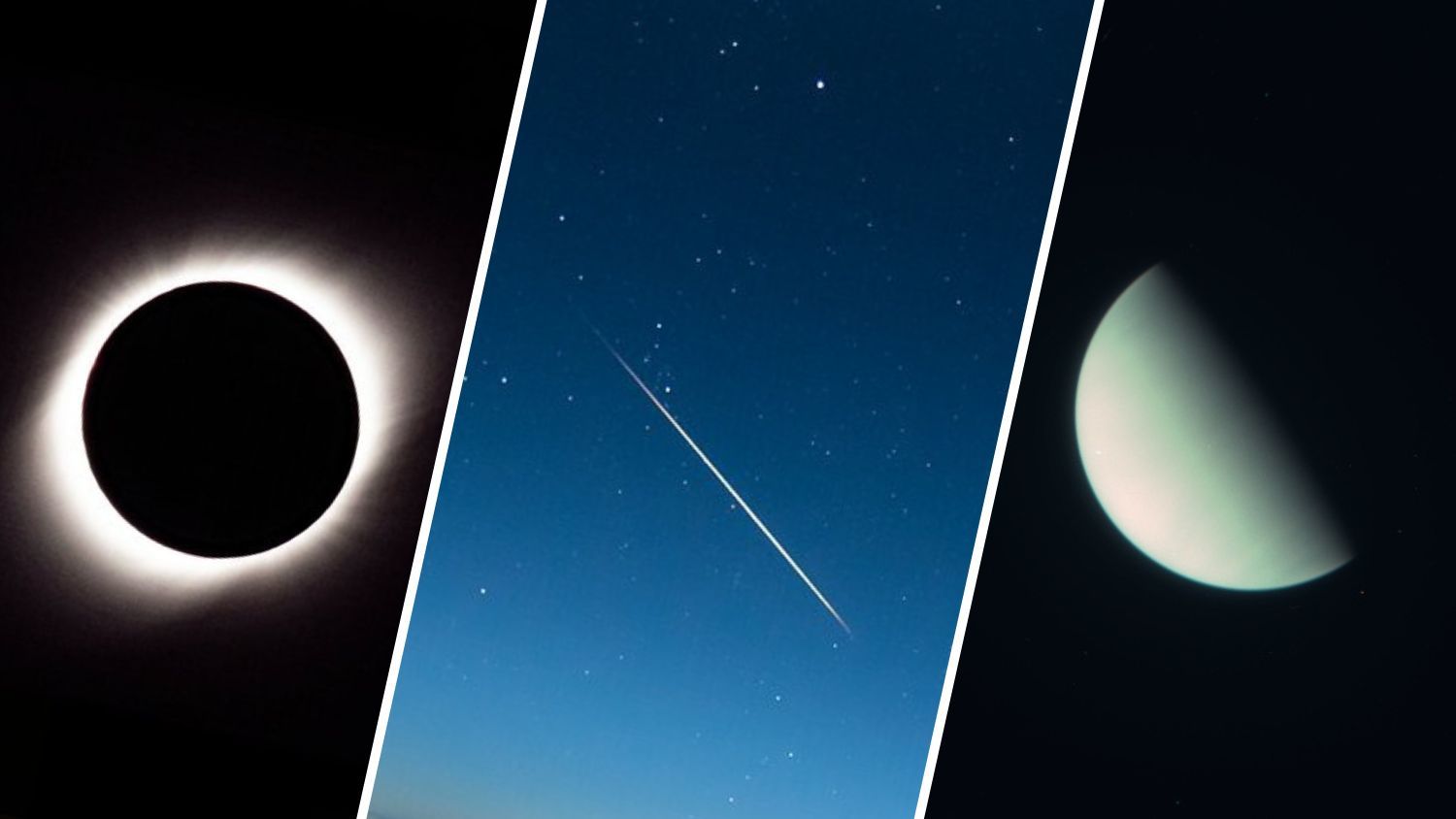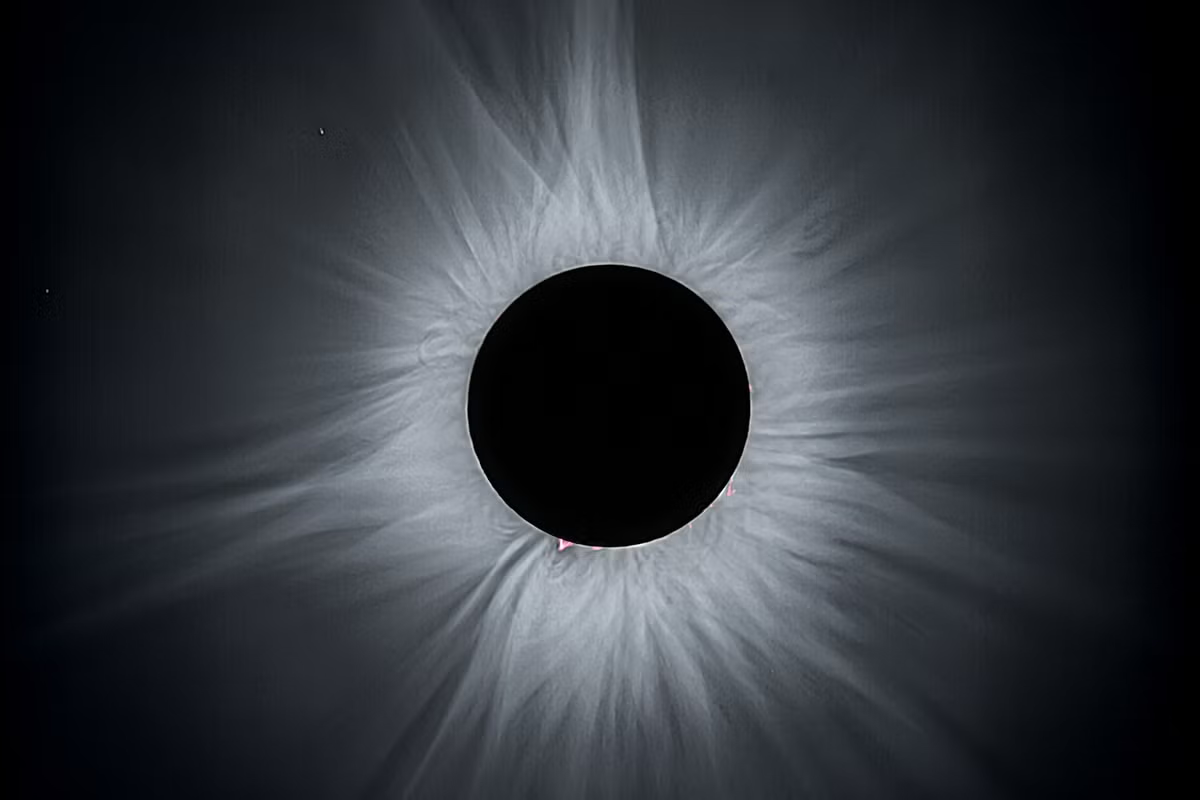
One major eclipse is always a headline event, and this month people in Europe – including the UK – northwestern Africa and northern North America will be treated to two!First up – on 12 August – is an eclipse of the Sun, visible from these regions as a partial eclipse, and as a spectacular total eclipse within a narrow band stretching from the North Pole to the Iberian Peninsula. The shadow of the Moon races from Greenland southwards to western Iceland, where the total eclipse has its maximum duration of 2 minutes 18 seconds; then down the eastern Atlantic Ocean to make landfall again in northern Spain (where totality lasts 1 minute 50 seconds), and finally across the western Mediterranean to Majorca, where the eclipse ends at sunset. Cities that will be treated to totality include Reykjavik, A Coruña, Bilbao, Zaragoza, Valencia and Palma. During the partial phase, make sure you use eclipse glasses with dark filters meeting the ISO 12312-2 safety standard. You can attach a sheet of a specialised metallised film (such as Baader AstroSolar film) across the front of your telescope or camera as a safe filter. If you’re in the track of totality, whip off your eclipse glasses when the Sun’s brilliant disc is completely hidden by the Moon (and at no point before), and you’ll be treated to the unearthly sight of the Sun’s gently glowing corona surrounding the silhouette of the lunar globe, like a luminous flower with a dark heart.The UK and Ireland are treated to a very large partial eclipse during the early evening: from London the Sun is 91 per cent eclipsed at 7.13 pm, with a similar obscuration visible from Edinburgh at 7.06pm. From the south-west of Ireland, the Sun is 98 per cent covered at 7.13pm.And have fun at the dozens of eclipse parties being held throughout the country, hosted by observatories and amateur astronomy societies. Find your local event at the UK Eclipse website.Not to be outdone, the Moon puts on its own eclipse show a couple of weeks later, when the Earth’s shadow almost completely engulfs the Full Moon. This event, on the morning of 28 August, is visible from the Americas, Africa and Europe: from the UK it’s one for the early birds, as the maximum of the eclipse – when the Moon is 93 per cent obscured – occurs at 5.14 am. While a lunar eclipse doesn’t impact your emotions the same way as a total eclipse of the Sun – when the familiar solar disc is replaced by a strange entity in the sky – for me a partial eclipse of the Moon is more beautiful than a partial solar eclipse. The brilliantly lit rim of the Moon will enclose an interior that’s not completely dark. Instead, you’ll dimly see the “face” of the full Moon illuminated in shades of red, by sunlight that’s refracted through the Earth’s atmosphere onto into the Moon’s shadowed regions.What’s UpAs well as the two eclipses this month (see main story), we’re due for a spectacular display of shooting stars on 12 August. With the Moon well out of way eclipsing the Sun, the night will be unusually dark, allowing us an unspoilt view of the annual Perseid meteor shower. Specks of dust from Comet Swift-Tuttle burn up in the atmosphere as fiery shooting stars, appearing to speed outwards from the constellation Perseus. If the clouds stay away, you may be treated to a meteor every minute or two.The night sky at around 11pm this month (Nigel Henbest)The glorious Evening Star is livening up our early night skies, and forms a lovely sight with the crescent Moon on the evenings of 15 and 16 August. Through a small telescope, you’ll see Venus looking like a first quarter Moon, its globe half illuminated by sunlight.High in the south, the three principal stars of this season make out the corners of the Summer Triangle. Brightest is Vega, in the little constellation of Lyra (the lyre). Below Vega lies Altair, the leading light of Aquila (the eagle). These stars are comparatively close neighbours to the sun, lying 25 and 17 light years away respectively. Altair is 11 times brighter than our Sun, while Vega outshines our star 47 times over.But these celestial beacons are way outclassed by the third member of the triangle. Deneb, in Cygnus (the swan) is some 100,000 times more brilliant than the Sun. But its immense distance – around 2,000 light years – dims it down to match Vega and Altair in our skies.Over in the east, Saturn is rising around 10 pm, followed by Mars – which clears the horizon about 1am – and Mercury (for the first half of the month) appearing low in the morning twilight glow around 4am. The Moon passes Mars on the morning of 9 August, and Mercury before dawn on 11 August.Diary6 August, 3.21am: Last Quarter Moon9 August, early hours: Moon near Mars 11 August, early hours: Moon near Mercury12 August, 6.37pm: New Moon; total solar eclipse; maximum of Perseid meteor shower15 August, early hours: Mercury near Jupiter15 August: Venus - at greatest elongation east – near the Moon16 August: Moon near Venus20 August, 3.46am: First Quarter Moon near Antares28 August, 5.18 am: Full Moon; partial lunar eclipse30 August: Moon near Saturn
Stargazing in August: Two eclipses to look forward to
One major eclipse is always a headline event, Nigel Henbest writes, let alone two
881 words~4 min read