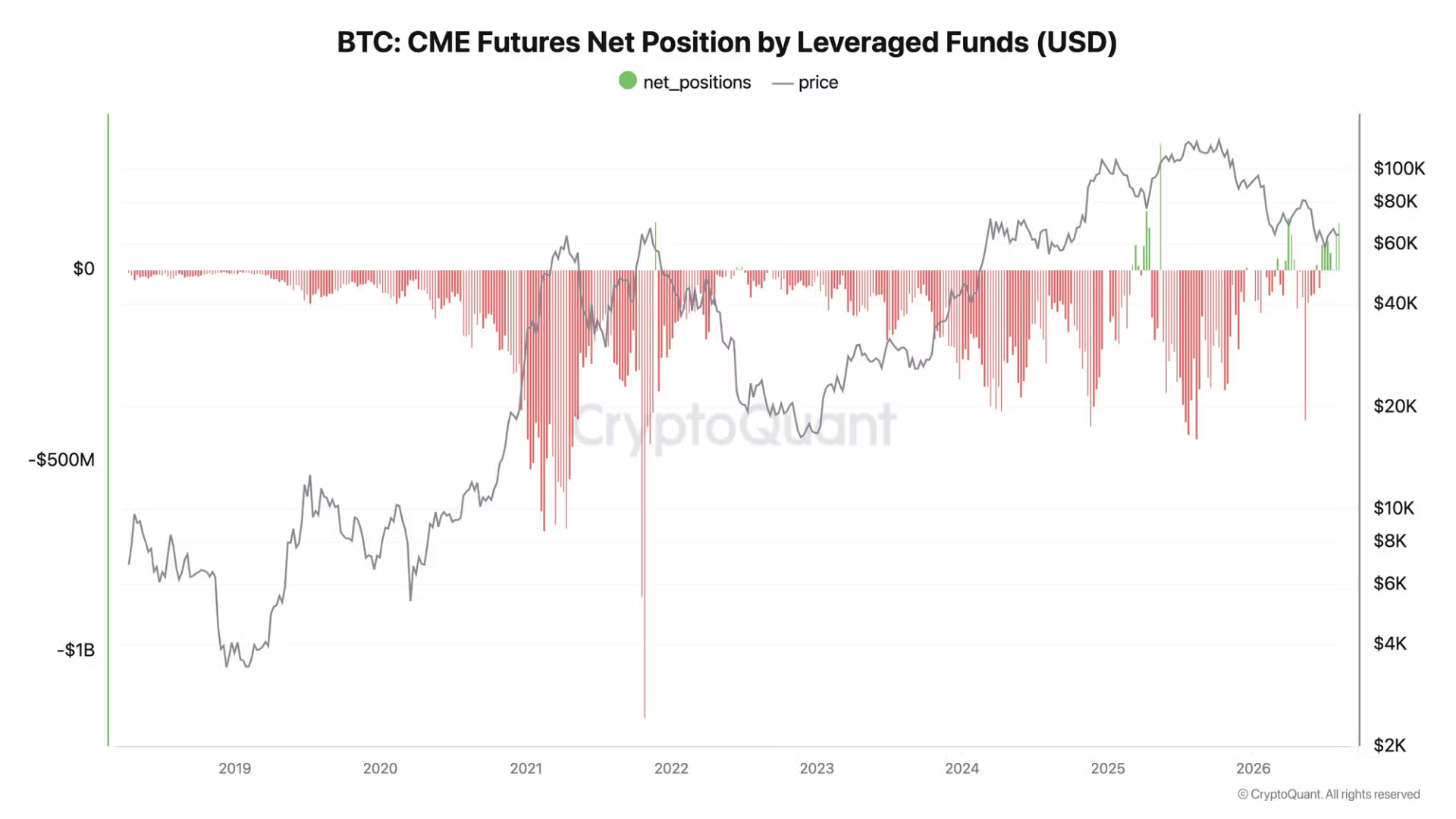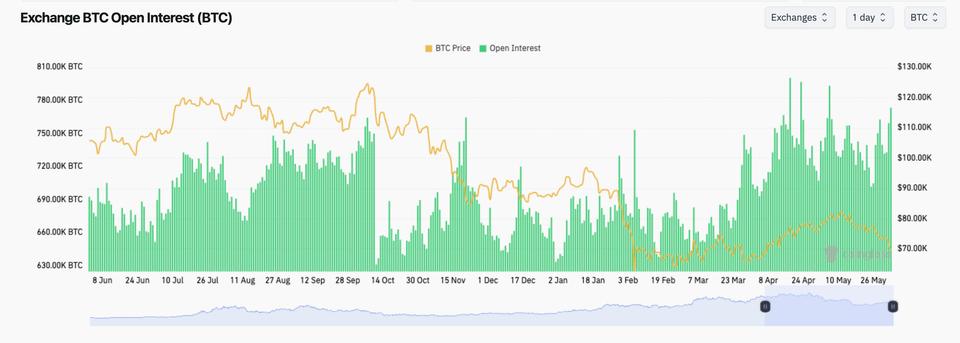
Bitcoin’s perpetual futures funding rate has turned negative, meaning short sellers are now paying long holders to maintain their positions. Meanwhile, spot buyers pushed BTC up roughly 1.2% on the day, creating a divergence that veteran traders tend to watch very carefully.
What negative funding actually means
Perpetual futures contracts don’t have expiration dates, which means exchanges need a mechanism to keep futures prices tethered to spot prices. That mechanism is the funding rate. When more traders are long (betting on price increases), longs pay shorts. When more traders are short (betting on declines), shorts pay longs.
In English: a negative funding rate tells you there’s more demand for short positions than long ones. Traders with leveraged bets are collectively positioned for downside.
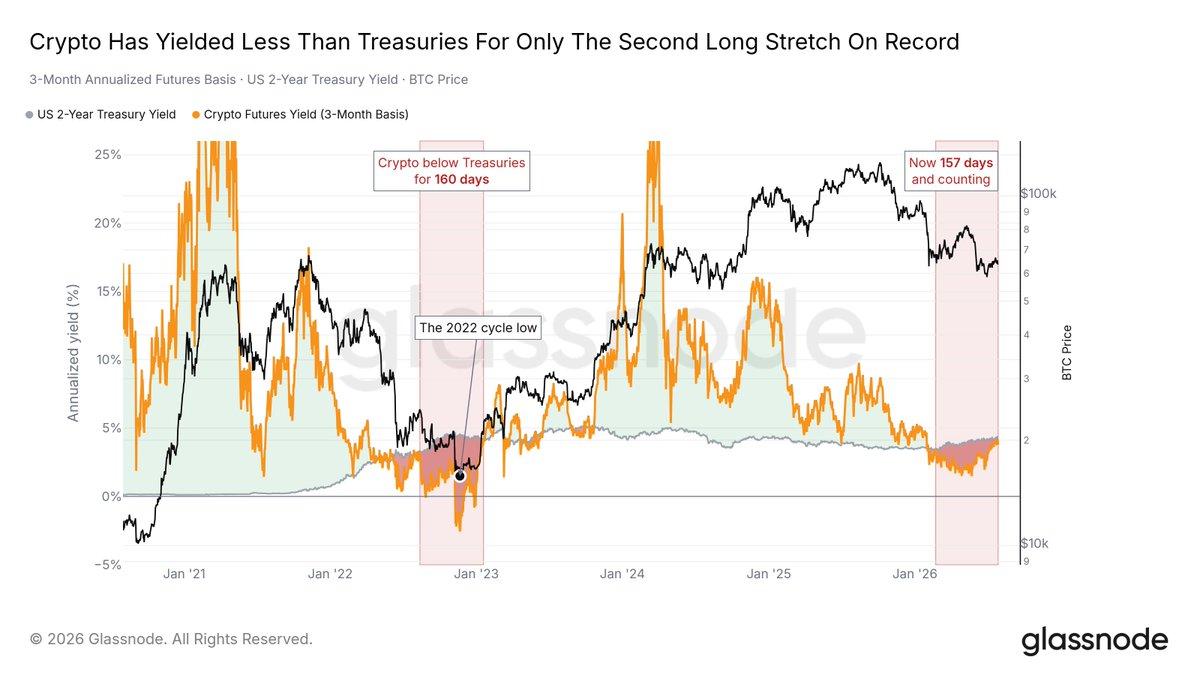
Data from analysts at K33, CoinGlass, and Glassnode reinforces this reading. They note that negative funding rates typically indicate structural discounting of futures relative to spot prices, not a wholesale bearish conviction across the entire market.