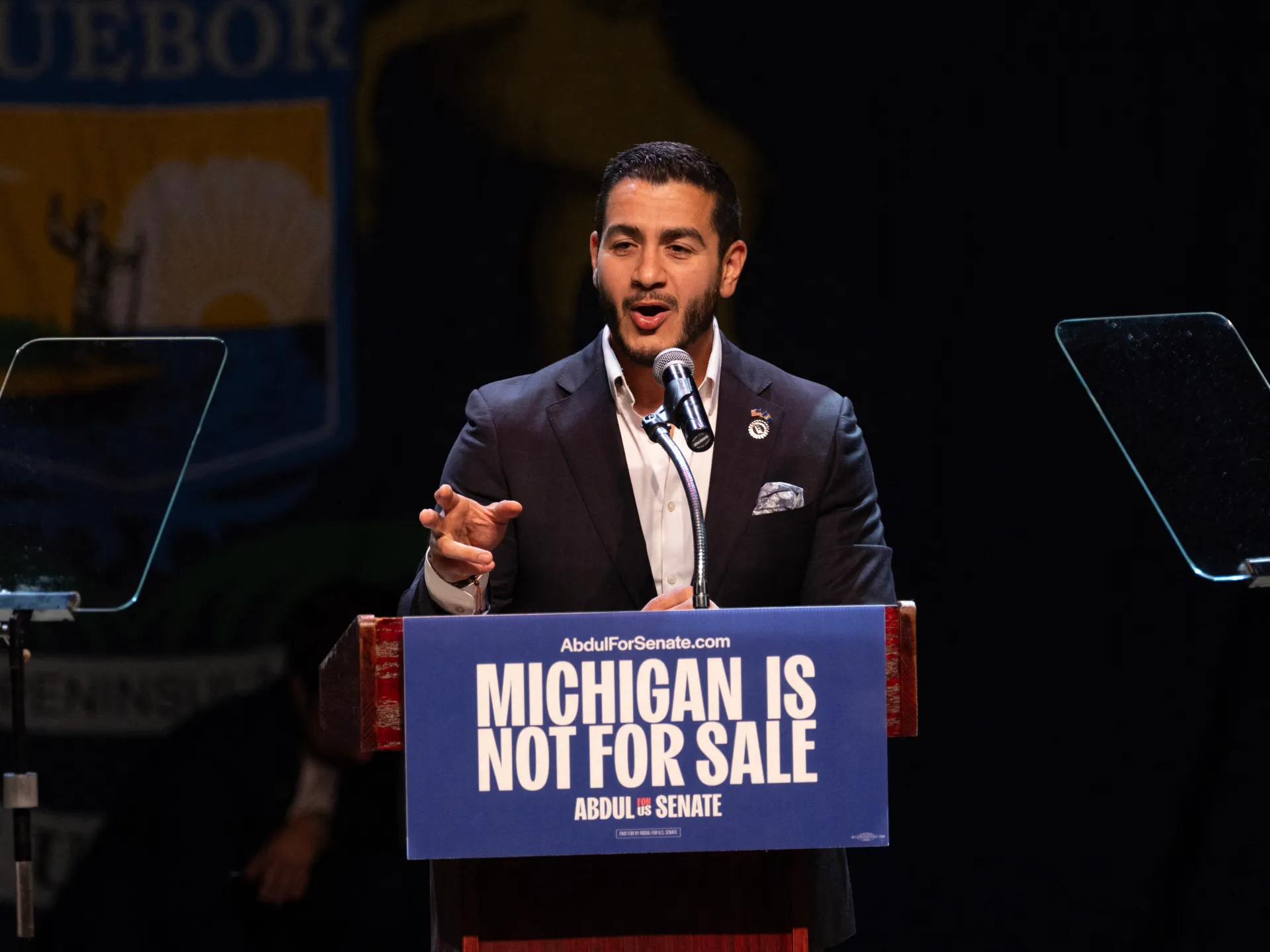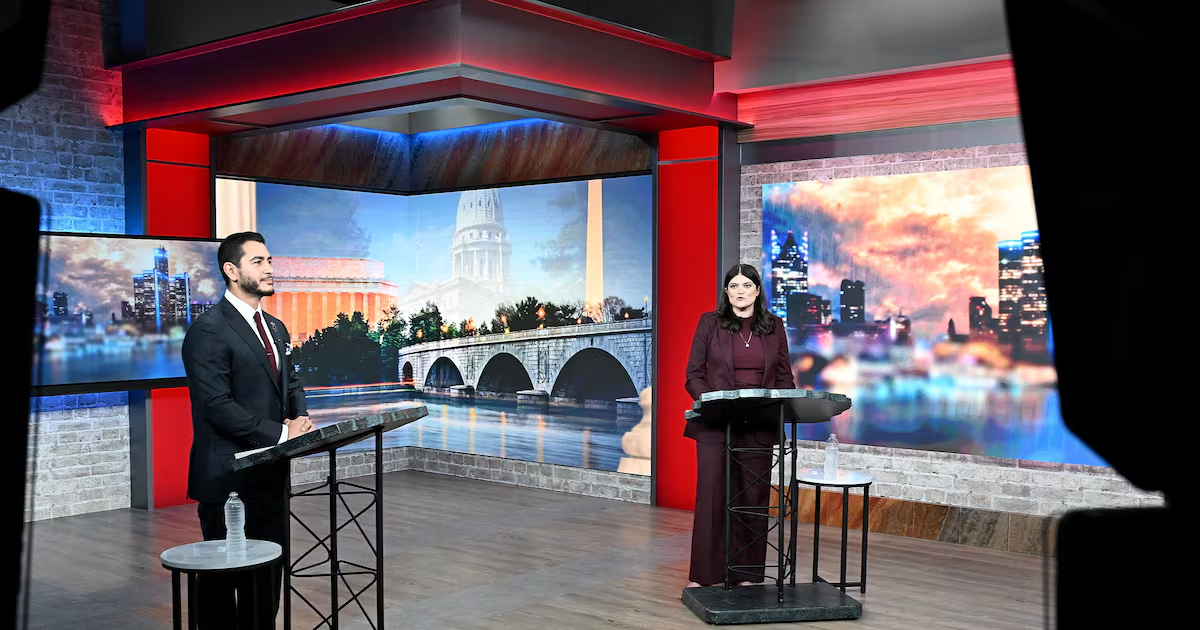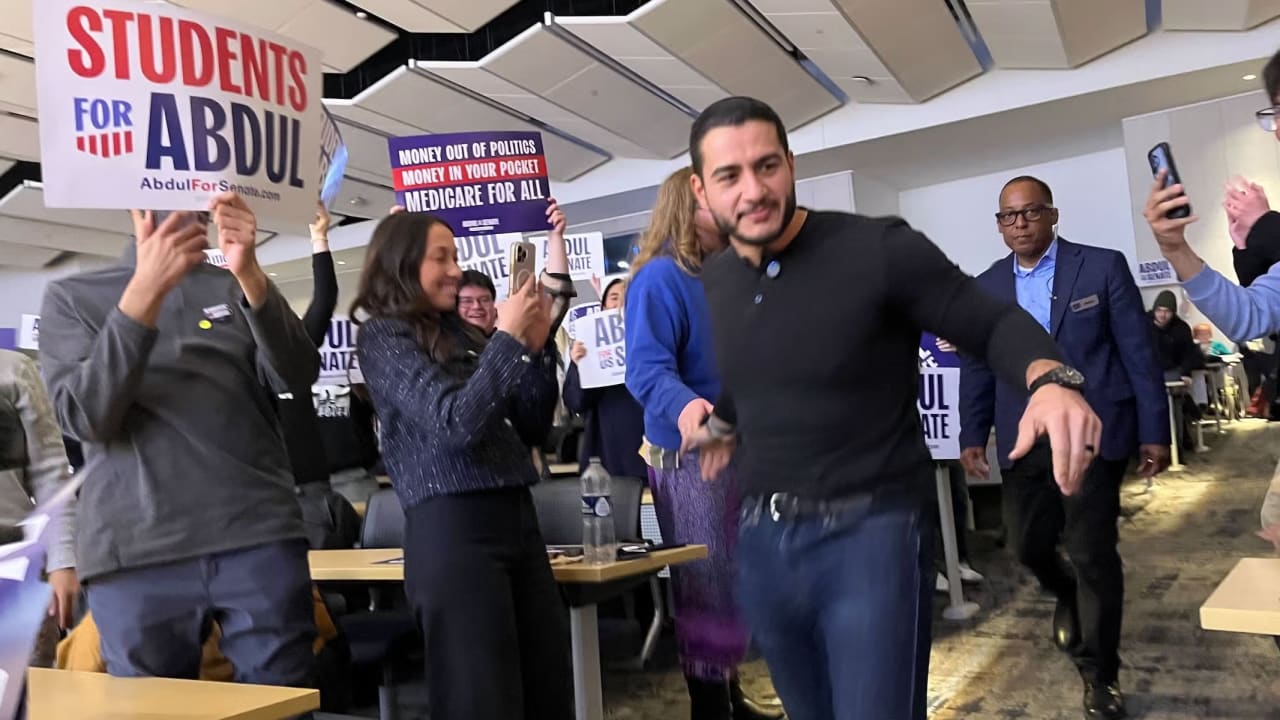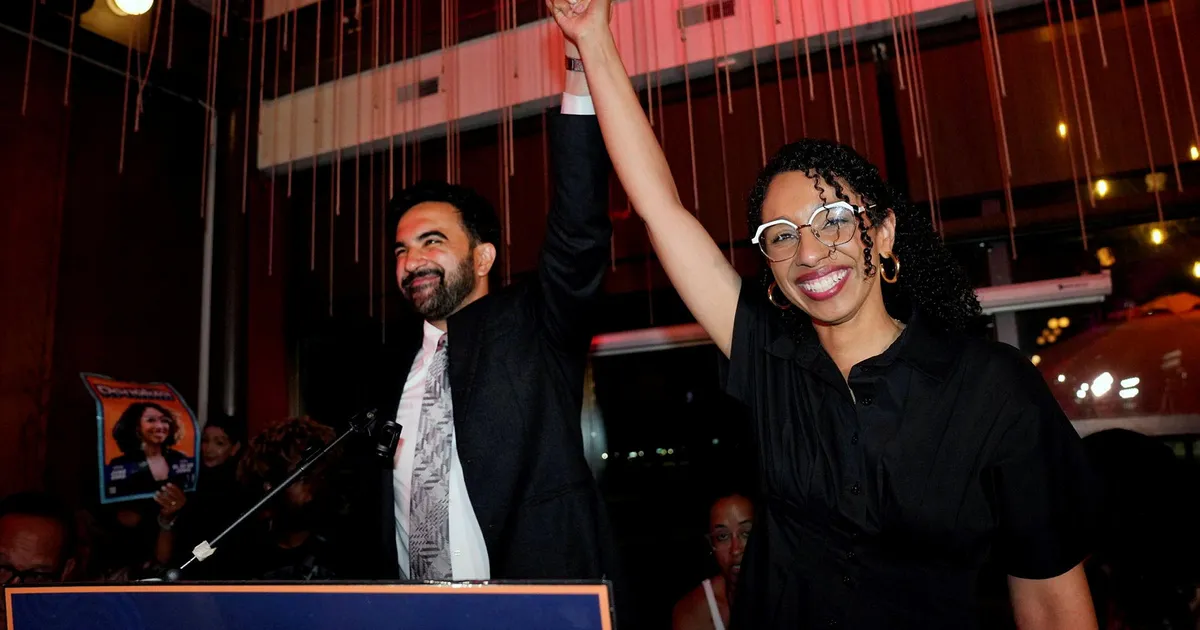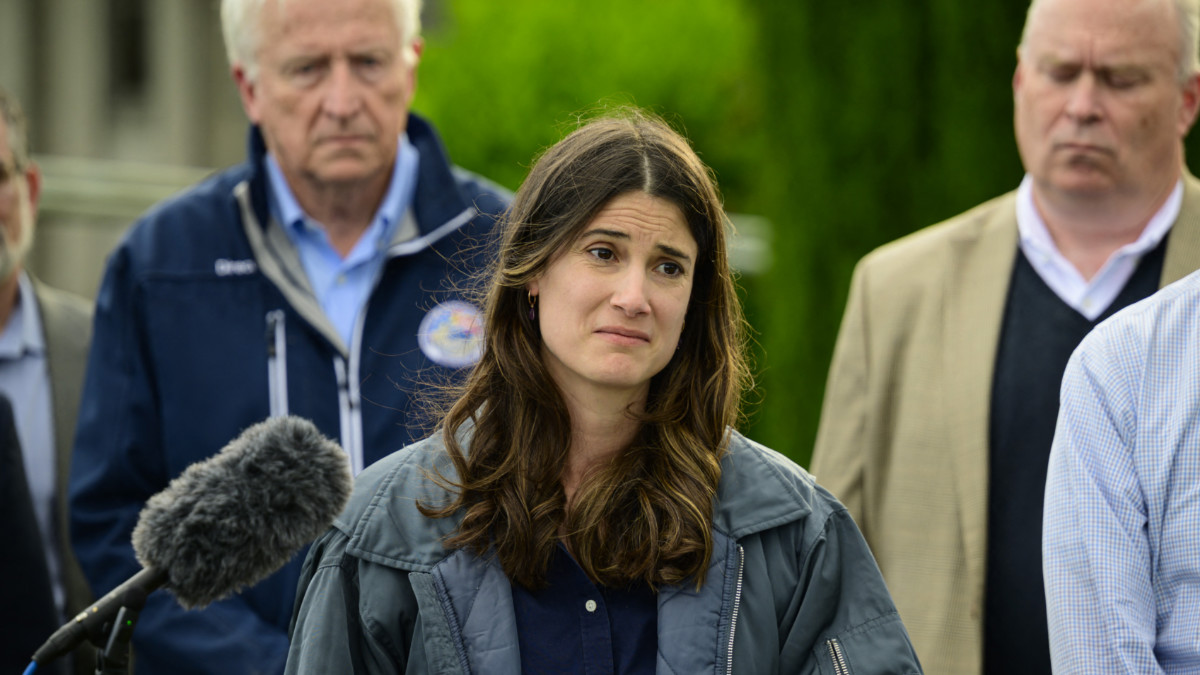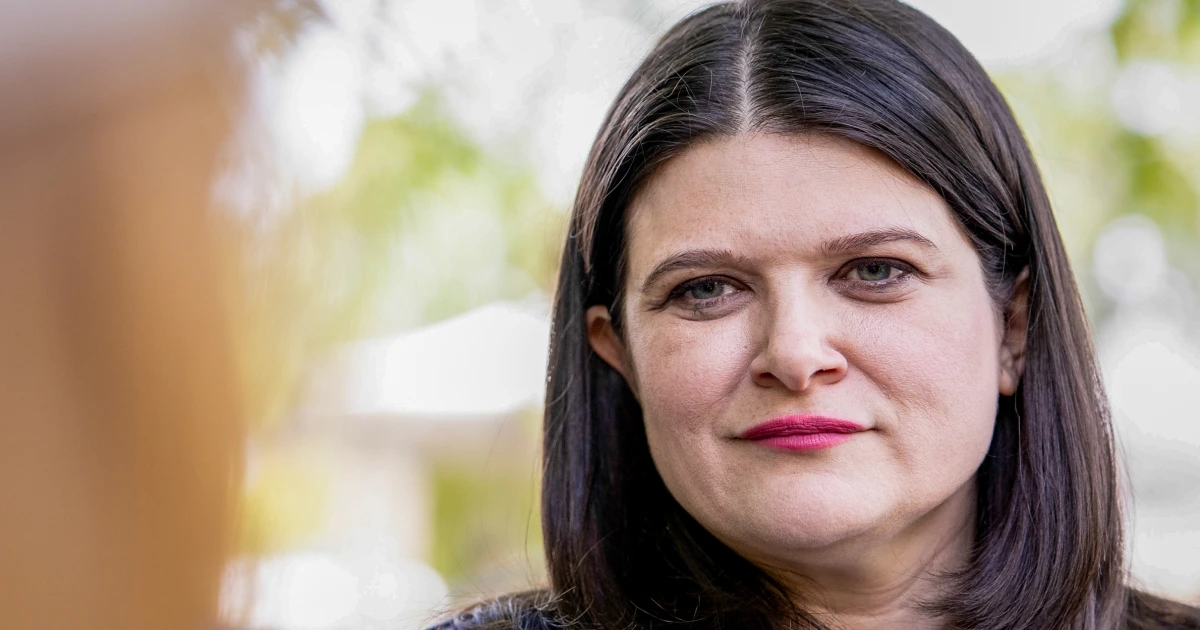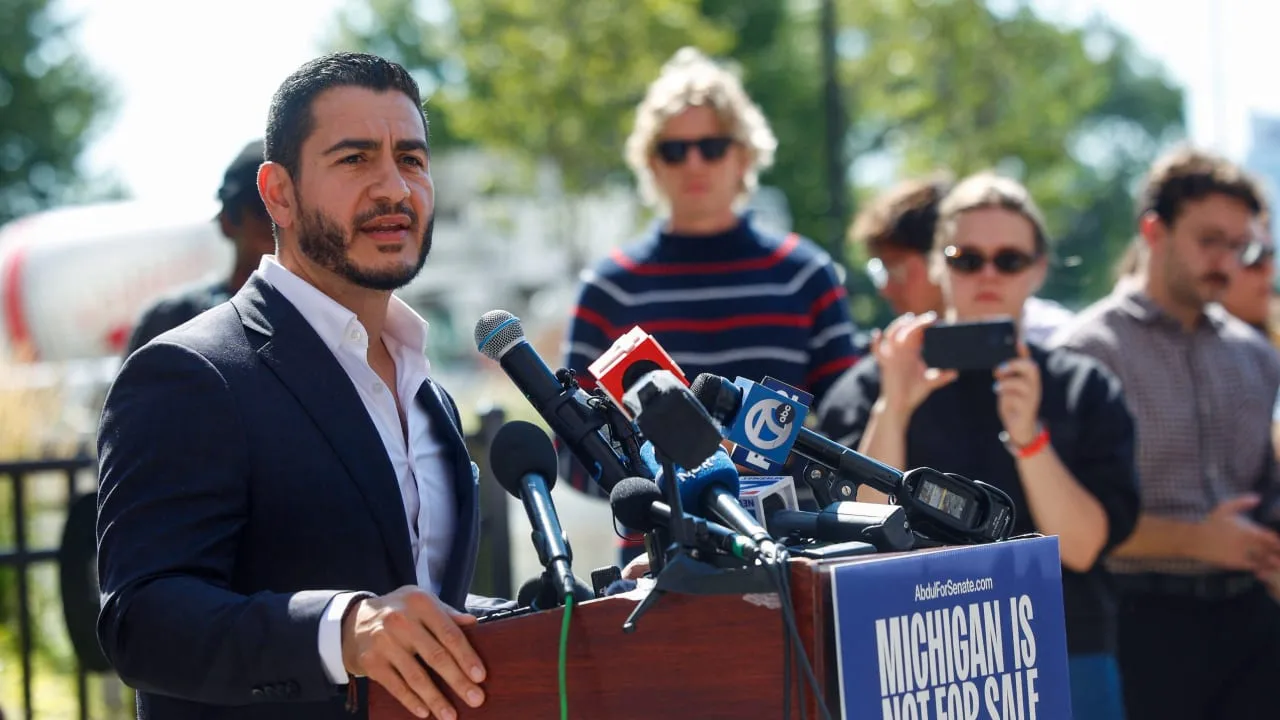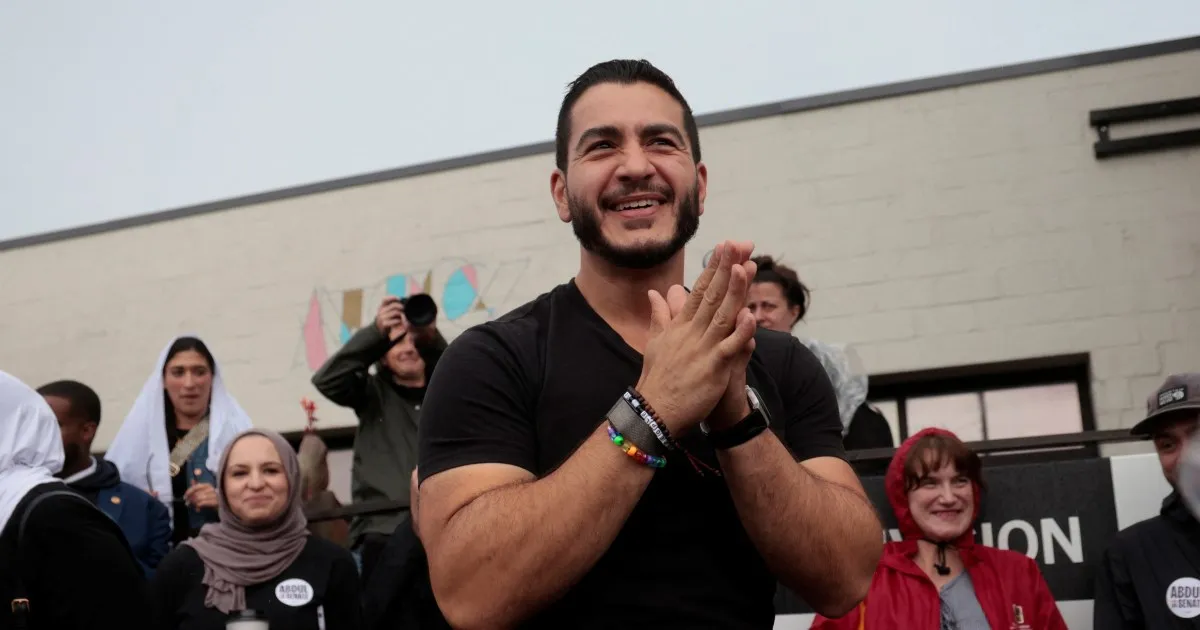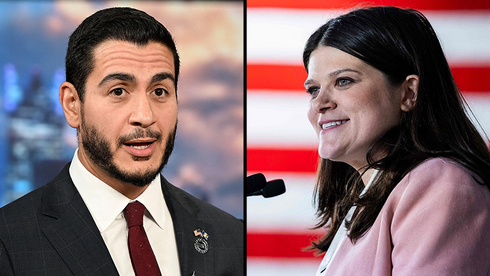
Analysis: Progressives scored key wins, but Black voters in Detroit and St. Louis sent a clear message rejecting extremism, exposing cracks in the Democratic Party and highlighting a renewed opportunity for Israel to rebuild ties with African American communitiesKobi Berda|Michigan is a swing state where Trump won two of the last three presidential elections. Although some polls gave El-Sayed a commanding lead of more than 11 percentage points, the gap narrowed considerably by the time polls closed, with the final margin relatively small compared with the level of support he had been projected to receive. This should likely raise serious concerns among Democrats regarding the party’s chances of retaining Michigan’s Senate seat. Dr. Ahmed El-Sayed and Haley Stevens (Photo: Finn Gomez / Getty Images North America / AFP, Robin Buckson/Pool via Reuters)The phenomenon illustrates the rise of the progressive Muslim wave that has swept across America, beginning with the election of Representatives Rashida Tlaib and Ilhan Omar in 2018 to Congress as part of what later became known as “the Squad,” continuing through Zohran Mamdani’s 2025 election as New York City mayor and, about a month ago, the election of three candidates backed by him to the House of Representatives from New York City. Those developments prompted past Democratic presidential candidate Kamala Harris, said to be considering another run, to meet with Mamdani as well as pro-Palestinian activists and progressive figures.But immediately afterward, it is necessary to look up and examine the broader picture. Alongside these developments, Tuesday night also saw a series of primary contests in which AIPAC scored decisive victories. Above all, the powerful message that emerged from voters in Detroit and St. Louis is one that every Israeli should understand, especially current policymakers and members of the new government that will soon be formed.Let us begin with the tactical victories, several of which contain important details worth noting. From Michigan’s 11th District came remarkable news: Jewish candidate Jeremy Moss, whom many remember from a photo of him proudly marching with an Israeli flag in Tel Aviv during a protest, scored a major victory over progressive Muslim candidate Aisha Farooqi, who suffered a decisive defeat.At the same time, it is impossible not to be moved by the impressive comeback of Elaine Luria from Virginia’s 2nd District. Luria, a former nuclear submarine commander, is remembered for her famous “J’accuse” style speech against Ilhan Omar after Omar questioned her loyalty to the United States. It is a speech worth watching and reflecting on.הנאום העוצמתי והמרגש של חברת הקונגרס הדמוקרטית איילין לוריא.איילין הייתה מפקדת ספינת קרב אמריקאית ושירתה במשך 6 משימות שונות בים, תוך שהיא מפקדת על כוחות במשימות קרביות. אחרי שסיימה את שירותה הצבאי הקימה עסק, ולאחר מכן החליטה לרוץ באזור השני של ורג'יניה, pic.twitter.com/wmOe4kfiaI— קובי ברדה-Dr. Kobby Barda (@kobbybarda) May 13, 2021 It is important to remember that Martin Luther King Jr. was a major supporter of Israel and that, at the time, Rabbi Abraham Joshua Heschel marched arm in arm in Selma, Alabama, carrying a Torah scroll alongside leaders of the Black community. This strong bond existed during the 1960s and 1970s but has steadily weakened in recent years.Tuesday night’s elections sent a particularly strong message from heavily African American districts, first and foremost from Detroit, where 75% of the population is African American. The city’s large Black electorate sent an unequivocal message to the Democratic Party, saying clearly: We are not willing to be represented by progressives.In Detroit, El-Sayed suffered a resounding defeat against Stevens, contrary to polls that had given him an advantage. The result points to significant cracks within the Democratic Party that should be a source of serious concern.Detroit City:Election Day Vote🟠 Haley Stevens – 19,602 (50.1%)🟣 Abdul El-Sayed – 18,371 (46.9%) Absentee🟠 Haley Stevens – 31,578 (74.7%)🟣 Abdul El-Sayed – 8,924 (21.1%) pic.twitter.com/e4waKWWgK4— Peace Maker (@princezar) August 5, 2026 The same occurred in St. Louis, which has a large African American community of around 45%. Candidate Wesley Bell won there. Bell already had defeated progressive Cori Bush in 2024, but the direct confrontation over attitudes toward Israel and his victory on that issue proved themselves once again, as he received nearly 60% of the vote against Bush in their rematch.Alongside the political arena, a particularly fascinating and surprising cultural development has recently emerged: Ashley, the daughter of civil rights icon Jesse Jackson, who is remembered in history for his tense and complicated relationship with the Jewish community, in June completed a conversion process to Judaism, choosing the Hebrew name Miriam Yiskah. Ashley even invited her father to attend a synagogue service with her two years before he died. The event reflects deeper currents and a renewed cultural connection between the communities.Jesse Jackson’s daughter reveals she has converted to Judaism - Jewish Newshttps://t.co/WBfH5hotIlJesse Jackson was in synagogue with his daughter who convertedbefore he died He was an antisemite He made this apology to Godand to the Jewish peopleHe called NYC HimeyTown…— forthepeople (@MimiSchlos70357) July 24, 2026 The message sent after Tuesday's primaries to all decision-makers at the Foreign Ministry, the Prime Minister’s Office and elsewhere must be sharp and clear: Which progressive messages are causing such widespread rejection among African American voters? And how can we, at least initially, build a shared struggle that restores the historic bond and recreates the affection that existed during the 1960s and 1970s?Dr. Kobi BerdaPhoto: Tal GivonyIt is true that the direction in which the United States is heading is troubling. But just as we reinvented ourselves in the 1970s through a brilliant outreach campaign toward evangelical audiences, we now need to rethink which communities share broad common ground with us, how we cultivate those relationships and how we build a coalition capable of working with us in a courageous and relevant way.Dr. Kobi Berda is a lecturer at the Multidisciplinary School at HIT and a senior researcher at the Jewish People Policy Institute (JPPI).
The Black vote, Israel and the 2026 primaries: This is the political shift Washington should watch
Analysis: Progressives scored key wins, but Black voters in Detroit and St. Louis sent a clear message rejecting extremism, exposing cracks in the Democratic Party and highlighting a renewed opportunity for Israel to rebuild ties with African American communities
977 words~4 min read