Free daily briefing on global business news.
Fake booking confirmations, cloned rental listings, AI-cloned voices asking for emergency wire transfers — the scams timed specifically to summer travel and how each one actually works
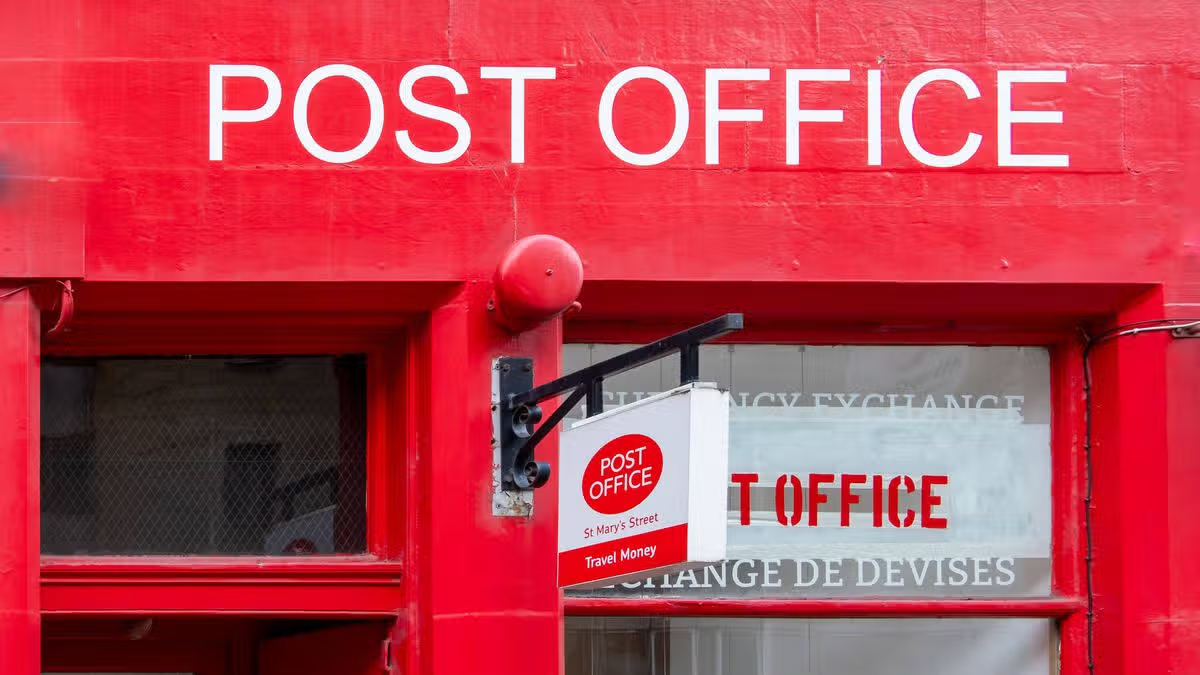
Armin Rimoldi / Pexels
Summer creates a specific and predictable opportunity for online fraud: a large number of people booking travel, sharing itinerary details, and expecting communication from airlines, hotels, and rental platforms all at once, producing exactly the conditions scammers need to make a fraudulent message plausible. The Federal Trade Commission's own consumer alert ahead of summer 2026 specifically flagged a rise in vacation scams, and the scale is not trivial: American consumers filed more than 64,000 fraud reports tied to travel and vacations in 2025 alone, with reported losses of roughly $274 million — a figure that almost certainly understates the true total, since most fraud goes unreported.
What has changed most significantly heading into this summer is not the basic scam structure but the sophistication behind it: several major travel companies, including Amtrak and Carnival, have disclosed data breaches this year exposing millions of customers' names, contact information, and booking details, giving scammers real itinerary information to reference in a fraudulent message rather than a generic template — a combination that dramatically increases how convincing a scam email or call can appear, since a message referencing your actual cruise date and confirmation number is considerably harder to dismiss as spam than a generic "your booking has an issue" template.