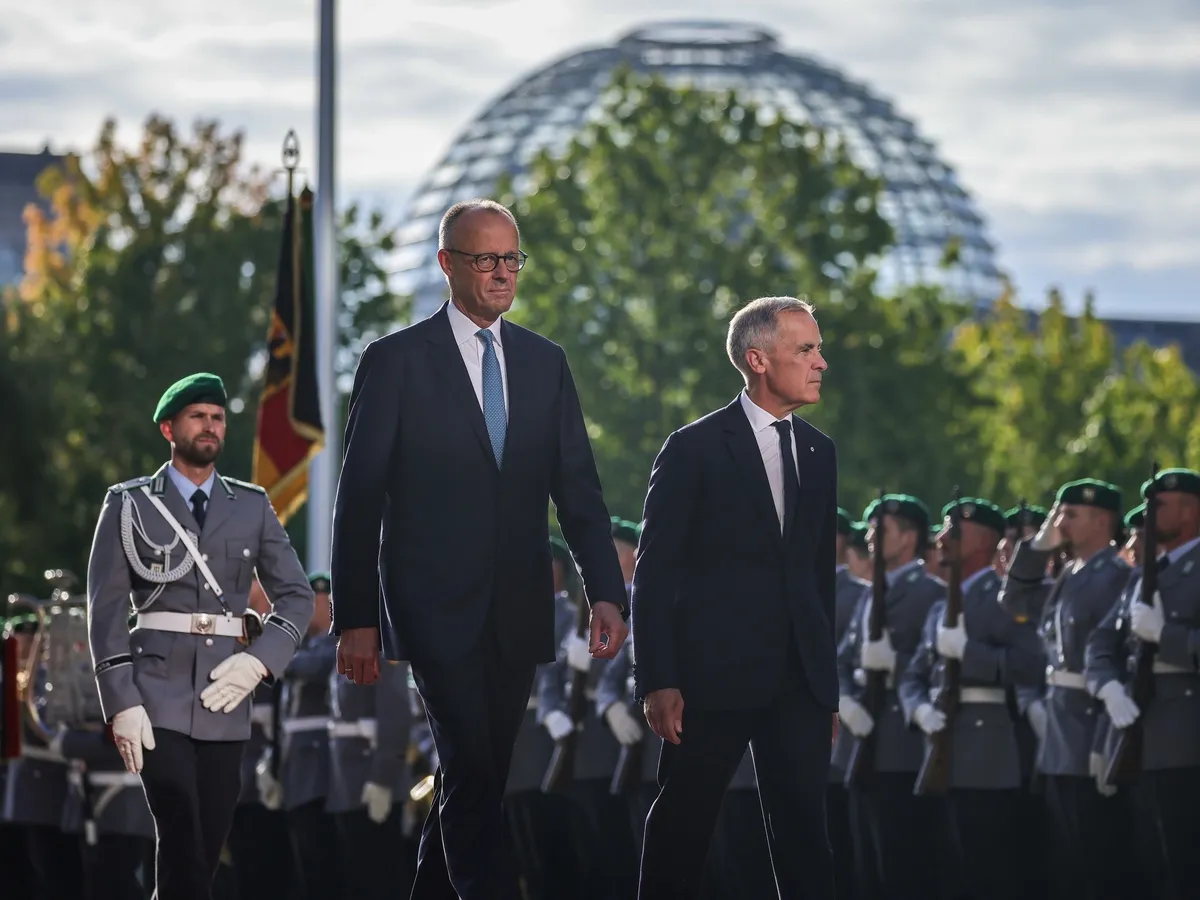
Skip to Content News Archives Economy Energy Oil & Gas Renewables Electric Vehicles Mining Commodities Agriculture Real Estate Mortgages Mortgage Rates Finance Banking Insurance Fintech Cryptocurrency Work Wealth Smart Money Wealth Management Investor Personal Finance Family Finance Retirement Taxes High Net Worth FP Comment Executive Women Puzzmo Newsletters Financial Times Business Essentials More Innovation Information Technology FP500 Podcasts Small Business Lives Told Tails Told Shopping Financial Post Store Obituaries Place a Notice Advertising Advertising With Us Advertising Solutions Postmedia Ad Manager Sponsorship Requests Classifieds Place a Classifieds ad Working Profile Settings My Subscriptions Saved Articles My Offers Newsletters Customer Service FAQ News Economy Energy Mining Real Estate Finance Work Wealth Investor FP Comment Executive Women Puzzmo Newsletters Financial Times Business Essentials HomeCommoditiesMiningEurope has the missing piece of the critical minerals puzzle that Canada needsMirco Wojnarowicz: Canada has the resources, but Germany has the policy architecture needed to develop a midstream processing industry You can save this article by registering for free here. Or sign-in if you have an account.German Chancellor Friedrich Merz welcomes Prime Minister Mark Carney with military honors before talks at the Chancellery on Aug. 26, 2025 in Berlin, Germany. Photo by Omer Messinger/Getty Images filesAt the G7 summit in Évian, France, in June, leaders of the member nations, including Prime Minister Mark Carney and German Chancellor Friedrich Merz, signed a declaration identifying critical minerals as strategic assets essential to economic security.Subscribe now to read the latest news in your city and across Canada.Exclusive articles from Barbara Shecter, Joe O'Connor, Gabriel Friedman, and others.Daily content from Financial Times, the world's leading global business publication.Unlimited online access to read articles from Financial Post, National Post and 15 news sites across Canada with one account.National Post ePaper, an electronic replica of the print edition to view on any device, share and comment on.Daily puzzles, including the New York Times Crossword.Subscribe now to read the latest news in your city and across Canada.Exclusive articles from Barbara Shecter, Joe O'Connor, Gabriel Friedman and others.Daily content from Financial Times, the world's leading global business publication.Unlimited online access to read articles from Financial Post, National Post and 15 news sites across Canada with one account.National Post ePaper, an electronic replica of the print edition to view on any device, share and comment on.Daily puzzles, including the New York Times Crossword.Create an account or sign in to continue with your reading experience.Access articles from across Canada with one account.Share your thoughts and join the conversation in the comments.Enjoy additional articles per month.Get email updates from your favourite authors.Create an account or sign in to continue with your reading experience.Access articles from across Canada with one accountShare your thoughts and join the conversation in the commentsEnjoy additional articles per monthGet email updates from your favourite authorsSign In or Create an AccountorMore importantly, they named midstream processing competitiveness as a shared priority. It was the right call, and an increasingly important one.Allied countries, from Canada to Germany and anywhere in between, can make all the declarations they want about how they are moving at lightning speed to unearth the critical minerals that will help build up pillars of the economy — from EVs to battery energy storage systems and an expanding array of defence capabilities.But if we don’t process those resources, we don’t really own or control them. Instead, we are beholden to those countries that do.For decades, allied nations operated under a comfortable assumption: extract the resource, export it and let someone else convert it into the materials that power modern industry. That approach produced short-term revenues and long-term dependencies. Today, roughly 90 per cent of global hard rock lithium refining sits in a single country, China. The story is similar for cobalt, rare earths and a growing list of materials that underpin electric vehicles, grid-scale energy storage and an expanding range of defence capabilities. The G7’s commitment to reduce critical minerals dependencies on a single supplier to under 60 per cent by 2030 is an acknowledgment of how far allied nations have drifted from control of their own supply chains.Canada has world-class lithium, nickel, cobalt and rare earth deposits. The gap is in what happens after extraction: the processing step that chemically converts ore into battery-grade material. Without that midstream layer, Canadian resources travel offshore and return as finished battery cells. The economic value stays overseas and the strategic dependency on foreign countries remains.Lithium is the clearest example of why this matters now. It is essential to not only electric vehicles, but also to grid-scale battery storage, portable power for defence operations, autonomous systems and platforms and the data infrastructure that drives industrial AI. The sectors that depend on a secure lithium supply are growing, and none of them can afford to wait for processing capacity to catch up.Canada has been faster than most allied countries to recognize what needs to be built. The federal and provincial governments have put instruments in place and they are beginning to direct capital toward the projects most likely to move. Where there is room for improvement, however, is the engineering expertise and chemical processing know-how that our allied partners have honed over the past number of years. That is what can help us match the speed this moment demands.Take Germany as a reference point. It has no lithium deposits of its own, but it has a long history in designing, building and ramping up chemical processing capacity that its automotive and industrial base depends on. The country’s regulators have decades of experience permitting chemical processing facilities, while engineering firms understand how to translate strict environmental standards and regulations into commercially operable plants.Put simply, Germany demonstrates the value of regulatory certainty. That certainty gives investors greater confidence that strategic projects can move from engineering to construction. The results are permitted, construction-ready lithium conversion projects in Europe. Those do not yet exist in Canada.Conversely, Canada has the resources Germany lacks. Germany has demonstrated the policy architecture and industrial know-how that Canada is still building. The opportunity that exists here is to leverage the unique advantages both countries offer: a supply chain that unearths Canadian resources and processes them right here in Ontario, with expertise and experience borrowed from our German counterparts. This made-in-Canada supply chain can serve the automotive, energy storage and defence sectors here at home and among our allies, who need materials from suppliers they can trust. The G7 declaration points directly at this kind of allied processing partnership as the model for reducing single-source dependencies.Turning that into built capacity requires a few things to happen in sequence. Governments need to move from identifying strategic projects to actively supporting final investment decisions through permitting coordination, catalytic public capital and the procurement signals that make long-cycle industrial financing possible. Downstream customers, including OEMs, defence primes and utilities need to define material requirements and qualification pathways. Industrial partners need to keep advancing real projects on real timelines instead of waiting on optimal market conditions that may not arrive in time.The G7 declaration is a meaningful step forward. The next step is harnessing Europe’s experience to complete our missing midstream.Mirco Wojnarowicz is CEO of Rock Tech Lithium Inc., a German-Canadian critical minerals company. Join the Conversation This website uses cookies to personalize your content (including ads), and allows us to analyze our traffic. Read more about cookies here. By continuing to use our site, you agree to our Terms of Use and Privacy Policy.
Europe has the missing piece of the critical minerals puzzle that Canada needs
Canada has critical minerals, but Germany has the policy architecture needed to develop a midstream processing industry. Read more.
1,233 words~6 min read