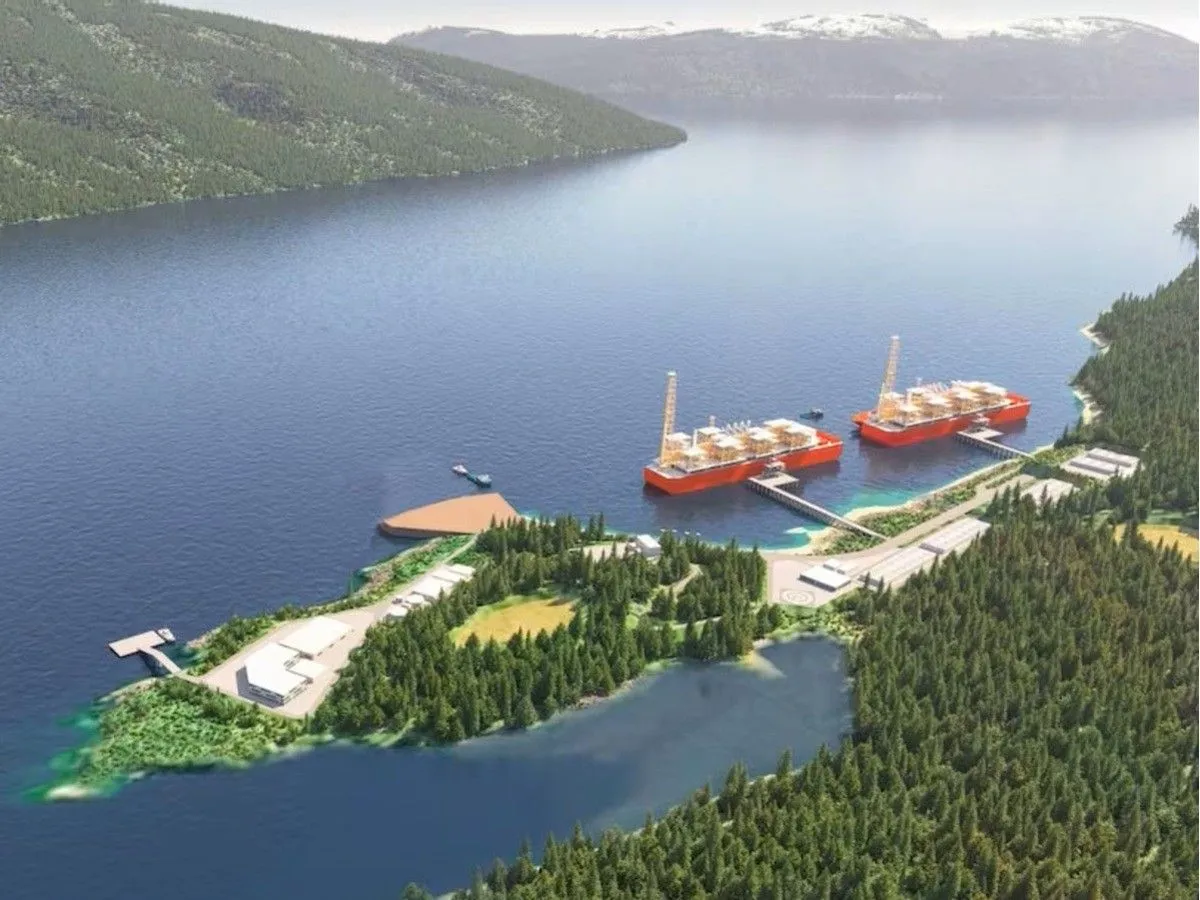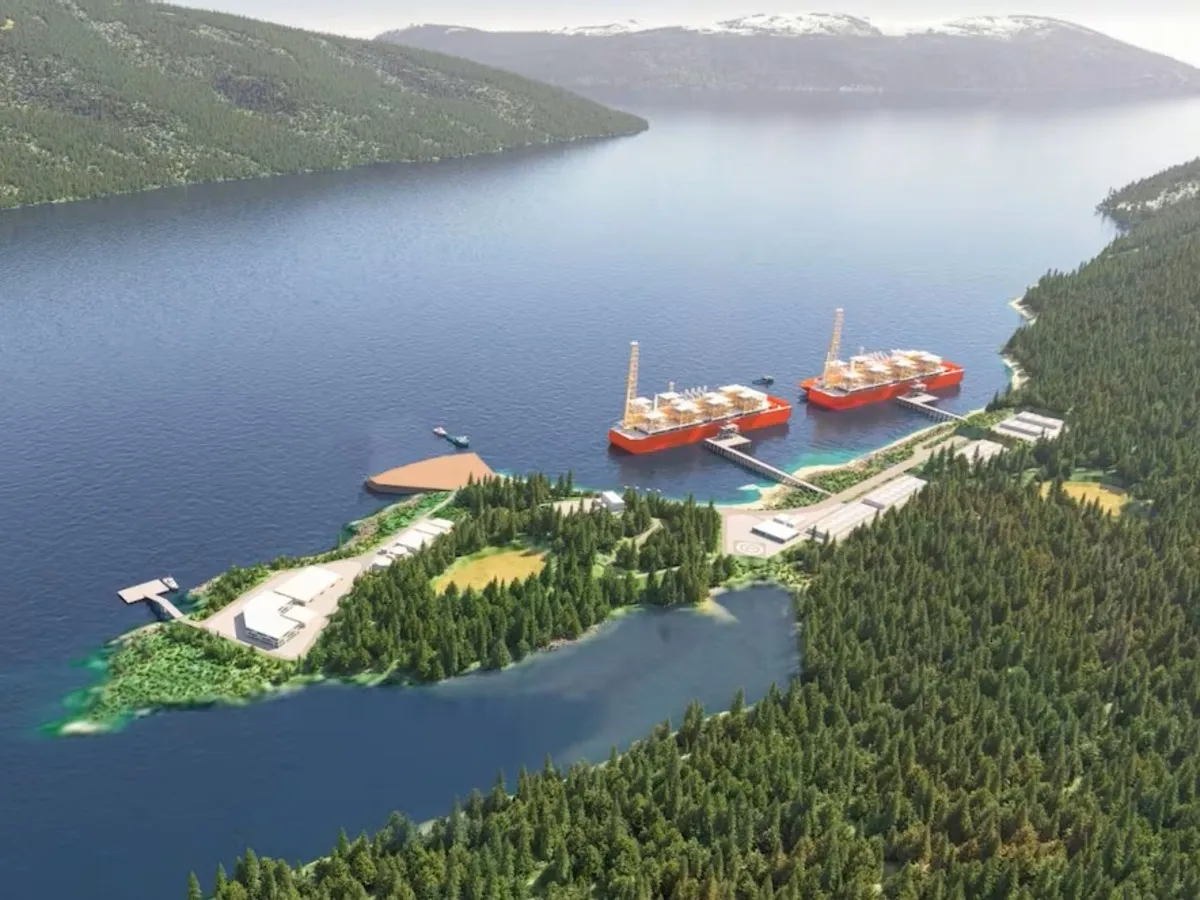
Skip to Content News Archives Economy Energy Oil & Gas Renewables Electric Vehicles Mining Commodities Agriculture Real Estate Mortgages Mortgage Rates Finance Banking Insurance Fintech Cryptocurrency Work Wealth Smart Money Wealth Management Investor Personal Finance Family Finance Retirement Taxes High Net Worth FP Comment Executive Women Puzzmo Newsletters Financial Times Business Essentials More Innovation Information Technology FP500 Podcasts Small Business Lives Told Tails Told Shopping Financial Post Store Obituaries Place a Notice Advertising Advertising With Us Advertising Solutions Postmedia Ad Manager Sponsorship Requests Classifieds Place a Classifieds ad Working Profile Settings My Subscriptions Saved Articles My Offers Newsletters Customer Service FAQ News Economy Energy Mining Real Estate Finance Work Wealth Investor FP Comment Executive Women Puzzmo Newsletters Financial Times Business Essentials HomeNewsEconomyOpinion: Indigenous-led LNG deal with Germany is the kind of reconciliation Canada needsKaren Ogen: The agreement between the Ksi Lisims project and a government-owned German energy utility shows reconciliation can bring real benefitLast updated 1 hour ago You can save this article by registering for free here. Or sign-in if you have an account.A rendering of the Ksi Lisims LNG project in northern B.C. Photo by Ksi Lisims LNGAn Indigenous-led LNG project in northwest B.C. last week agreed to supply Germany with one million tonnes of liquefied natural gas a year for the next 20 years.Subscribe now to read the latest news in your city and across Canada.Exclusive articles from Barbara Shecter, Joe O'Connor, Gabriel Friedman, and others.Daily content from Financial Times, the world's leading global business publication.Unlimited online access to read articles from Financial Post, National Post and 15 news sites across Canada with one account.National Post ePaper, an electronic replica of the print edition to view on any device, share and comment on.Daily puzzles, including the New York Times Crossword.Subscribe now to read the latest news in your city and across Canada.Exclusive articles from Barbara Shecter, Joe O'Connor, Gabriel Friedman and others.Daily content from Financial Times, the world's leading global business publication.Unlimited online access to read articles from Financial Post, National Post and 15 news sites across Canada with one account.National Post ePaper, an electronic replica of the print edition to view on any device, share and comment on.Daily puzzles, including the New York Times Crossword.Create an account or sign in to continue with your reading experience.Access articles from across Canada with one account.Share your thoughts and join the conversation in the comments.Enjoy additional articles per month.Get email updates from your favourite authors.Create an account or sign in to continue with your reading experience.Access articles from across Canada with one accountShare your thoughts and join the conversation in the commentsEnjoy additional articles per monthGet email updates from your favourite authorsSign In or Create an AccountorThis was no small deal. The agreement between the Ksi Lisims project and government-owned German energy utility Securing Energy for Europe (SEFE) marks a significant step toward shoring up Germany’s energy security at a moment of profound European insecurity, with the war in Ukraine and rising tensions involving Iran unsettling global supply.How is it that the Nisga’a Nation, the driving force behind Ksi Lisims, has put itself at the centre of energy and geopolitics, and become a trusted supplier to a major European ally?Get the latest headlines, breaking news and columns.By signing up you consent to receive the above newsletter from Postmedia Network Inc.A welcome email is on its way. If you don't see it, please check your junk folder.The next issue of Top Stories will soon be in your inbox.We encountered an issue signing you up. Please try againI am of Gitxsan and Wet’suwet’en ancestry. As a “neighbour” of the Nisga’a, I have watched up close their decades-long struggle to control their own destiny — a struggle built on hard-fought legal victories, a modern-day treaty and a refusal to be told their project wasn’t viable.The Nisga’a advanced the Calder case in the 1970s which was a landmark judgment that helped set the table for land-claims negotiations and for Section 35 of the Canadian Constitution. The Nisga’a’s modern-day treaty with Canada and B.C. then put them in a position to chart their own course.Over the past decade, the Nisga’a chose to strengthen their economic future by pursuing an LNG project on Nisga’a-owned land. First Nations advancing trade is not a new concept — not at all. Going back to the grease trails where Nations traded amongst themselves in pre-colonial times, our people understood the importance of trade, and the connection between trade and security.When they started on their LNG journey, neither Ottawa nor Victoria were as enthusiastic as they are today. Many observers did not give the project much of a chance. The Nisga’a and their partners held to their vision.When built, their proposed LNG facility will be one of the largest in the world, and with the lowest emissions. The goal is to make it fully electrified. When BC Hydro can supply the power, the plant’s emissions would be 94 per cent below the global average.It will deliver generational revenue for the Nation, create employment, drive the economy of northern B.C. and help generate tax revenues that can offset the province’s significant budget deficit.That is why B.C. Premier David Eby and the federal Minister of Natural Resources Tim Hodgson stood alongside Nisga’a President Eva Clayton this past week to announce the deal with Germany. The Nisga’a are advancing B.C.’s economy and Canada’s economy.This is the kind of economic reconciliation we need — and we need more of it. Across B.C. and Canada, First Nations are stepping up to lead in the economy: the Treaty 8 nations in northeast B.C.’s natural gas sector; the Haisla Nation’s Cedar LNG project; the more than 20 First Nations with agreements on the Coastal GasLink pipeline and LNG Canada; the Stonlasec8 partnership on the Westcoast Energy line; and the Musqueam and Squamish Nations’ involvement in Tilbury LNG and Woodfibre LNG respectively.We take it for granted in B.C. that we have a world-class supply of natural gas in Treaty 8 territory. The world needs that gas, and our democratic allies need it most of all.We have a choice: send it by pipeline to the U.S. Gulf Coast and let Americans capture the benefits of LNG or build the industry here at home. To move Canadian gas to tidewater on the Pacific, it must cross the territories of dozens of First Nations. LNG Canada and the Coastal GasLink pipeline — now in operation — showed how First Nations and industry can come together for the common good.We all win. Indigenous people own their future. The projects are built to the highest standards. Canadians benefit. And our allies, like Germany, have a little more peace of mind that they can count on a trusted partner, and lessen their reliance on Russian gas.It’s not just LNG. It’s Indigenous LNG.That’s what we need to reconcile: the hard work of reconciliation brings real benefits. The Nisga’a have shown again that when First Nations, industry and government work together, the impact can stretch beyond our borders, and the economic benefits remain here.Karen Ogen is CEO of the First Nations Natural Gas Alliance Join the Conversation This website uses cookies to personalize your content (including ads), and allows us to analyze our traffic. Read more about cookies here. By continuing to use our site, you agree to our Terms of Use and Privacy Policy.
Opinion: Indigenous-led LNG deal with Germany is the kind of reconciliation Canada needs
Agreement between the Ksi Lisims project and a government-owned German energy utility shows reconciliation can bring real benefit. Read more
1,219 words~6 min read