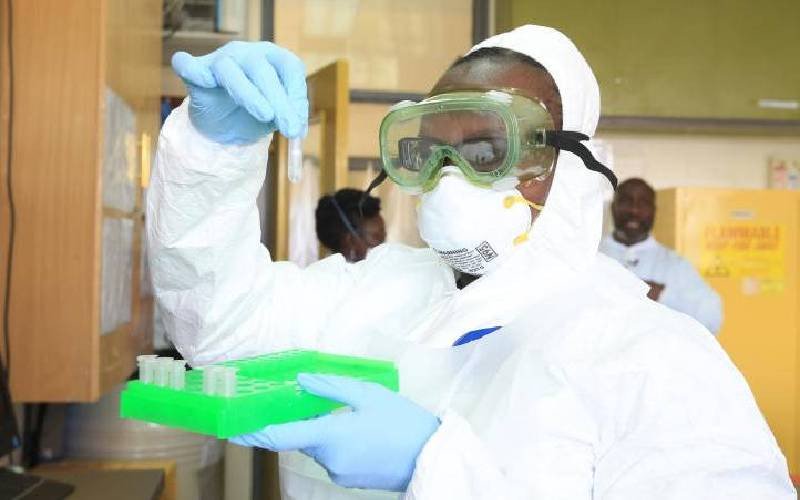
KEMRI lab scientist Dr Edith Koskei displays coronavirus samples obtained from the public in Nairobi on March 24, 2020. [File, Standard]
For too long, medical research in Africa was described in the passive voice. Trials were "hosted" here. Samples were "collected" here. The discoveries, somehow, were credited elsewhere. That is changing, and fast. Across the continent, African scientists are no longer merely participating in global health research; they are designing it, leading it and interpreting it.
This is not a matter of pride alone; it is one of survival. When Africa invests in its own research capacity, it strengthens health security, creates skilled jobs, and ensures that lifesaving vaccines are built for African realities from the start. The conviction behind it is simple: the science that ends our deadliest diseases must be led by the people who live closest to them.
The evidence is already here. African research centres have contributed the samples, data and leadership that reshaped global understanding of HIV transmission, broadly neutralizing antibodies and vaccine design. This was not a supporting role. It was science conceived and conducted in African populations, for the diseases that burden the continent most.