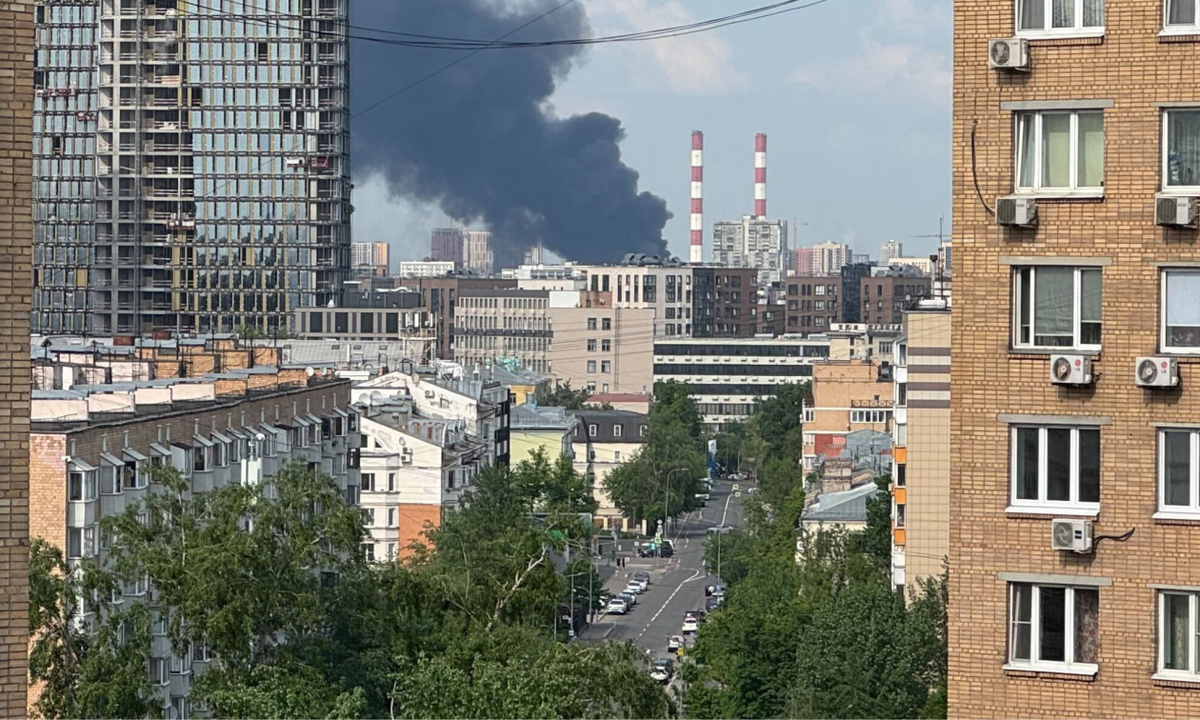
An important turning point has been reached in Russia’s war on Ukraine. But unfortunately for Kyiv, it’s not the ‘tide is turning’ in Ukraine’s favour narrative that Volodymyr Zelensky has been pushing ever since his long-range drone attacks began smashing oil refineries and logistics warehouses deep inside Russia and sinking dozens of ships in the Sea of Azov. Rather, last night not one of the 27 ballistic missiles fired by Russia at and around Kyiv was shot down. At least seventeen people were killed and a series of huge warehouses and major Ukrainian retail outlets were devastated.
No grain vessels have docked for almost two weeks as Ukraine’s summer harvest season enters full swing
By the terrible arithmetic of war, the casualty numbers were not in themselves game-changing. But Ukraine’s inability to stop incoming ballistic missiles – especially Zircon and Kindzhal hypersonic missiles that travel at up to nine times the speed of sound – is a fundamental strategic flaw that the Kremlin is exploiting mercilessly. As Zelensky himself said last month, “ballistic missiles are Russia’s last strategic advantage.”
The reason that the skies over Ukraine are now open to ballistic attack is that Kyiv’s arsenal of US-made PAC-3 Patriot interceptors is used up – and there’s little prospect of any more coming because the US has used up almost all its own reserves defending against Iranian missiles. Last month in Washington, Zelensky pleaded for 300 Patriots to defend Ukraine this winter. But according to the Center for Strategic & International Studies (CSIS) the US Army’s reserves are down to just 750 missiles. Patriot’s manufacturer Lockheed-Martin currently produces between 50 and 60 new units a month – compared to Russia’s monthly production of at least 120 regular ballistic missiles, plus four to seven Zircons.