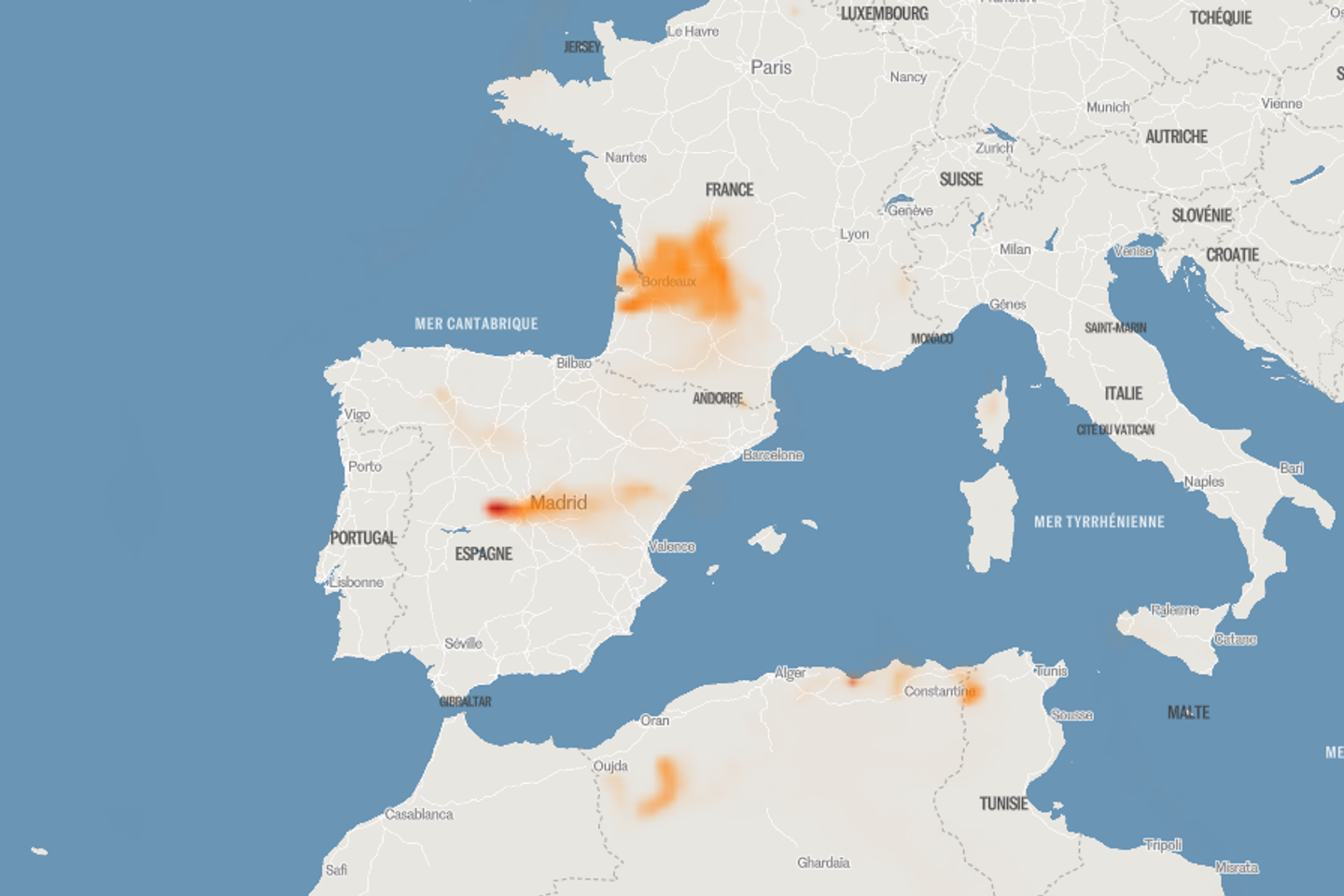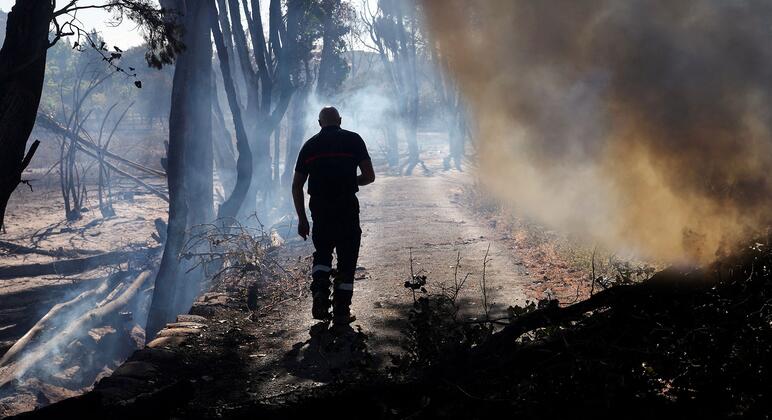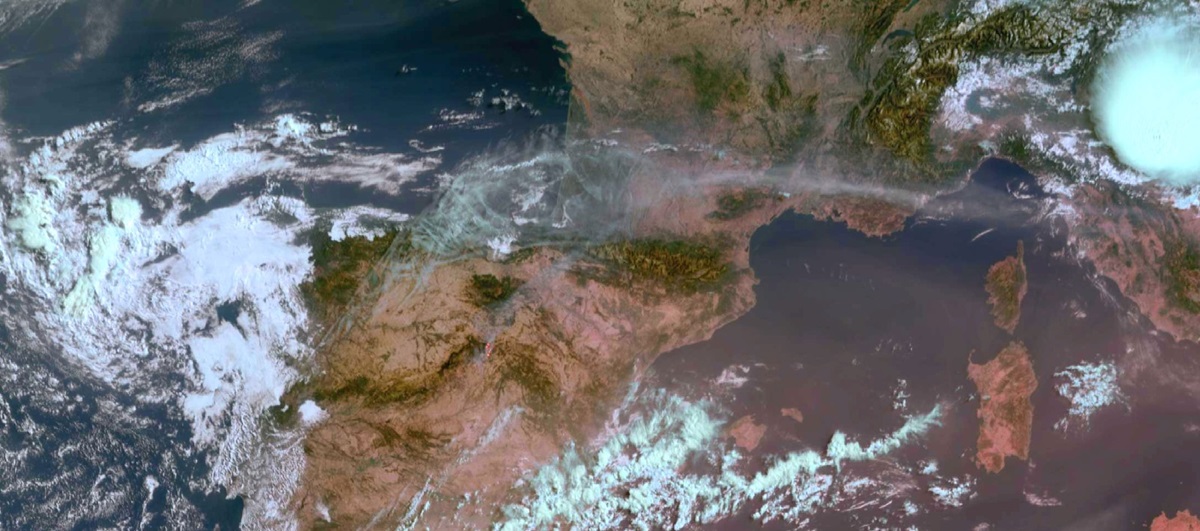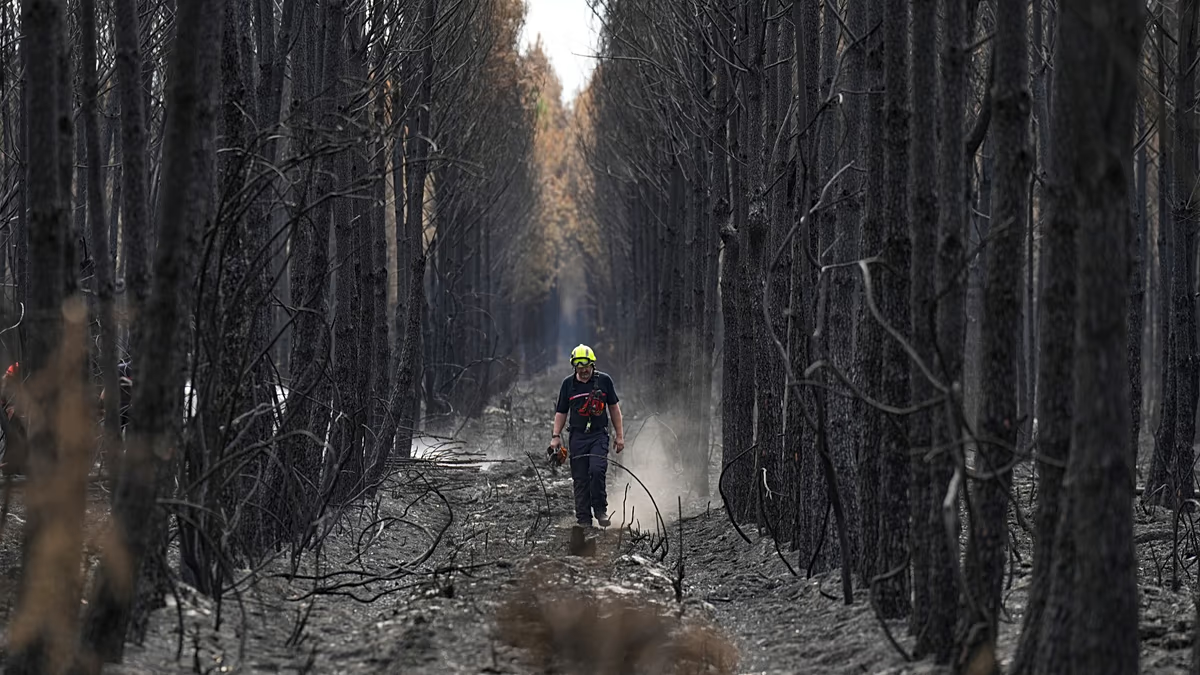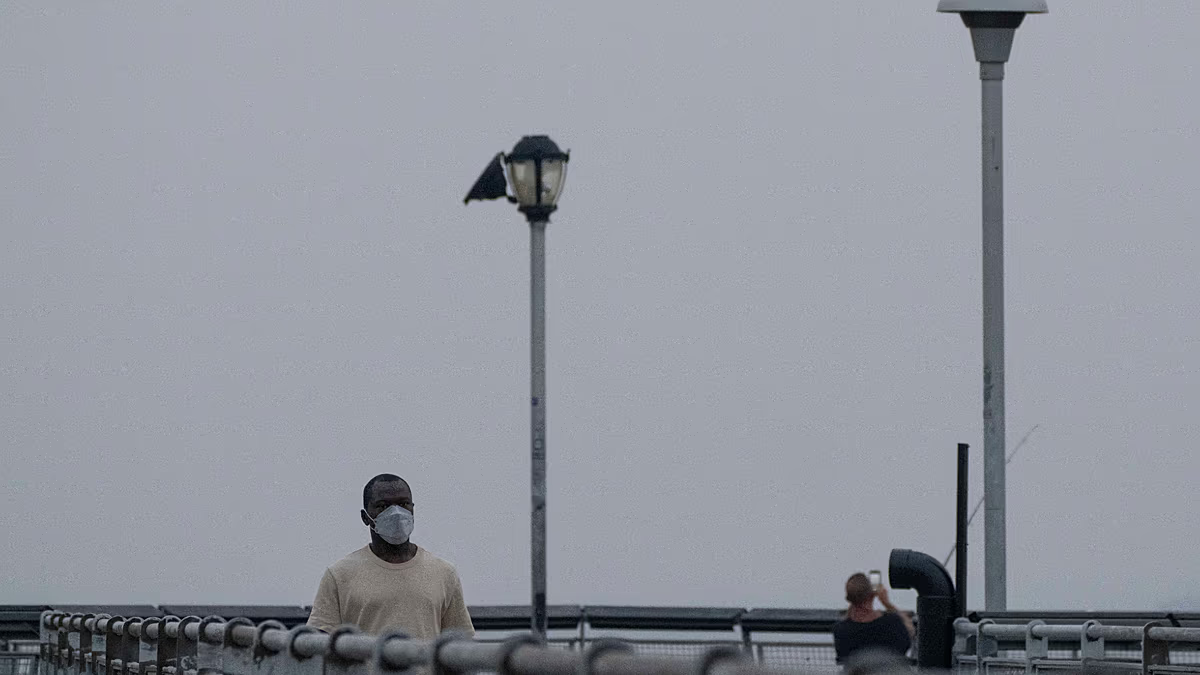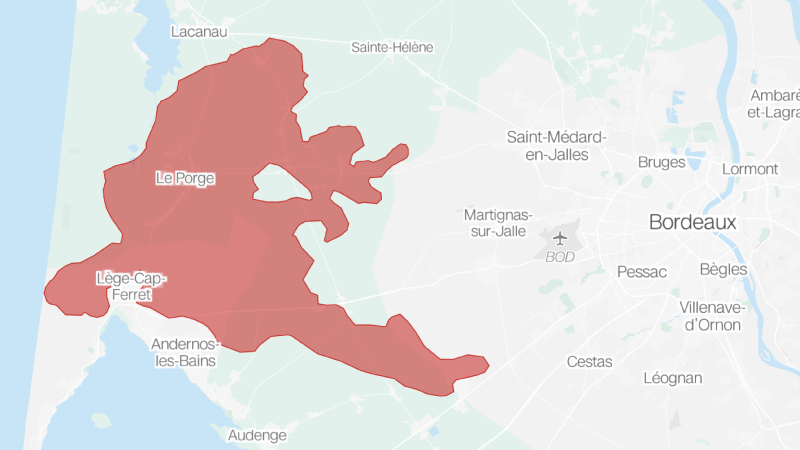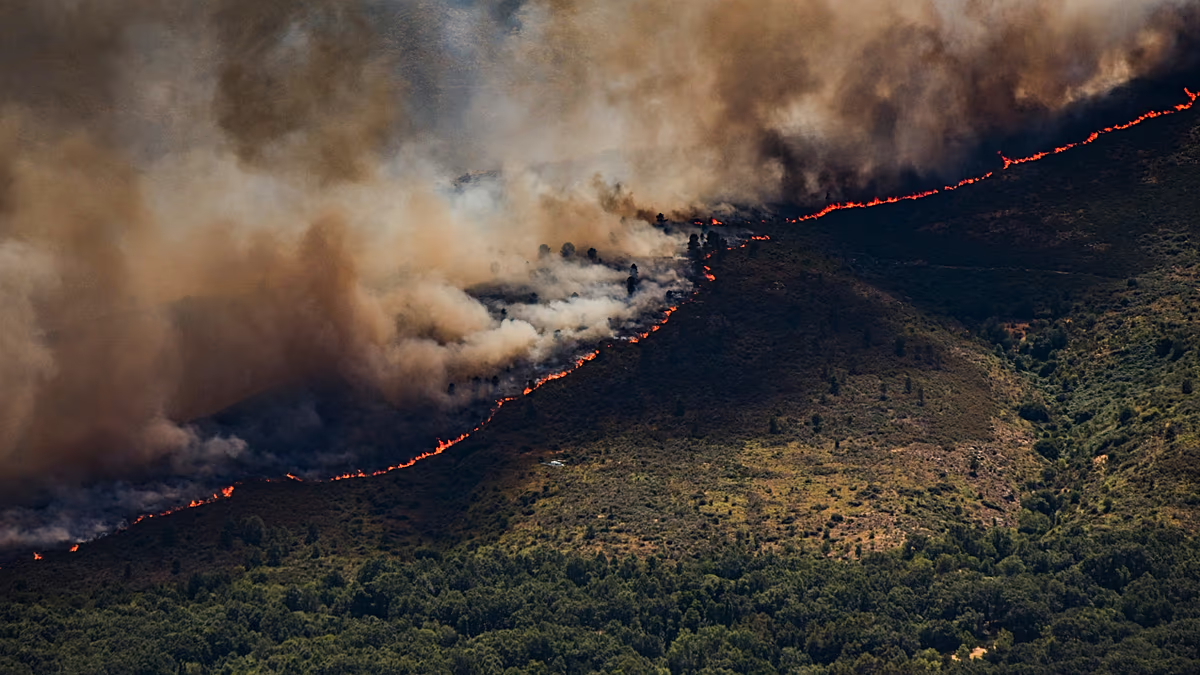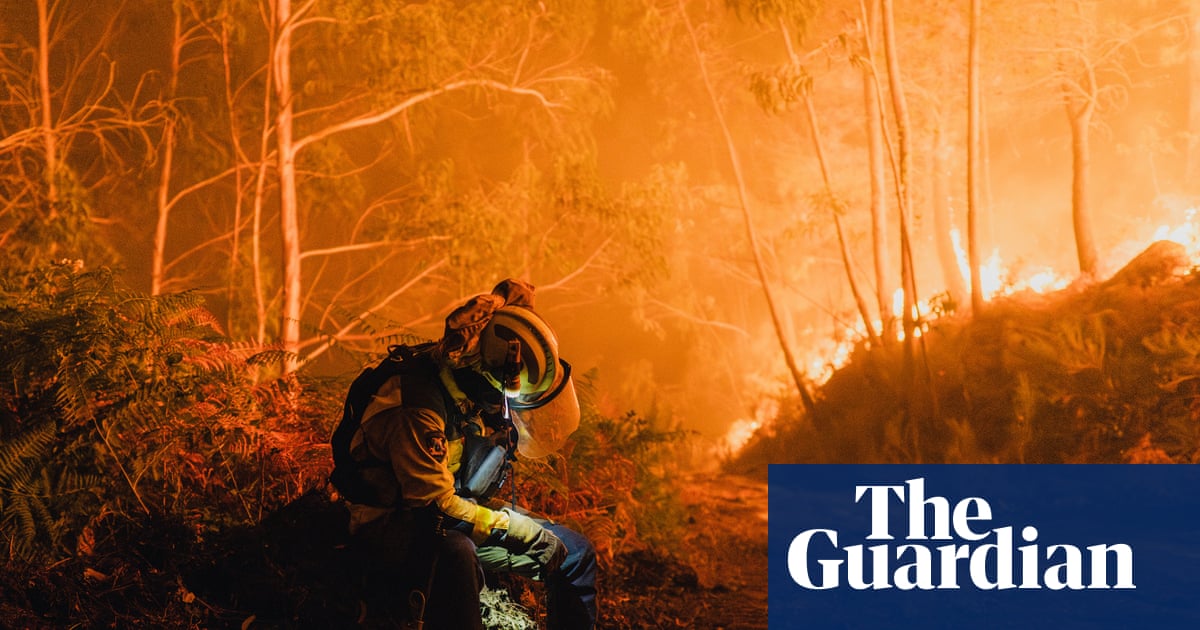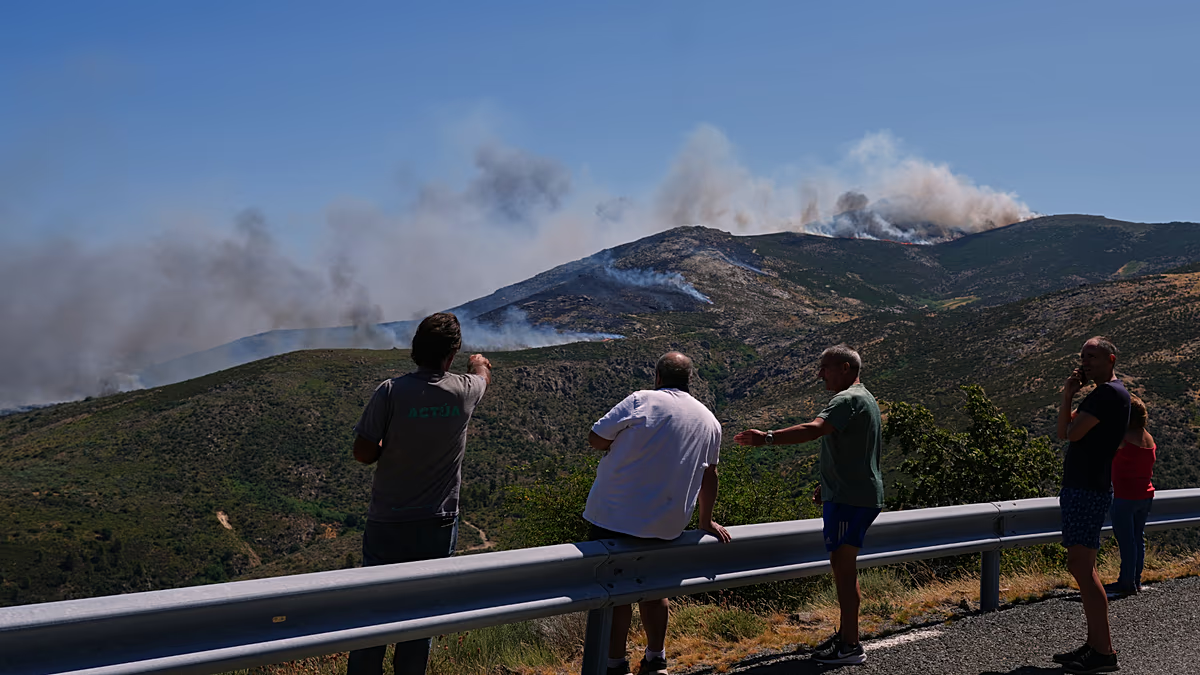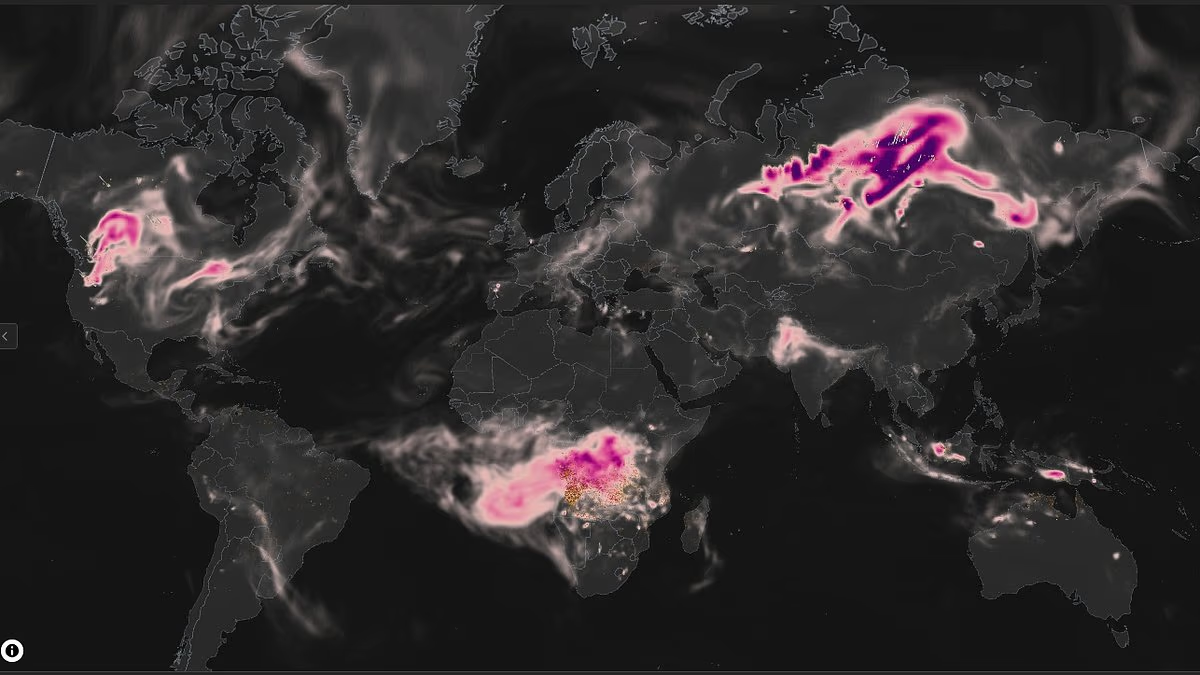
As devastating wildfires continue to rage across Europe, millions of holidaymakers face an invisible threat in the form of hazardous air pollution.Now, an interactive map lets you track where wildfire smoke is travelling in real time and see which areas are being hit hardest by dangerous emissions.The free Fire Emissions Watch tool has been launched by the Copernicus Atmosphere Monitoring Service (CAMS).It allows users to monitor wildfire emissions across the globe, replay major fire events and compare countries affected by blazes. You can zoom in from a global view to individual regions or even draw custom areas to examine the impact of fires.The launch comes as western Europe endures one of its worst wildfire seasons in years, with destructive blazes sweeping across France, Spain and other countries.'It is very apt that this product should launch at such a critical moment for fires across the globe, with thousands of people displaced and millions exposed to hazardous air pollution,' said Laurence Rouil, Director of CAMS.'Whether users want to understand the fires affecting their local area or examine global biomass burning trends over the past two decades, Fire Emissions Watch makes that information available in just a few clicks.'To try the interactive map, visit the website here and click 'Enter the dashboard'. The map shows Spain and Portugal with high levels of emissions during the recent wildfires. The protruding columns indicate daily carbon emissions, while the purple areas indicate the total aerosol amount from wildfire emissions Wildfire smoke can be dangerous because it is a toxic mix of microscopic fine particles and hazardous gases that penetrate deep into your lungs and enter your bloodstream. Pictured: A firefighter walks amidst smoke during wildfire near the Agia Paraskevi village, GreeceAccording to CAMS, France has already recorded its highest year–to–date fire emissions on record, surpassing the previous peak set in 2022.The country also experienced its worst July for wildfire carbon emissions, producing 0.89 megatonnes of carbon compared with the previous record of 0.64 megatonnes.The interactive tool, which works by transforming vast amounts of satellite data, captures these ongoing fires, allowing users to see daily, monthly and year–to–date emissions.It shows daily carbon emissions, which are used as an indicator of the many pollutants contained within wildfire smoke.It also reveals how smoke plumes travel across countries as well as a 'smoke forecast', helping people understand where polluted air is likely to spread.At a global level, the data reveals that Canada produced the highest wildfire emissions last month, with thousands of fires sending smoke across North America, the Arctic and the North Atlantic.The smoke even contributed to air pollution alerts across parts of the eastern United States in the days leading up to the World Cup final.Users can also revisit some of the world's most significant wildfire events dating back to 2003. These include the European heatwave of 2003, the Amazon fires of 2019 and Canada's record–breaking wildfire season in 2023. During last week's wildfires on the Suffolk coast, some 3,249 tonnes of carbon emissions were released in one day, the map shows An aerial view taken with a drone shows smoke rising from wildfires near Dunwich Heath, with the Sizewell B nuclear power plant in the background. This image was taken on 31 July, as firefighters entered their third day of battling the blaze The map allows users to monitor wildfire emissions across the globe, replay major fire events and compare countries affected by blazes The hidden health risks of wildfire smoke Wildfire smoke contains fine particulate matter (PM2.5) – microscopic particles small enough to penetrate deep into the lungs and even enter the bloodstreamExposure can cause coughing, wheezing, shortness of breath, sore throats and chest tightness, even in otherwise healthy peopleSmoke can trigger asthma attacks and make chronic lung diseases such as COPD significantly worseIt can also cause burning eyes, redness, itching and watery eyes, as well as irritating the nose and throat Studies have linked wildfire smoke exposure to an increased risk of heart attacks, strokes and irregular heart rhythms, particularly in older adultsWhen smoke levels are high, health agencies recommend staying indoors with windows closed where possible and avoiding strenuous exercise The system is powered by satellite observations that estimate the amount of pollution released by fires around the world.'The application transforms the wealth of information contained within the CAMS Global Fire Assimilation System into an intuitive and accessible tool,' Ms Rouil said.'Our teams have worked incredibly hard to develop Fire Emissions Watch, which we believe will be a game changer for global fire emissions monitoring.'France and Spain have recently battled some of the worst wildfires in living memory, forcing hundreds of thousands of people to flee.Now, scientists say these devastating scenes are becoming more likely thanks to a growing number of days with weather 'primed' for wildfires.Researchers found that while Europe is experiencing fewer wildfires overall than four decades ago, those that do ignite are occurring under far more dangerous conditions, making them harder to contain.The team warns that hotter, drier summers driven by climate change are creating the perfect recipe for fast–moving and destructive fires.And they revealed the trend is particularly pronounced across Spain, Portugal, France, Italy and Greece, where many communities are once again facing a summer of extreme heat and smoke. According to CAMS, France has already recorded its highest year–to–date fire emissions on record, surpassing the previous peak set in 2022Wildfire smoke can be dangerous because it is a toxic mix of microscopic fine particles and hazardous gases that penetrate deep into your lungs and enter your bloodstream.This can trigger widespread inflammation, breathing difficulties and serious cardiovascular risks.'What you see when you see a smoke plume or when the air is hazy with wildfire smoke are the tiny particles that are too small to fall to the ground right away with gravity,' Colleen E. Reid, Associate Professor of Geography at the University of Colorado Boulder, wrote on The Conversation.'These particles, which scientists call particulate matter, are very small – we measure them in microns. When you breathe them in, they can harm your health. The smaller the particles, the deeper they can get into your lungs and body.'She said when wildfire smoke gets bad, it's best to stay indoors as much as possible with doors and windows shut.If you have to go outside, she suggests wearing a well–fitting face mask that can protect you from inhaling particles in the air around you.
Interactive map reveals how bad wildfire emissions are in your area
As devastating wildfires continue to rage across Europe, millions of holidaymakers face an invisible threat in the form of hazardous air pollution.
1,062 words~5 min read