Louise Nealon on the Chaos of Her Creativity
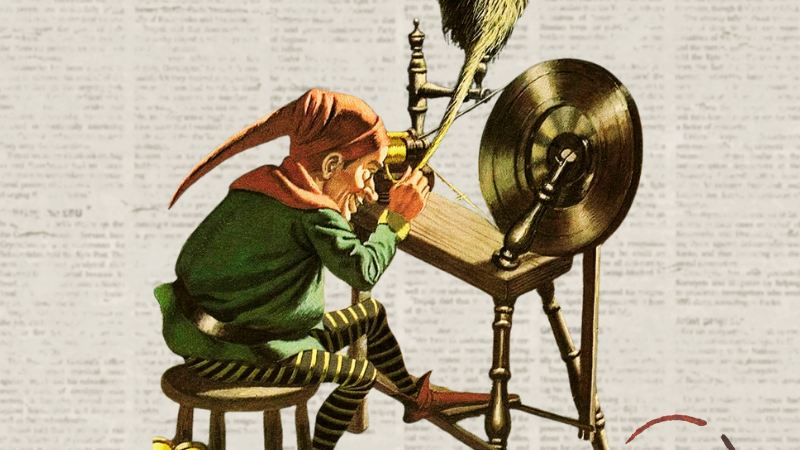
A few years ago, scrolling through social media when I should have been writing, I came across a photo of the Lady Bird edition of Rumpelstiltskin. Struggling to remember the specifics of the story, I googled it. There, in the summary of a childhood book, I found the perfect analogy for my writing life:Article continues after advertisement
A miller brags to a king that his daughter can spin straw into gold. (I pitch a novel.) The King imprisons the miller’s daughter in a room and orders her to prove her magical ability under pain of death. (I attempt to write.) There is no image that captures my experience of drafting a novel better than a woman crying over her inability to spin straw into gold.
The miller’s daughter finds herself in my ideal writing environment: time spent alone without distraction. Her salvation arrives in a strange but recognizable form. Rumpelstiltskin is the villain of the tale. Rereading the story as an adult, I began to question his motives. He haggles a ring and necklace from the miller’s daughter in exchange for his labour, before asking for her unborn child. The jewelry he takes is of little worth to someone who can spin straw into gold, and he doesn’t seem to be in the market for a baby. The only value he attaches to these possessions is that they belong to a young woman who he initially helps and then terrorizes, but why? The woman marries the King and gives birth to her first-born, bringing about the return of the forgotten imp who comes to collect his pay check. Instead of taking the child, Rumpelstiltskin proposes a game: if the Queen can guess his name within three days, she can keep her baby. His desire is human, childlike even: he wants to play.