This is Part 7 of my "From One User to One Million" series, where we'll build an understanding of System Design by following a simple application as it grows from a single user to millions. Instead of memorising technologies, we'll learn why they exist by solving real problems as they appear.
Last time, we ended on a question that sounded simple but isn't.
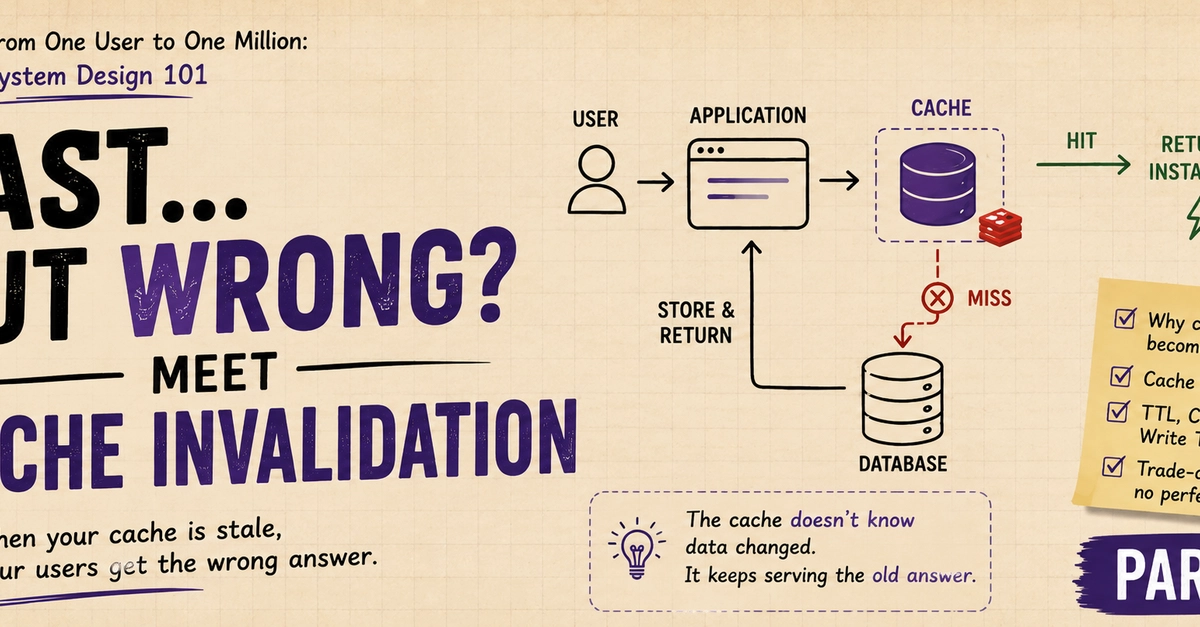
Aisha updated her profile picture. Her new photo is now saved in the database. But the cache is still holding onto the old one, completely unaware that anything changed. So every request for Aisha's profile gets served the old data. Confidently. Instantly. Incorrectly.
How does a cache know when the data it's holding is no longer correct?
Think about what we've actually built at this point. We have an application that responds fast, scales horizontally, and avoids hammering the database with repeated identical queries. From a performance standpoint, it looks great.