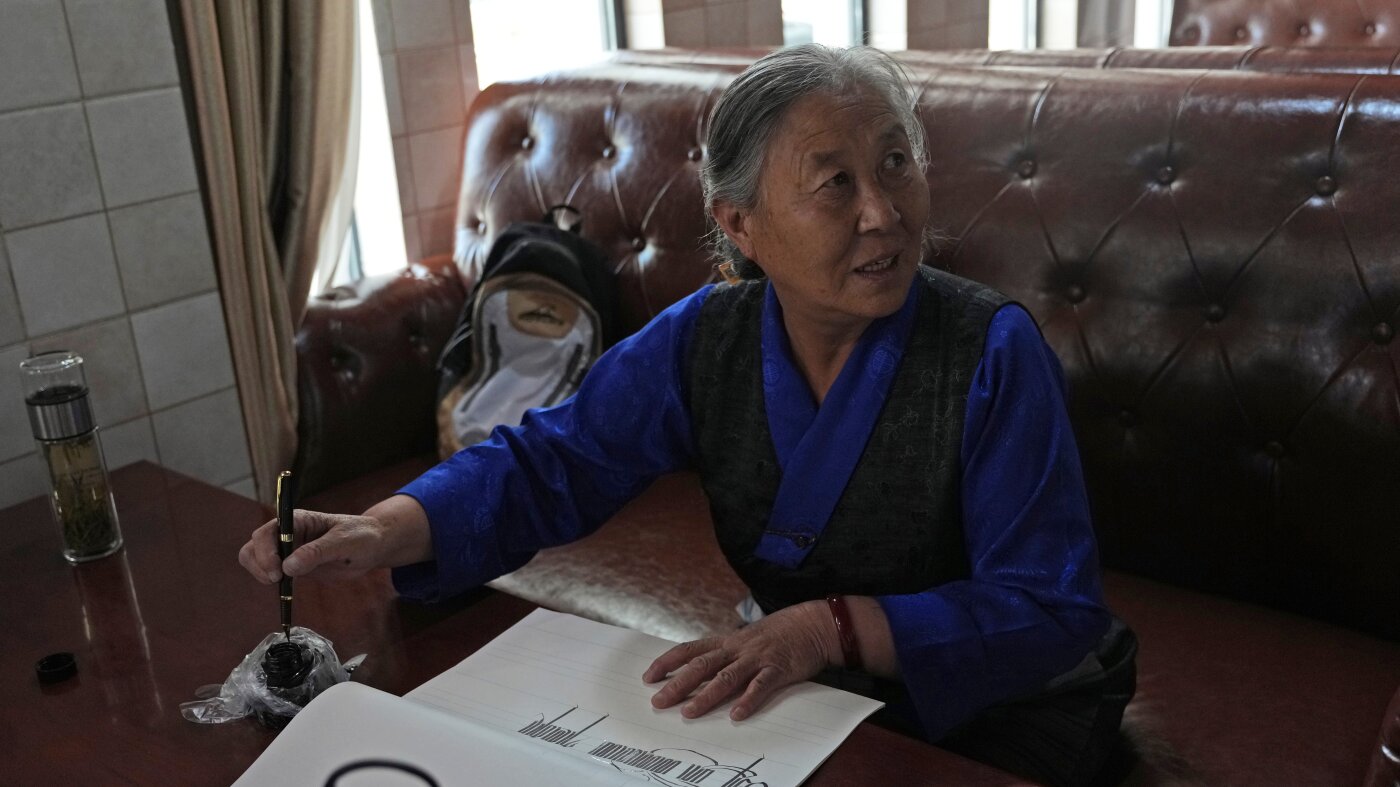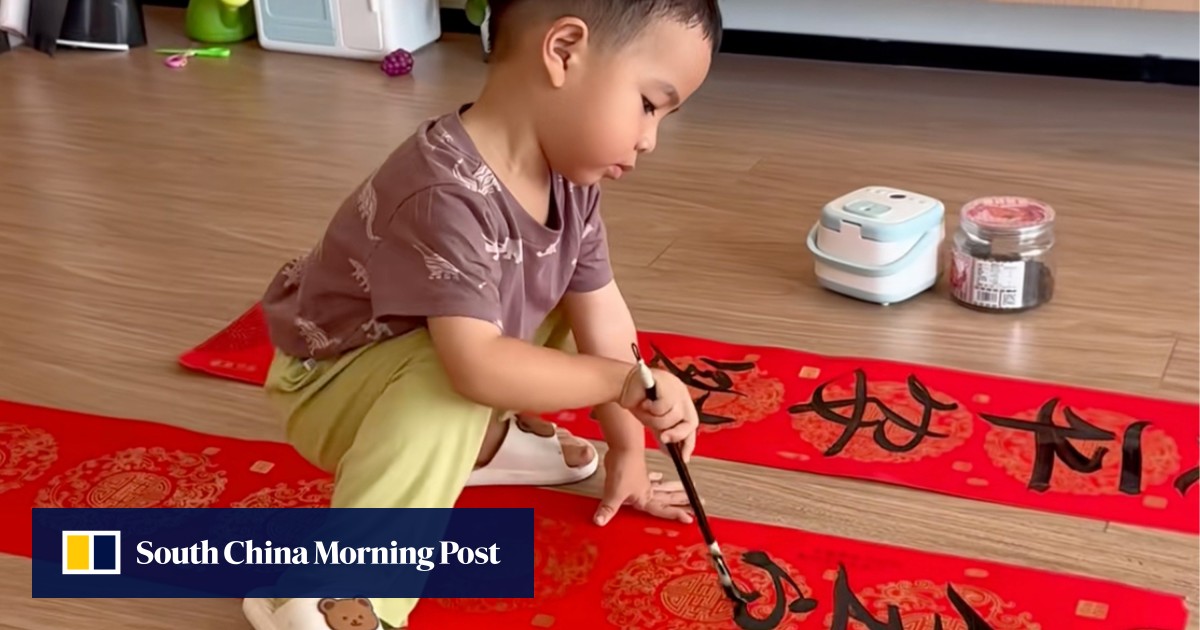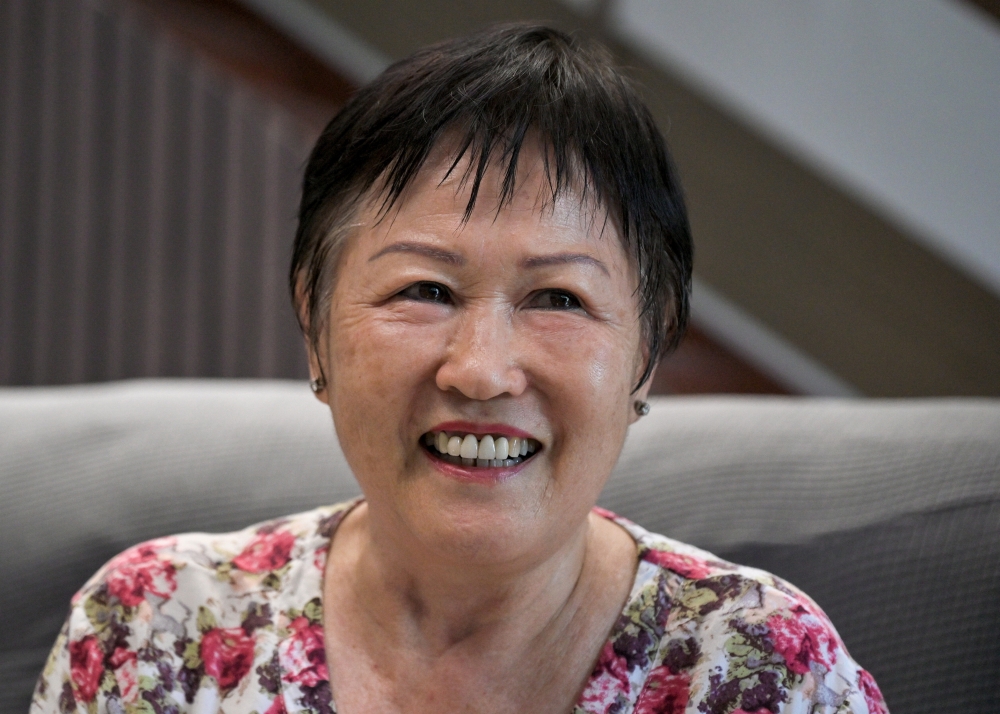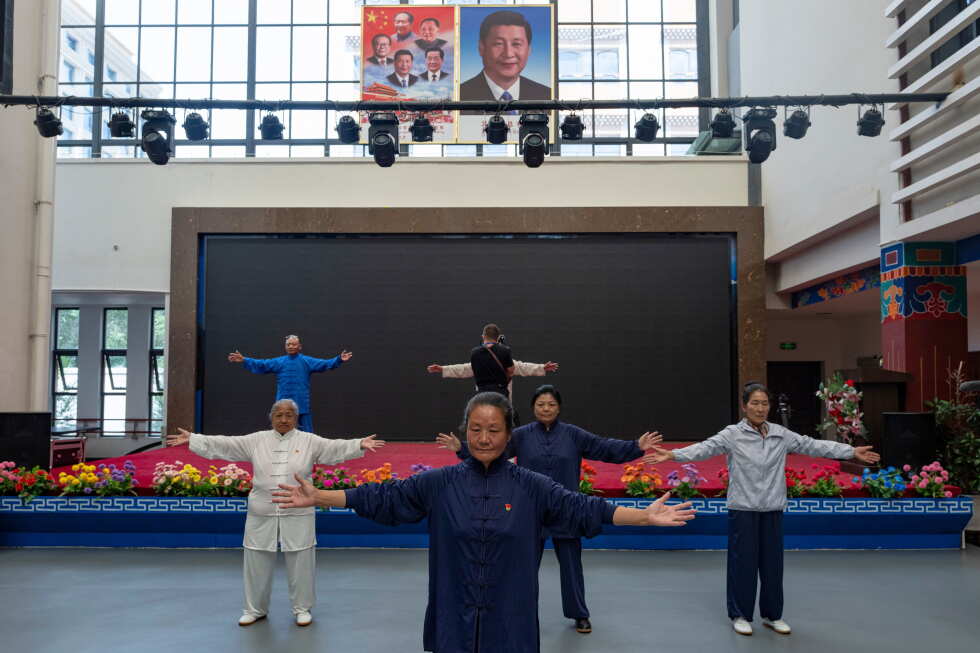
LHASA, Tibet (AP) — Kalsang Lhamo traces a series of vertical strokes, slow but firm, practicing Tibetan calligraphy. A 73-year-old retired nurse, she has spoken Tibetan all her life but never learned to write it. Now, in classes at a center for older adults, she immerses herself in the script. Lhamo also speaks and writes Chinese, which China mandated as its primary language for schools and government agencies in a sweeping new “ethnic unity” law implemented July 1. Under the new regulations, acts deemed to incite division among China’s 56 ethnic groups are prohibited, and schools, families and other institutions are expected to foster patriotism, national unity and a strong sense of community for the Chinese nation.
Kalsang Lhamo, a 73-year-old retired nurse, practices Tibetan calligraphy at the Chengguan District Day Care Center for the Elderly in western China’s Tibet autonomous region on July 20, 2026, during a government-organized visit for foreign journalists.(AP Photo/Ng Han Guan)
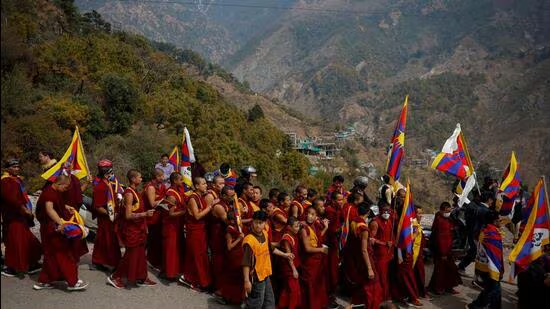
The law has been widely criticized as a way to further erode the rights of Tibetans and other minorities, and for the authority it gives Beijing to target activities it considers separatist, even outside China. The Chinese government has dismissed foreign criticism as “ideological bias.”