With more than 333,000 new cases every year, prostate cancer is the most frequently diagnosed cancer in the U.S., and by far the most common among men. It is also the least deadly: Only about 4% of prostate cancers end up being lethal, and the 5-year survival rate is about 99%.
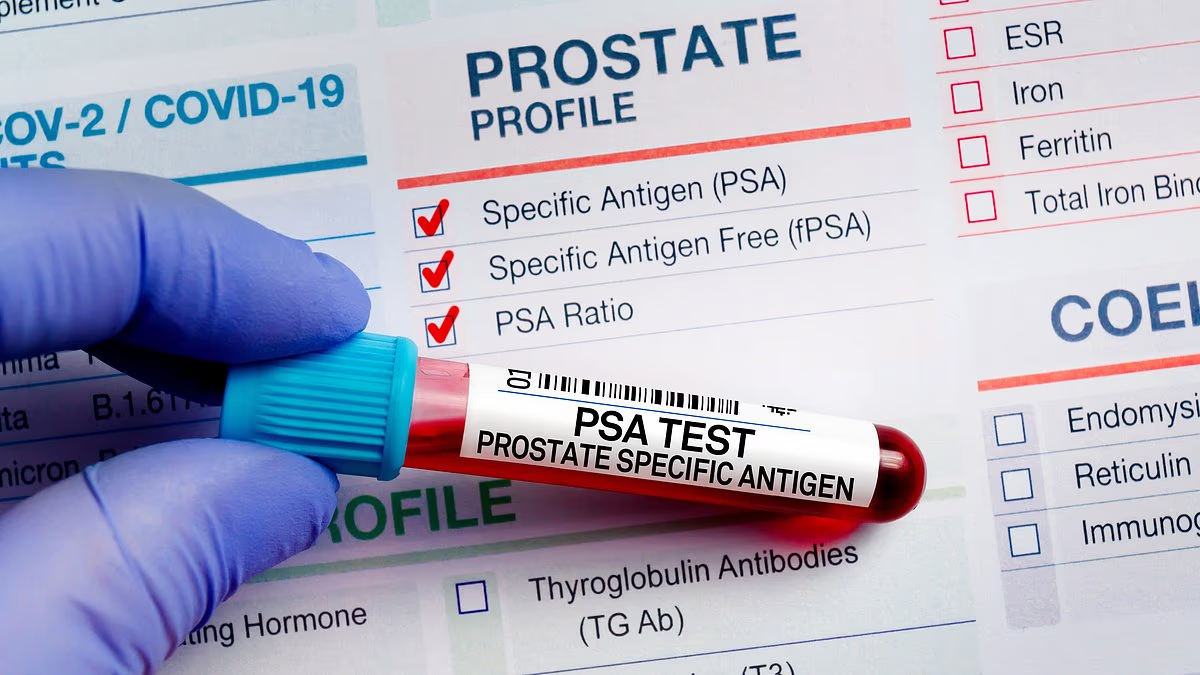
This paradox is in no small part due to the way it is diagnosed. A routine blood test checking for levels of a biomarker called prostate-specific antigen (PSA) is followed, if this protein is elevated, by a systematic biopsy to find cancerous tissue. This two-step process is effective at detecting cancer, even in its earliest stages. It may be too effective, in fact: Up to 70% of new prostate cancer diagnoses are low grade and in no need of treatment, as the risk of the disease turning deadly is negligible.
Yet as many as 50% or more of men with such clinically insignificant disease get treated in the U.S., according to data from the American Urological Association Quality Registry; there are even providers who treat essentially all patients with low-grade cancer.
A good number of prostate cancer experts think these low-grade lesions “shouldn’t even be called a cancer,” said Scott Eggener, a professor of urology at the University of California, Los Angeles. The ubiquity of prostate cancer, he and these other experts argue, is an overdiagnosis problem.