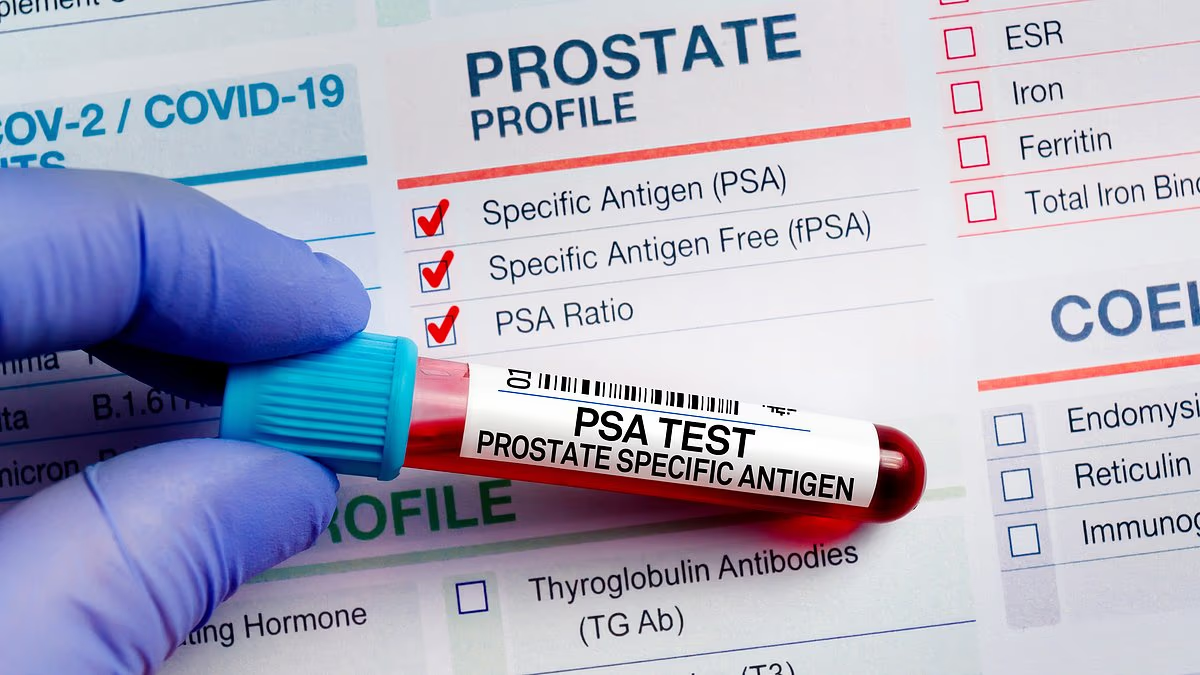
Experts are urging officials to rethink their decision on prostate cancer screening after a breakthrough MRI approach was shown to slash the need for invasive biopsies by half - while speeding up diagnoses.It comes just days after government advisors rejected calls for a nationwide prostate cancer screening programme - a move critics warned could condemn thousands of men to an avoidable death. Now campaigners say the decision should be revisited in light of new evidence.'This paper adds to a growing international consensus around the use of faster, simpler MRI scans that could make prostate cancer screening more practical and affordable,' David James, a spokesperson from Prostate Cancer Research, said. 'The Committee has said its prostate cancer model is a living model, and we believe this important new evidence should now be considered as part of that ongoing process.'Screening policy must continue to evolve alongside innovation and the evidence base. 'We urge the Committee to revisit how MRI is represented within their model to ensure it reflects expert consensus on faster, simpler MRI scans for screening populations.'World-leading experts behind the new recommendations say MRI testing could transform the diagnostic pathway, offering a safer, more accurate alternative to traditional testing. Last week the The UK National Screening Committee rejected calls for a nation-wide prostate cancer screening programme Under the proposed approach, men would be offered an MRI after receiving a positive PSA test, before any biopsy is considered - a step experts say would allow doctors to act on lower PSA levels and detect cancers earlier. 'We recommend that screening MRI should be used following a PSA test,' the experts behind the Prostate Imaging for Screening Magnetic Resonance Imaging (PRISM) recommendations said. Rather than screening all men once they reach a certain age, the panel recommended a more personalised approach, based on risk. Men at low-risk of the disease would be offered an MRI every four to five years, while those at higher risk - such as black men and those with a genetic predisposition - should be screened more frequently. Biopsies, which can be painful and lead to sexual problems, should only be carried out if MRI scans - read by highly trained doctors - flag clearly suspicious results. The panel said this stricter, more personalised approach could slash biopsies in half, while detecting roughly the same amount of cancers. Data suggests this could nearly double the accuracy of positive tests, significantly slashing rates of overdiagnosis. Led by urology specialist Nikhil Mayor from Imperial College London, the experts reviewed six studies including more than 1,900 participants.
International experts back new form of prostate cancer screening
Experts are urging officials to rethink their decision on prostate cancer screening, after an MRI approach was shown to slash the need for invasive biopsies by half while speeding up diagnoses.
847 words~4 min read