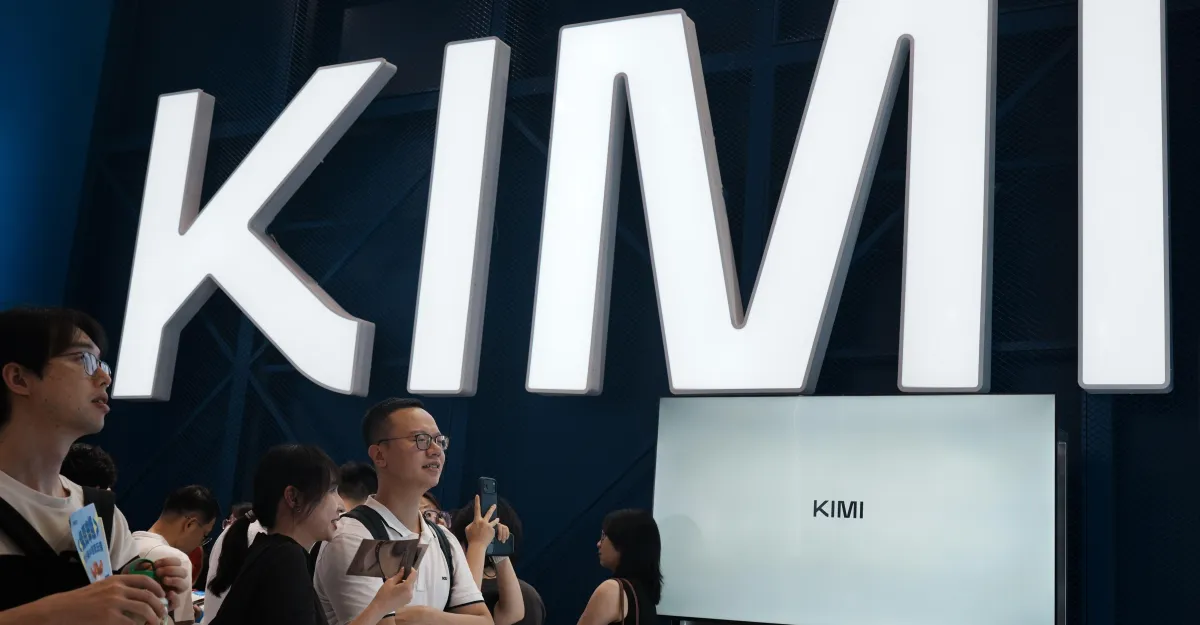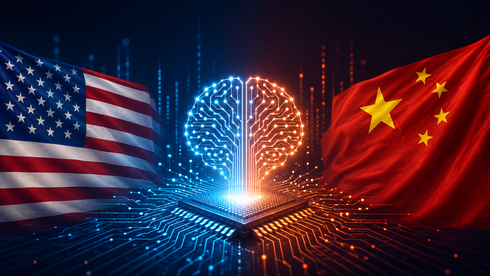
Ever since China’s Moonshot AI launched Kimi K3, an open-source AI model, experts have questioned whether American paid proprietary models could face serious competition. While an optimistic view suggests that Chinese models could break the American monopoly, tougher competition may instead push American firms to secure larger financial resources to fund increasingly expensive AI infrastructure and research. Over time, this could lead to the emergence of what many futurists call 'Big Tech'.While firms in the USA initially enjoyed a de facto monopoly, China’s cheap open-source models (i.e., models whose code and weights are publicly available) have challenged their dominance. Through lower-cost AI inference, intense domestic competition, cheap inputs and state support, China has been able to offer models that deliver near-benchmark performance at considerably lower rates.For businesses, open-source models are a strategic alternative to paid proprietary models as these models can be customized and run on local servers, while also allowing greater data privacy and control.Also read | India's data centre boom may drive 195 mn sq ft housing demandConsequently, Chinese models are seeing rapid adoption. According to Hugging Face's State of Open-Source 2026 report, Chinese models accounted for 41% of model downloads last year, overtaking the US.While one may expect Chinese firms to reap large profits through this rapid adoption, the real competitive advantage for these firms is not the model itself, but the accompanying infrastructure and services that are offered to customers.From the point of view of a foundation model alone, locally hosted open-source models are essentially free. The actual costs arise from renting compute infrastructure and training the model. This means that for Chinese AI firms, the actual revenue comes from AI managed services & cloud infrastructure.For instance, Alibaba uses its Qwen AI model to attract customers towards Alibaba's cloud computing platform. In this sense, China is not merely expanding its market share via cheap prices, but it is aspiring to provide an entire infrastructure and service ecosystem within which AI can be used.Also read | India enters the story as China begins to rewrite the chips playbookWhile open-source models and low operating costs are advantages, these hinge critically on how rapidly China can expand its AI computing infrastructure. Unless compute capacity can increase in tandem with demand, compute prices could rise.Fortunately for China, the availability of sparsely populated land in its western regions, together with its large power generation capacity, may reduce some of the constraints on expanding compute infrastructure. Although the US has imposed semiconductor export restrictions on China, and the country still relies on foreign suppliers for parts of the semiconductor supply chain, it is rapidly expanding domestic capacity, as evidenced by the recent launch of mass production of home-grown DUV chipmaking machines, a key tool used to manufacture semiconductors. However, it remains uncertain how quickly this will translate into advanced chip production.Given this context, Western firms may soon find it hard to justify their premiums, especially for tasks that do not require state-of-the-art technology. While these firms offer broader software and cloud ecosystem support, they would still need to hold on to two key avenues to sustain their substantial market share.The first would be data centre expansion to ensure inference costs remain competitive. However, pushing model capabilities could become the most critical area. Models like Fable and Sol still hold top performance on industry benchmarks, but with Chinese models working on narrowing the gap by constantly chasing their tail, algorithmic superiority would ultimately be consequential. The financial resources required for these endeavours are, unfortunately, immense.Meeting these growing capital requirements helps explain why AI firms are preparing to go public. Reports suggest that OpenAI and Anthropic confidentially filed draft IPO registration statements with the U.S. SEC in June 2026.An even stronger example is Elon Musk's SpaceX, which made a historic Wall Street debut through a funding round, with space-based AI data centres reportedly among the potential uses of the capital.The kind of financial power that these companies are eyeing is not trivial. SpaceX alone raised a record $86 billion and the fact that Musk exercises 85% voting power on a roughly $2 trillion valuation company makes one question the degree of regulatory oversight that policymakers are ready to allow.Even without going public, AI firms are already entering into partnerships with tech giants who can lease them computing power. OpenAI has reportedly partnered with Cerebras, Oracle and AWS, while Anthropic is partnering with Coreweave, Microsoft and NVIDIA.Such partnerships can strengthen network effects by tying together AI models, cloud infrastructure and semiconductor supply. This may ultimately result in entities that are wealthier than what regulators would want.These possibilities were always conceivable. China’s presence has only intensified these dynamics. While one may hope policymakers step in to break down these oligarchies, recent steps undertaken by the US government have shown that the country is treating AI as a geopolitical asset and not just another technology.If China challenges the USA’s hegemony over AI, policymakers might tolerate greater market concentration if it is viewed as strengthening America's geopolitical interests.The consequences of such market concentration are well documented. However, what is more important is the kind of social and political power that these firms can eventually acquire.The emergence of increasingly dominant AI conglomerates could make effective regulation and governance increasingly difficult because a handful of firms would acquire substantial economic, political, and social influence.This would also have international spillovers. For nations lacking technological sovereignty, decisions over how AI is developed, governed, regulated, and priced would increasingly rest with a few foreign firms. Greater financial resources could enable these companies to dominate the foundation model layer and expand into AI applications, increasing competition for countries like India, which so far have focused on AI applications and services rather than sovereign AI. Consequently, reliance on foreign AI systems may increase.Predicting the future is impossible, but recent developments suggest AI firms will likely continue seeking funds. As fears of technological dependence grow, the question is whether dependent nations are ready to respond.Amit Kapoor is chair & Mohammad Saad is researcher at Institute for Competitiveness.(Disclaimer: The opinions expressed in this column are that of the writer. The facts and opinions expressed here do not reflect the views of www.economictimes.com.)
The AI competition paradox
China's open-source AI models are challenging US dominance, driving intense competition. Chinese firms are gaining market share through lower-cost AI inference and state support. The race for AI supremacy is intensifying, with firms seeking massive funding rounds.
TL;DRAI
Chinese open-source models reached 41% of AI downloads, forcing US firms to consolidate via IPOs and cloud-infrastructure partnerships. Market concentration into cloud-integrated conglomerates will reduce vendor choice and deepen enterprise AI stack dependencies.
1,025 words~5 min read