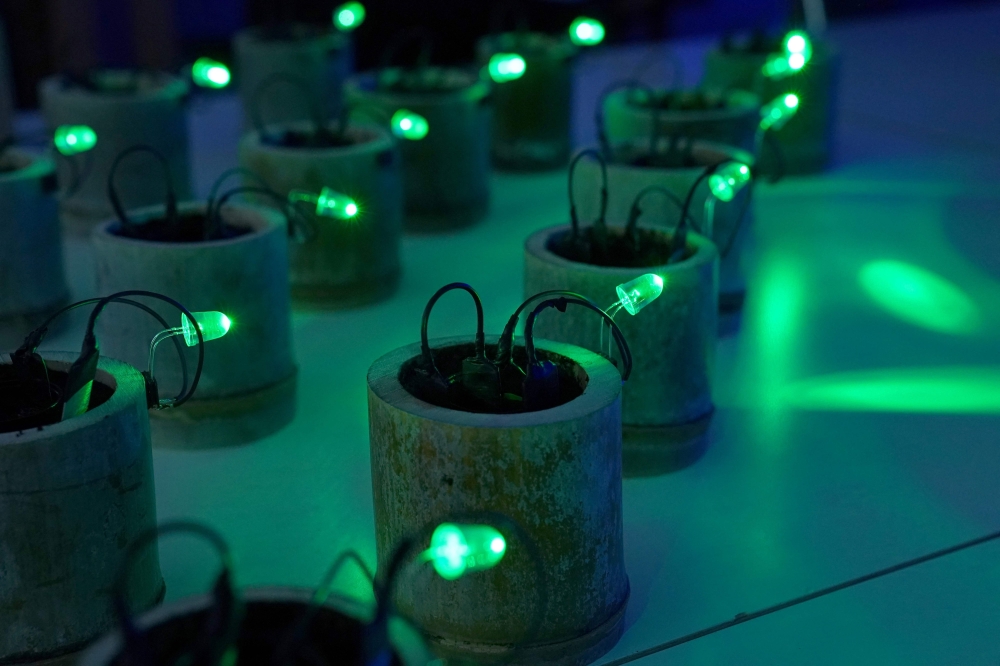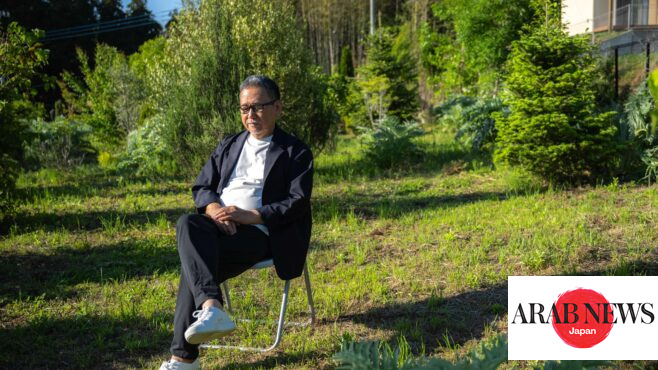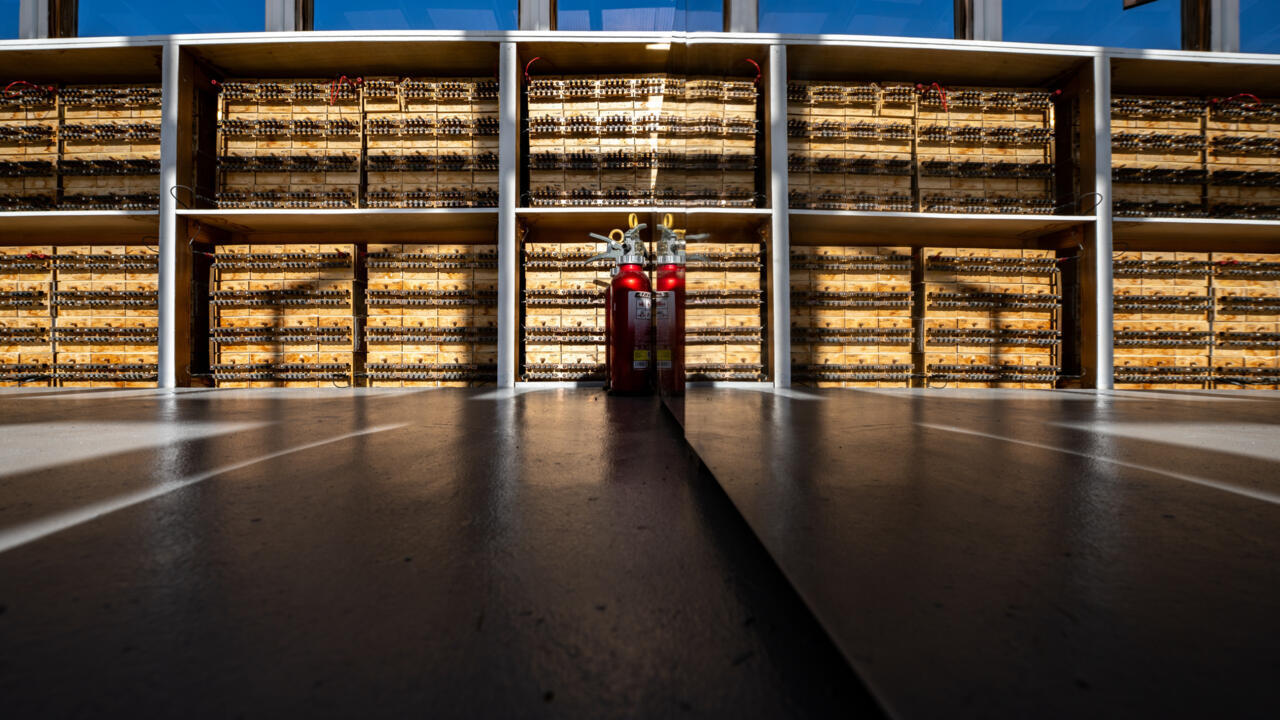
Designer Satoshi Nakagawa has long battled sceptics, but believes that the technology powering the 800 LEDs has a role to play in solving humanity's energy conundrum.And, failing that, it at least looks nice -- and gets people thinking."As the population moves toward 10 billion, energy issues will become just as critical as food issues," said Nakagawa, chief executive of design firm Tripod Design."Even if it's just a small contribution, I want people to be able to produce their own electricity using the soil around them," the Japanese product designer and engineer told AFP.The 72-year-old said he has pioneered "micropower collection (MPC)" -- a way to source tiny dribbles of electrical current from everything from wine to French bread.His system uses the same mechanism as the voltaic pile, the world's first electrical battery giving a continuous current invented in 1799 by Alessandro Volta.It involves inserting electrodes made of materials such as zinc and copper into substances that contain moisture or ions, and then collecting the small but steady electrical currents.Within eyeshot of the glass-covered "Ku-An", which he has rigged up in the remote town of Hitachi-ota, is "Lu-An", which opened last year.
Tiny light, big dream: Harvesting power from soil in Japan
Glinting in the night, halfway up a hill in Japan, the greenhouse-like "Ku-An" test lab is lit by electricity harnessed from 1,500 wooden boxes of soil and compost.
496 words~2 min read