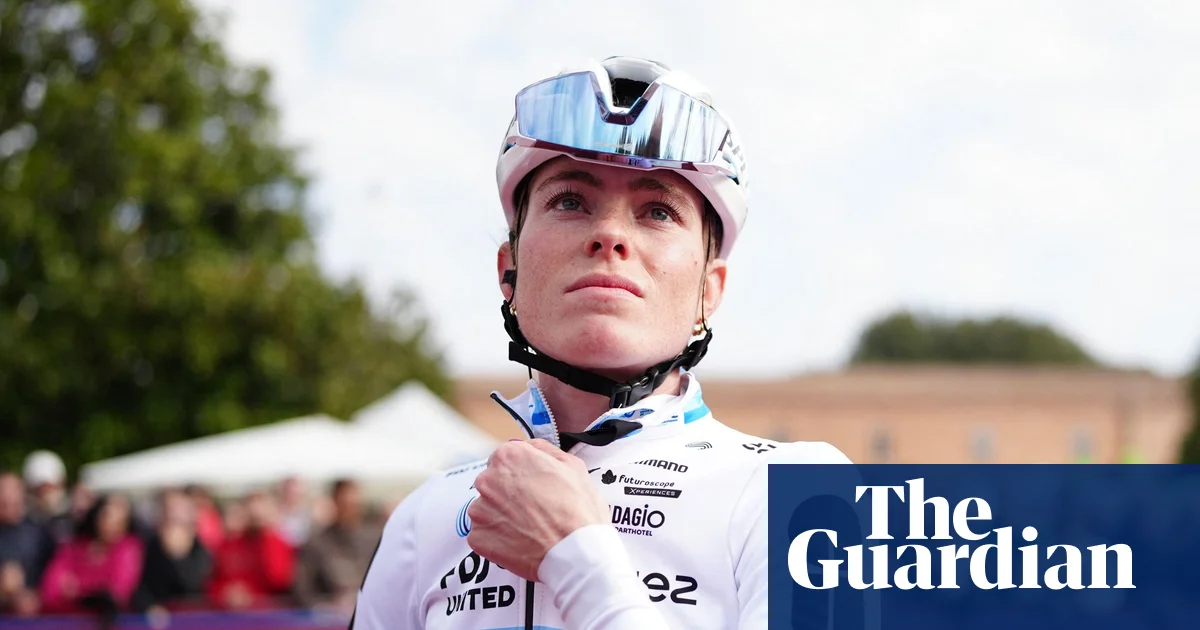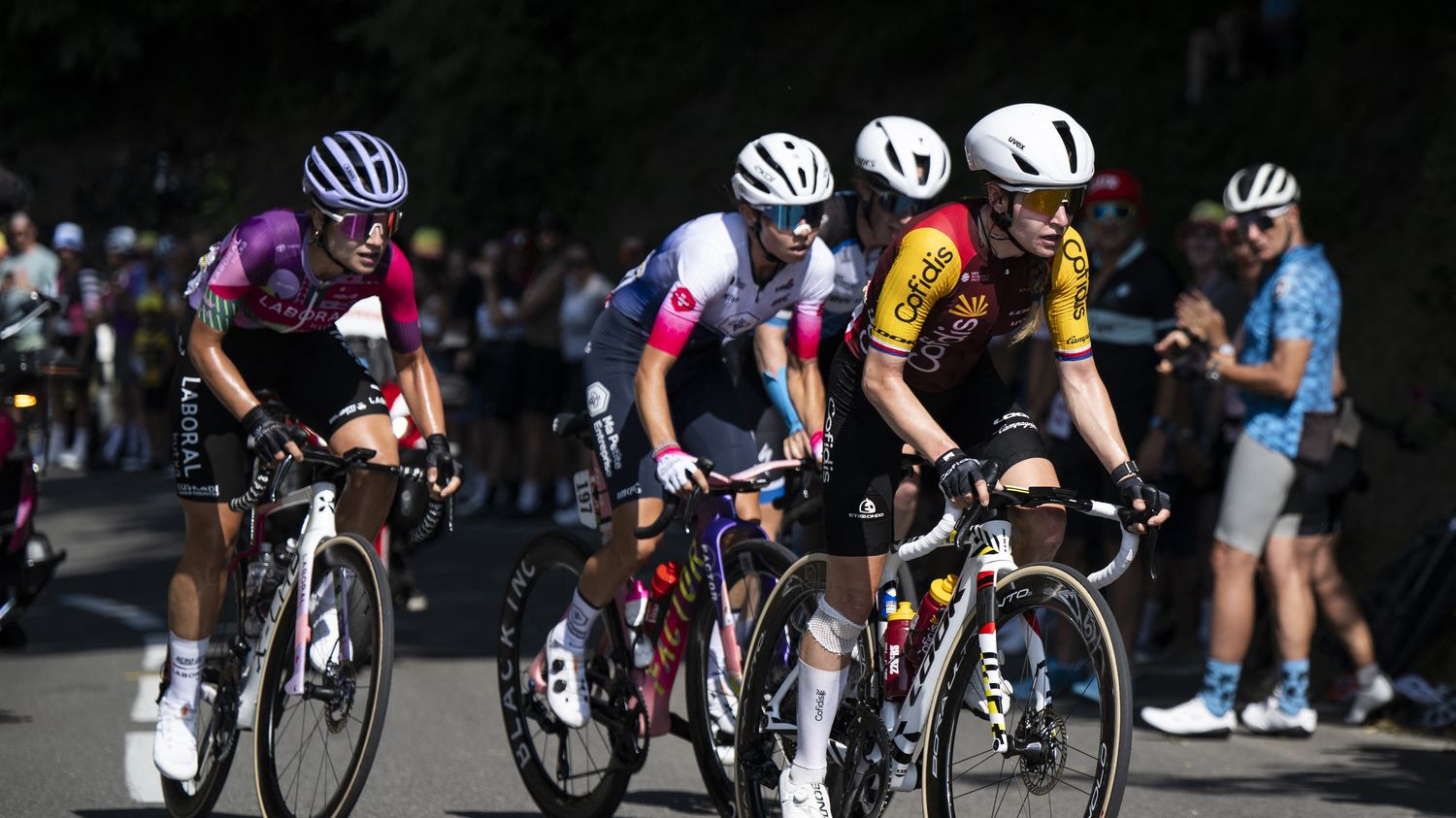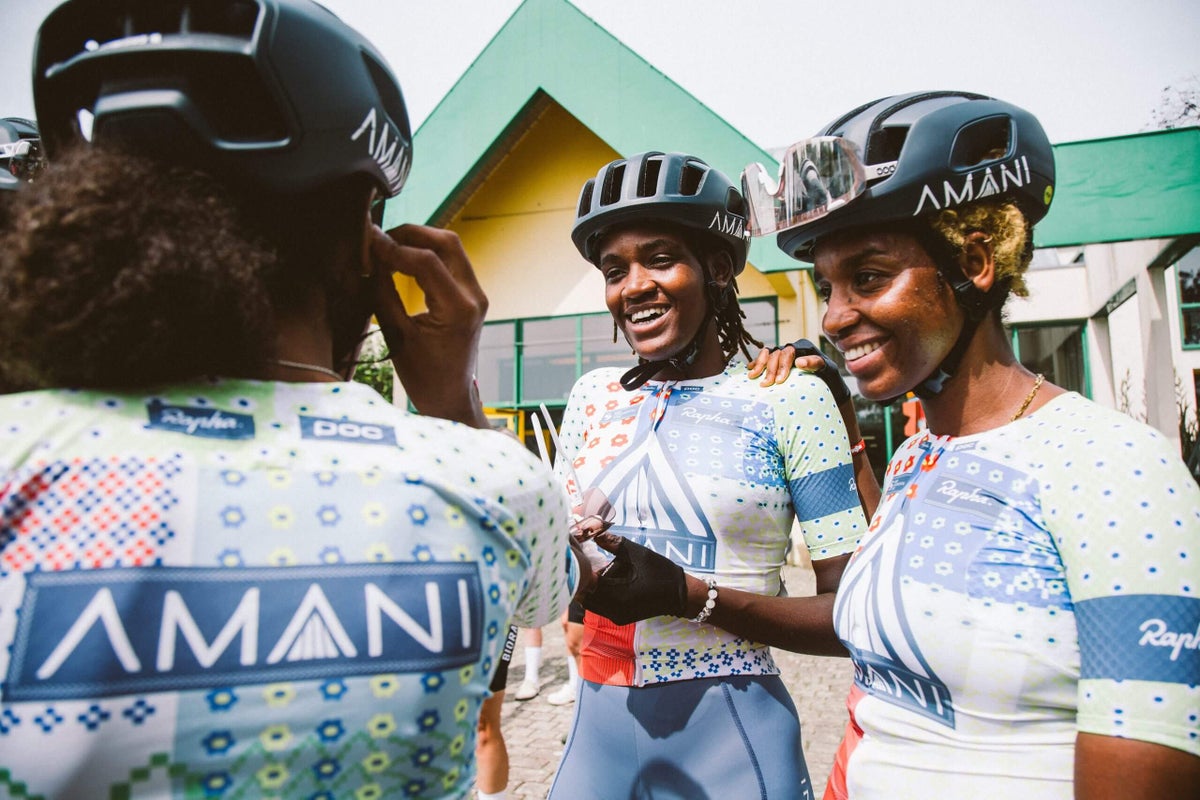
On the start line of May’s Classique Morbihan, Haftu Eyerusalem Reda shook with nerves.Team Amani’s first road race in Europe, at this one-day race in Brittany, France, was a chance to see how she and her teammates compared to some of the world’s best. It was the next step in the dream.Eyeru, as she is known to everyone, tried again and again to move up from the back of the bunch into the belly of the beast, only to be churned backwards in the washing-machine cycle of moving cyclists.She kept fighting because how could she and her East African team of riders make it to the Tour de France Femmes in 2028, their collective goal, by staying in the rear part of the peloton?The 27-year-old knows the meaning of perseverance and has experienced harsher things than a few elbows in the pack. By the end of their European racing block, she was battling with the best.Haftu Eyerusalem Reda competing in Classique Morbihan, a one-day race held in Brittany, France. (Wango Alfred)She is one of three riders in Amani’s 12-strong women’s road team who come from Tigray, a north Ethiopian region on the border with Eritrea. It is a high-altitude hotbed of cycling passion, with its own structure of races and cycling teams.However, after civil war hit Ethiopia in 2020, it became the focal point of a devastating, violent conflict. Mass rape was used as a weapon. A 2024 New York Times report said 600,000 people were killed in the conflict.Power, mobile network, internet and electricity were often cut off. For three years, Eyeru raised her child and did not ride her bike.“There are things that come through cycling,” Kidus Grmay, assistant coach and fellow Tigray native, says. “A dream, hope, everything. And in wartime, I was losing them.“Not having hope or a dream was so hard. I didn’t know what I’d do the next day. You are not even sure if you’ll be alive tomorrow. It was a tough time, just survival.”Geopolitically, the region remains unstable. Both Grmay and Eyeru have spent the last several months away from their homes, as they tell The Athletic on a video call from a rented house 1,000 kilometers away in the Ethiopian capital of Addis Ababa.For many riders, Team Amani is a path out, their painful experiences inconceivable to their rivals. According to the team’s co-founder Mikel Delagrange, there is a Ugandan rider who grew up in an orphanage and Rwandan riders had parents killed in the 1994 genocide.“This is more than a competition, it’s more than just riding bikes. It’s a chance to dramatically change not only their lives but the lives of everyone around them,” Delagrange says, speaking over a video call from his home in Switzerland.“It’s not a sad story, it’s a story of overcoming. It’s just there are a sh**load of things we have to overcome that the people we line up against have no idea about.”Delagrange is probably as unlikely a cycling team head honcho as you’ll ever meet.A criminal lawyer by day, he has worked at the International Criminal Court in The Hague and has a Fidel Castro ‘muerte al invasor’ poster on his wall. In his white-rimmed glasses, he bears a resemblance to a younger Robert Downey Jr.While eloquent and evangelical about the squad, the man from Miami says having a project in Africa was “the last thing” he wanted. He started Team Amani – which means “peace” in Swahili – with Kenyan cyclist Suleiman Kangangi in 2020.“Sule was a unicorn, in a sense, because not only was he really talented on the bike, but he was able to articulate very clearly the things that were holding him back,” Delagrange says.“He was able to identify the glass ceiling and why it sat there, and he also had ideas about how to chip away at it.”The Amani project is about providing access to top-flight racing opportunities for African cyclists, offering a long-term answer to their perennial under-representation in the sport.Delagrange was the resource marshaller, taking the proverbial passenger seat until Kangangi’s death at a Vermont gravel race in August 2022. He has stepped up after the “big shock” to him and the program.In recent years, the team’s focus has evolved from gravel races, including events such as Unbound, to pursuing road racing success, with a UCI Continental (third-tier) men’s team also making its debut in 2025. However, it is their women’s squad who have their sights set on road cycling’s biggest race.Team Amani’s women’s team have their sights set on road cycling’s biggest race. (Wango Alfred)When it comes to fighting for opportunities for African cycling, modern cycling fans will likely think back to MTN-Qhubeka.Against the odds, as a wildcard team, their German rider Gerald Ciolek won the 2013 Milan-Sanremo. Two years later, on the team’s Tour de France debut, Eritrean racer Daniel Teklehaimanot spent four stages in the polka-dot King of the Mountains jersey. He was one of 10 Africans to make their Tour debut on the team.
Team Amani’s Tour de France Femmes dream: Overcoming tragedy and needing to raise $1m
Team Amani’s aim is to be competing at the Tour de France Femmes, women's cycling's biggest road race, in 2028.
2,146 words~10 min read