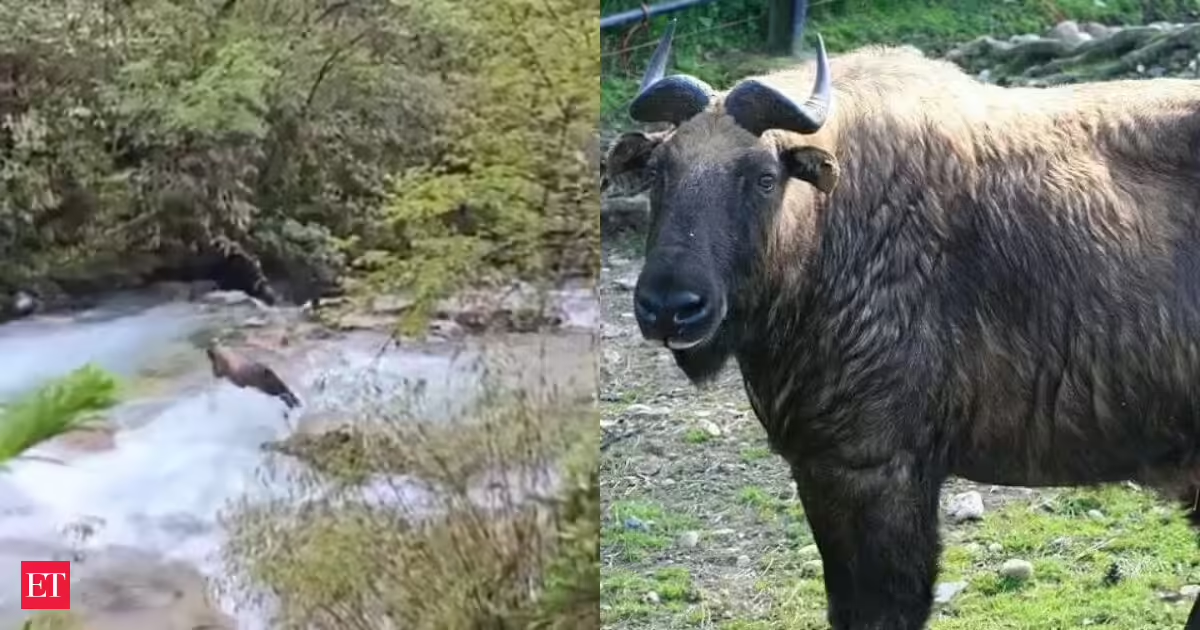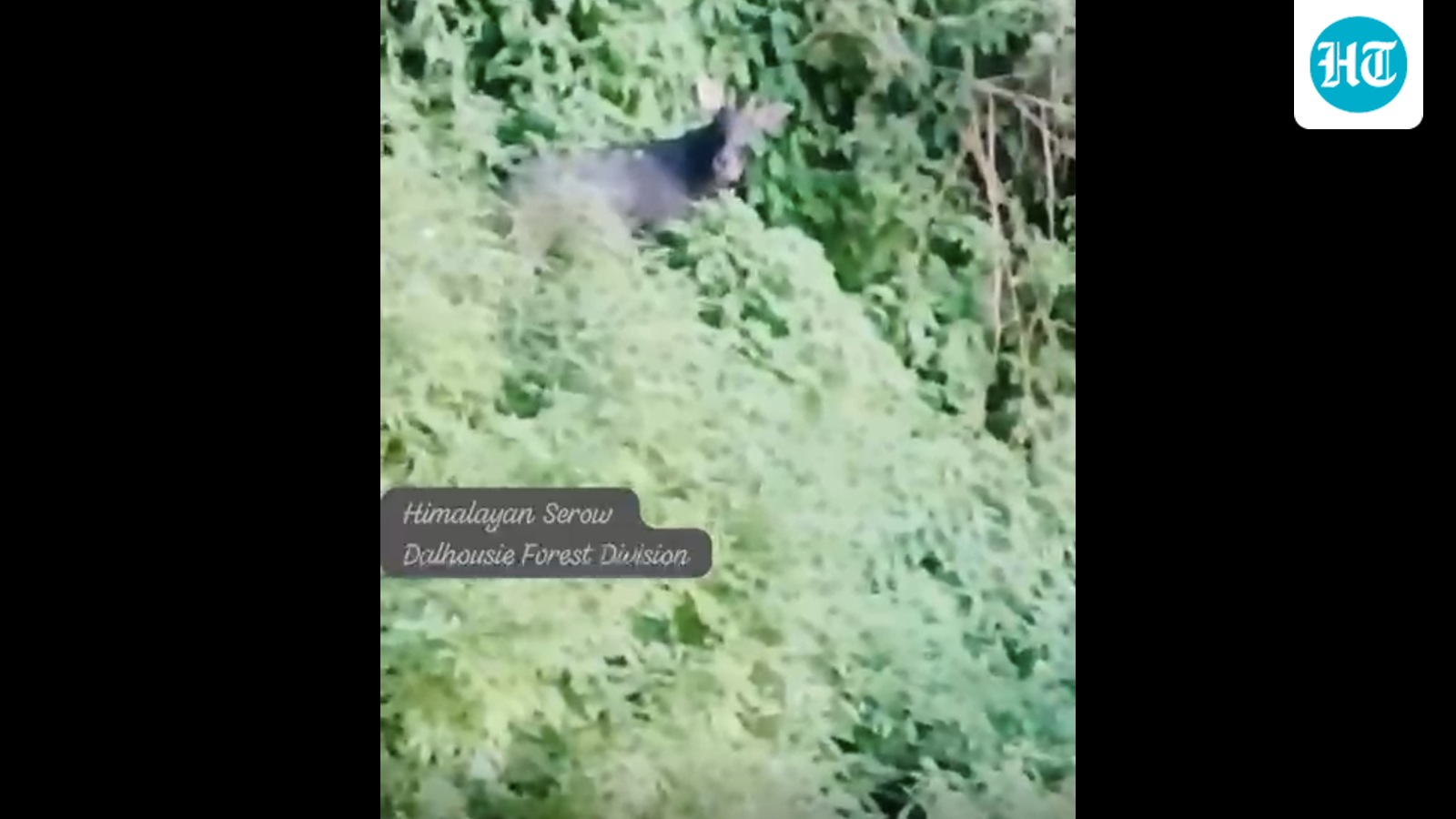
For the first time, the elusive Himalayan Serow (Capricornis thar) has been recorded on camera in the western end of the Dhauladhar range in Dalhousie, Chamba district, Himachal, officials said on Tuesday.The Himalayan Serow recorded in camera. (Screenshot)The rare animal was recorded on video in the Dalhousie catchment forests adjoining the Kalatop-Khajjiar Wildlife Sanctuary, during a routine forest patrol by field staff on Sunday. Officials said the animal was earlier believed to be extinct in the high-altitude forests at the western end of the Dhauladhar range. “The video provides the first confirmed visual record of the animal in the region. Though locals spoke about its presence in the Kalatop Khajjiar wildlife sanctuary and adjoining areas, there was no photographic evidence,” said divisional forest officer (DFO), Dalhousie, Kuldip Singh Jamwal.The Himalayan Serow is classified as Vulnerable on the International Union for Conservation of Nature (IUCN) Red List due to ongoing population declines driven by habitat loss, fragmentation, and hunting. It is also the state animal of Mizoram.Forest officials described the discovery as an important addition to the region’s faunal inventory, saying it highlights the ecological richness of forests under the Dalhousie Forest Division. The Himalayan Serow is a secretive, forest-dwelling mountain ungulate inhabiting steep, rugged terrain across the Himalayas. Owing to its solitary behaviour, dense habitat preference, and naturally low detectability, confirmed visual records remain relatively uncommon.Jamwal said the video documentation of the Himalayan Serow from the Dalhousie catchment area is a significant milestone for wildlife conservation in the region. This record highlights the rich biodiversity of the forests under the Dalhousie Forest Division and reinforces the need for continued scientific monitoring and habitat protection. “Such findings strengthen our understanding of wildlife distribution in the Western Himalaya and will support future conservation and management initiatives. The Forest Department remains committed to conserving these ecologically important landscapes through research, monitoring, and community participation,” Jamwal said.
Himalayan Serow makes camera debut in Dalhousie
The Himalayan Serow is classified as Vulnerable on the International Union for Conservation of Nature (IUCN) Red List due to ongoing population declines driven by habitat loss, fragmentation, and hunting. It is also the state animal of Mizoram
313 words~1 min read