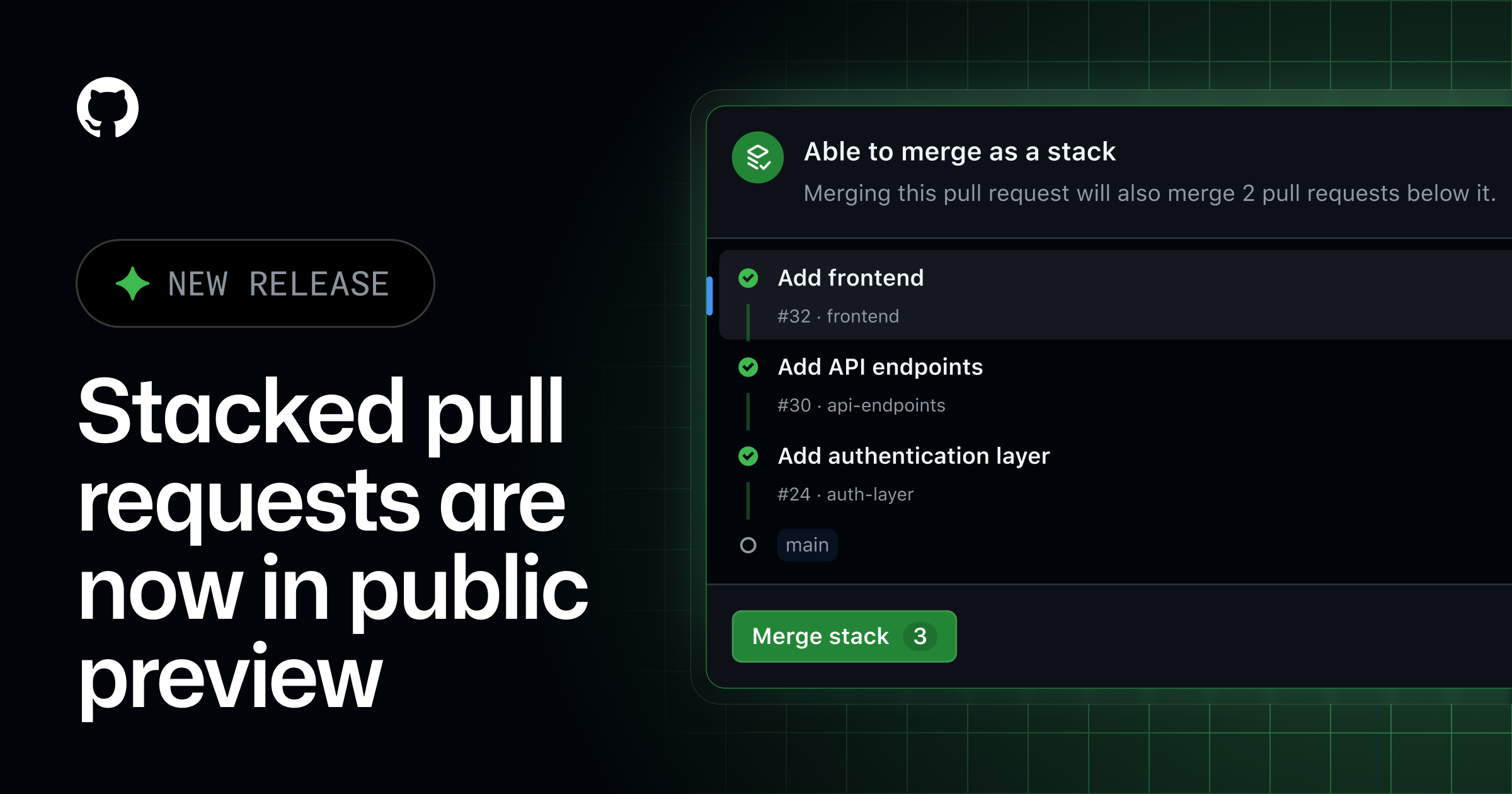
GitHub officially launched the public preview of stacked pull requests on July 30, providing a new way for software engineers to manage complex code updates. This feature enables developers to break down massive, monolithic changes into a sequential chain of smaller, dependent pull requests for better review efficiency.
Improving Code Review Workflows through Stacking
The introduction of stacked pull requests addresses a long-standing challenge in the software development lifecycle. When developers work on expansive features, they often produce a single, massive pull request that is difficult for peers to review. These large blocks of code frequently lead to oversight, fatigue, and delayed deployment cycles. By utilizing a stacking methodology, engineers can present their work as an ordered series of focused layers.
Each layer in a stack represents a specific, logical portion of the overall change. This structure allows reviewers to digest small increments of code rather than thousands of lines at once. GitHub designed this system to ensure that every individual piece of the stack maintains the integrity of the project. This approach prevents the common problem of splitting work across disconnected branches that require constant, manual rebasing to stay synchronized with the main codebase.