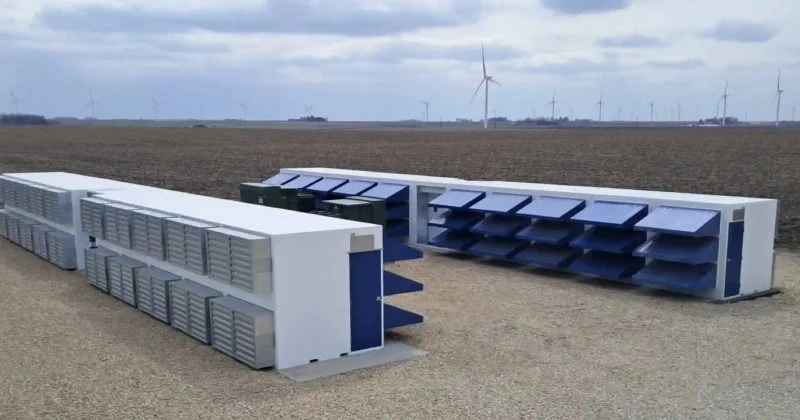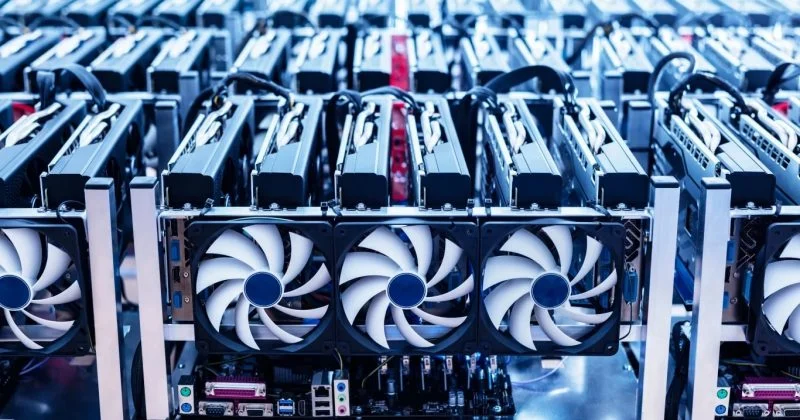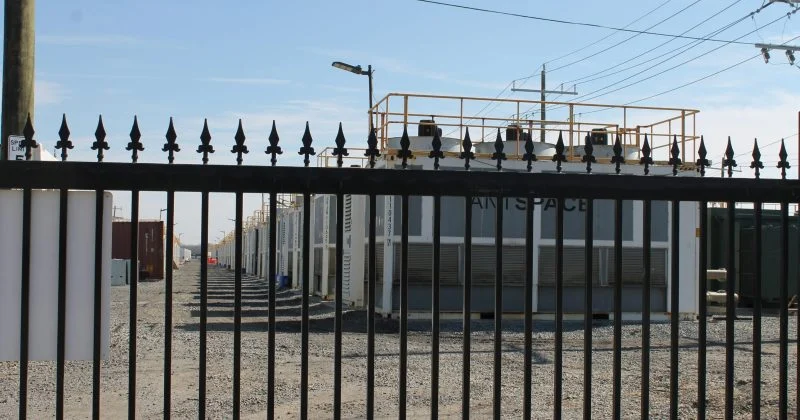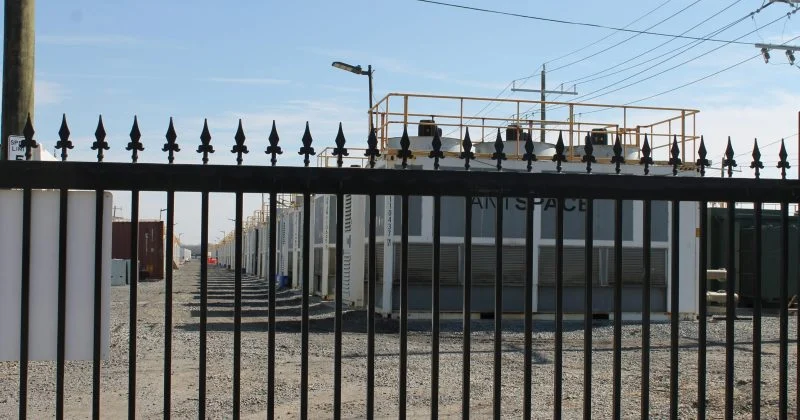
The AI boom has created an unlikely winner: the former bitcoin miner. For years bitcoin-mining companies were valued on hash rate, power costs and the price of bitcoin. In 2026 some of them are being revalued for a different reason. They control the thing AI companies now need most: large amounts of electricity connected to usable sites. Iren is the clearest example. The company built its original business by finding cheap, abundant power in places such as British Columbia and west Texas, then using that electricity to run bitcoin-mining machines. That looked like a crypto infrastructure story. It now looks like an AI infrastructure option. As hyperscalers and frontier labs race to secure data centre capacity, power has become the bottleneck. Graphics processing units (GPUs) matter, but they do not run without grid connections, cooling, land, permits and facilities. A company that already controls powered sites can move faster than a rival waiting years in an interconnection queue. That is why Iren’s pivot has attracted so much attention. In November the company signed a five-year contract with Microsoft worth about $9.7bn to provide access to Nvidia GB300 GPU capacity at its Childress, Texas, campus. In May it signed another five-year AI cloud deal with Nvidia worth about $3.4bn. That agreement included a warrant allowing Nvidia to buy up to 30-million Iren shares at $70 each, subject to regulatory approval. Then came the credit market’s endorsement. In June, Iren closed a $3.65bn GPU financing facility with investment-grade ratings from Fitch and DBRS. Combined with Microsoft’s prepayment, the financing covered most of the GPU capital spending tied to the Microsoft contract. That is the new collateral trade. Future AI cloud revenue, backed by a creditworthy customer and expensive GPUs, can be used to raise debt on attractive terms. For a company that began as a bitcoin miner, it is a striking transformation. But investors should separate the contract from the cash. At the time of Iren’s most recent quarterly results, the company reported about $3.1bn in contracted annualised recurring revenue. Its actual AI Cloud services revenue for the quarter was $33.6m. Annualised, that is roughly $134m, a fraction of the contracted figure. That does not mean the contracts are not real. Microsoft and Nvidia are not casual counterparties. It means the business is still in the execution phase. Data centres must be completed. GPUs must arrive. Power and cooling must work. Customers must accept the capacity. Only then does a contracted figure become recurring revenue. Iren has tried to reduce another obvious risk: customer concentration. The company has announced new multi-year contracts with a broader group of AI customers, including Nvidia, Perplexity, Figure AI, Together AI, Fluidstack, Fireworks AI, Fal AI and Hume AI. That reduces dependence on Microsoft, but it does not remove the construction challenge. The risk shifts from one large customer to many facilities needing to come online on schedule. Iren is not alone. TeraWulf, another former bitcoin miner, has also moved into AI infrastructure, including a long-term lease with Anthropic. The same pattern is visible across the sector: power-rich miners, AI customers, large contracted revenue claims, debt financing and a market eager to price future capacity before it exists. The danger is circularity. Chip suppliers can become customers. Customers can become competitors. Hyperscalers may rent from neoclouds today and resell their own excess compute tomorrow. The AI infrastructure boom is real. So is the demand for power. But the lesson from Iren is simple and important. A contract is not cash. The winners will be the companies that convert electricity, GPUs and promises into durable revenue before financing costs, delays and competition catch up.• Muchena is founder of Proudly Associated and author of ‘Artificial Intelligence Applied’ and ‘Tokenized Trillions’.
HEATH MUCHENA | Why AI companies suddenly want bitcoin miners
Iren pivots from mining to data centres because it has a scarce asset: lots of electricity connected to usable sites
TL;DRAI
Iren, ex bitcoin miner, signed $12.7bn contracts with Microsoft and Nvidia for GPU capacity, but revenue is $134m annualized versus $3.1bn ARR. Power is AI's infrastructure bottleneck; the risk: these contracts won't convert to cash until sites are fully operational.
621 words~3 min read