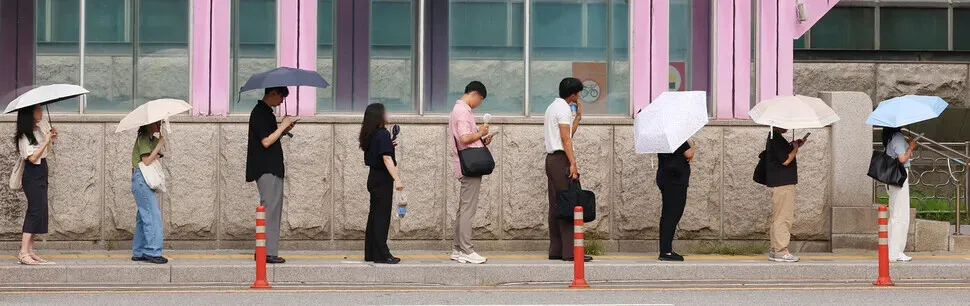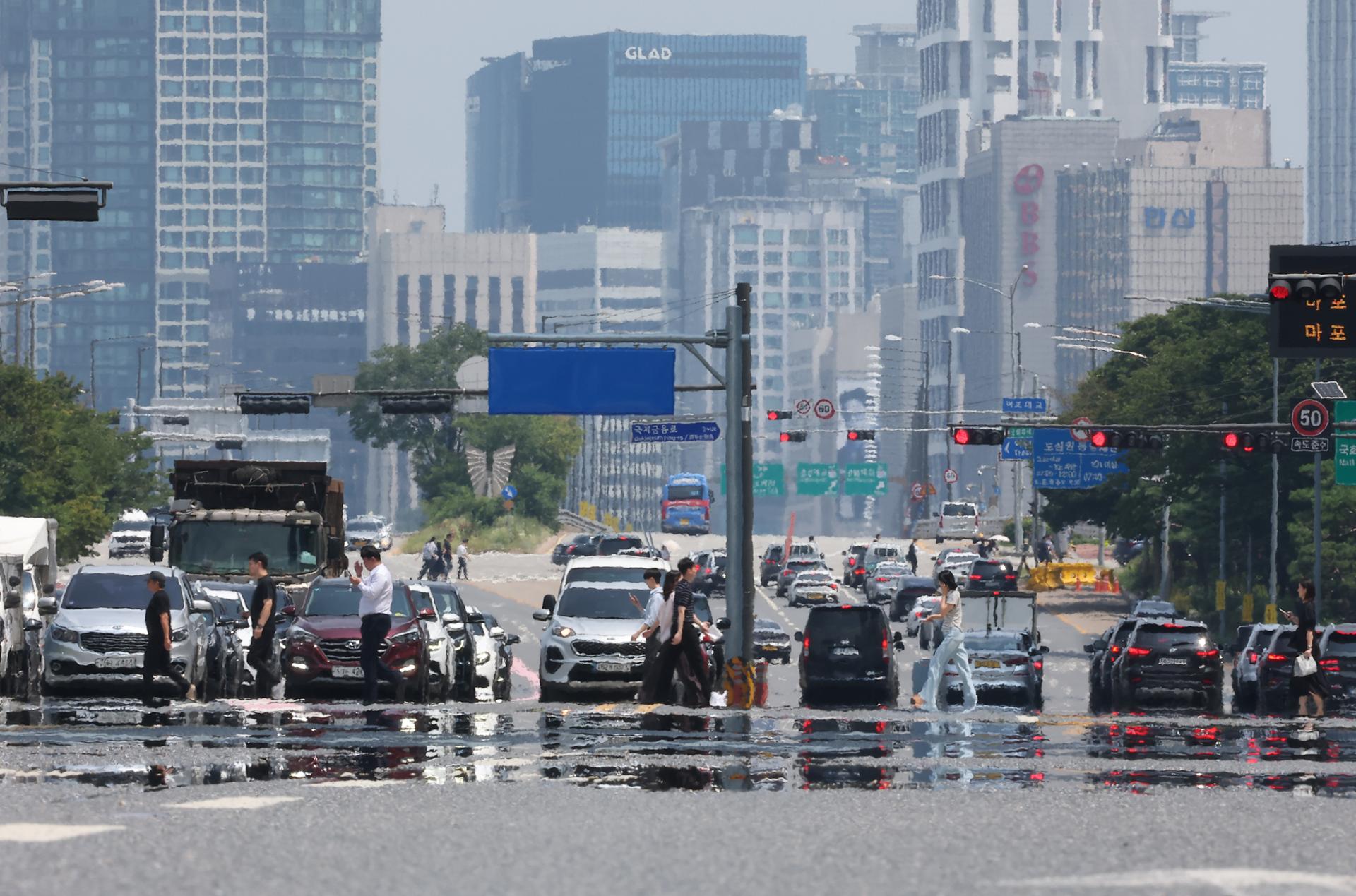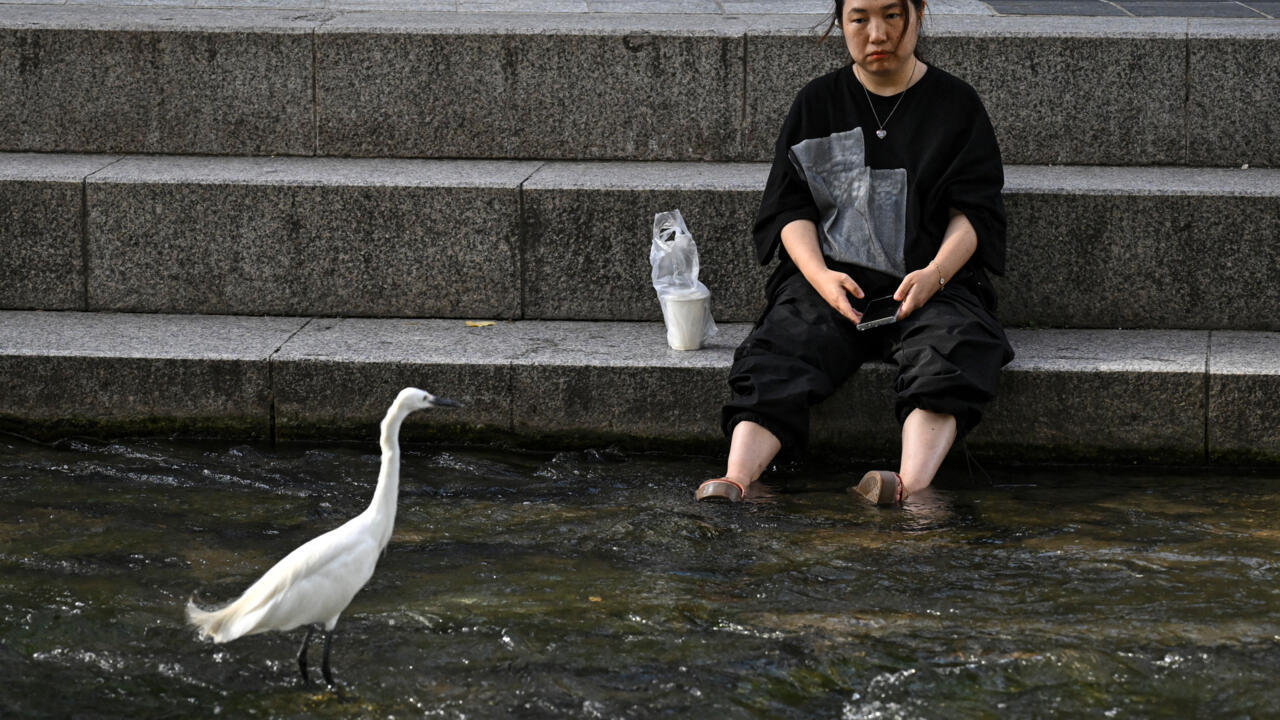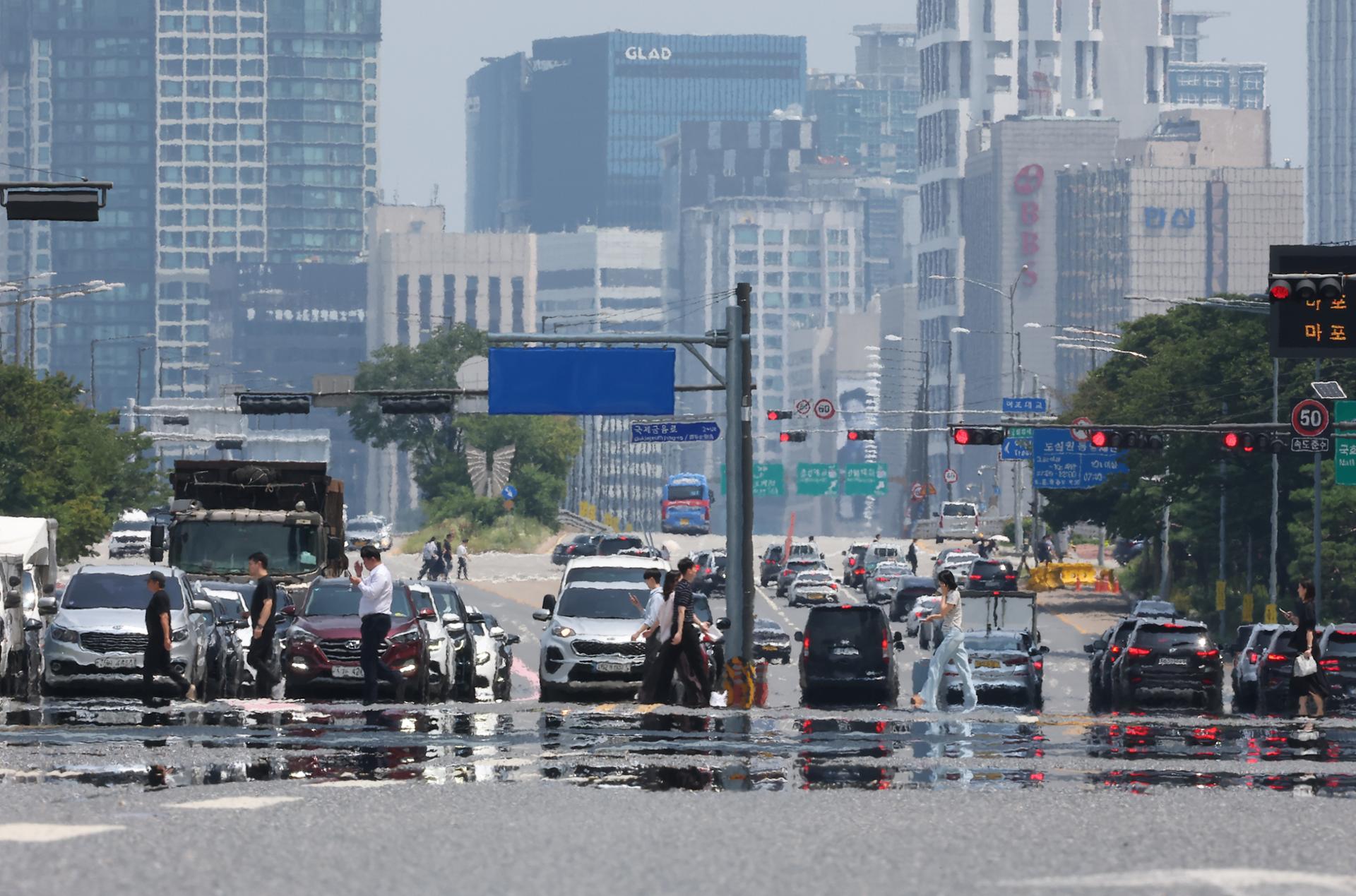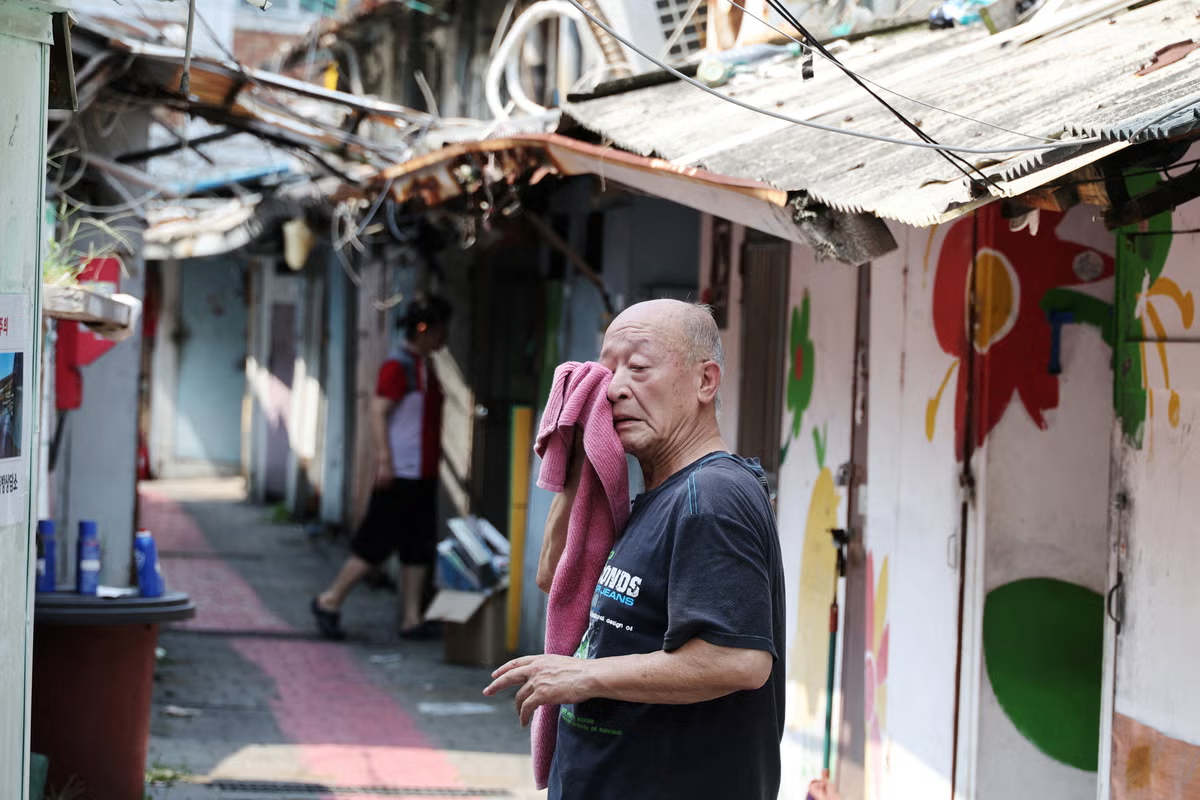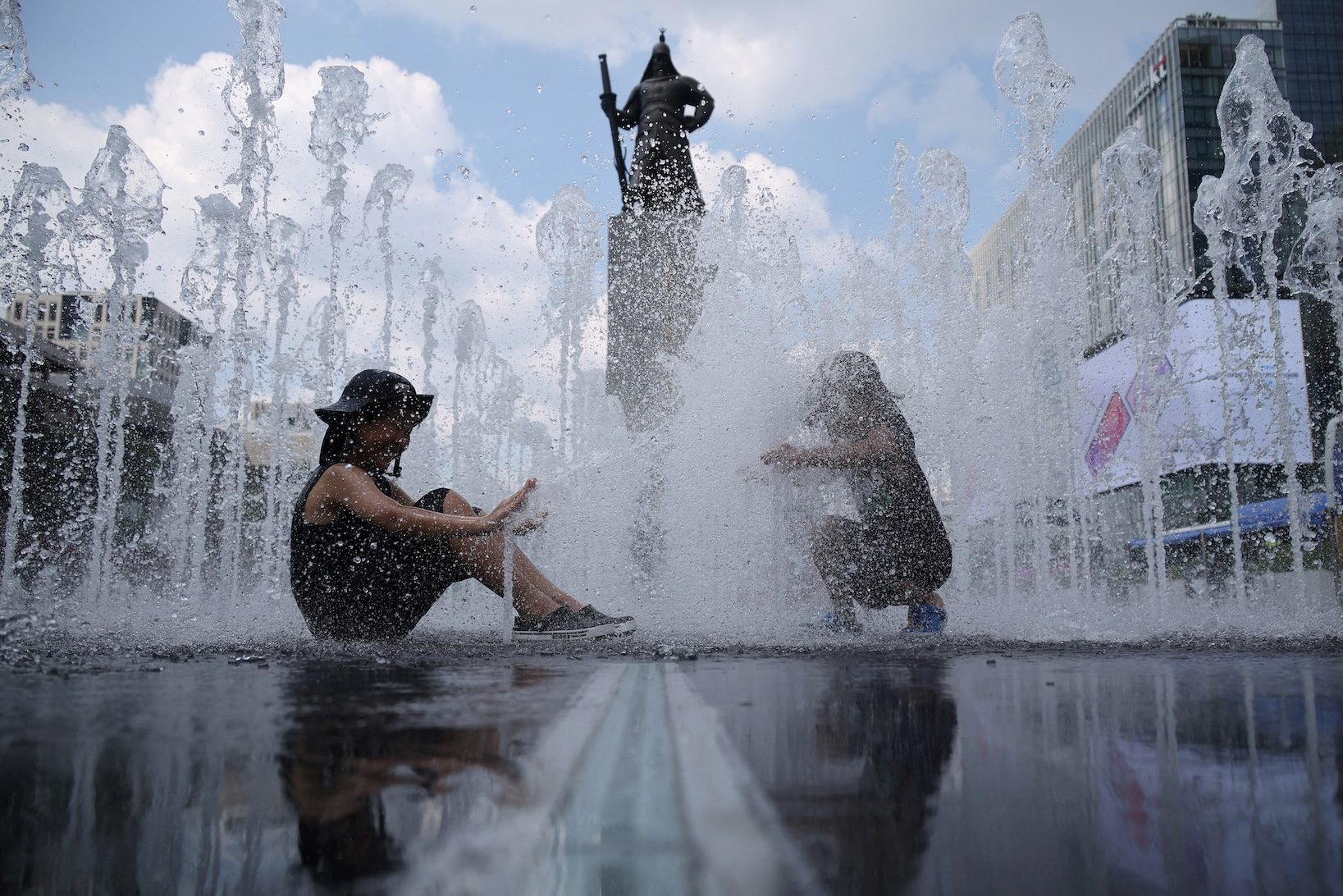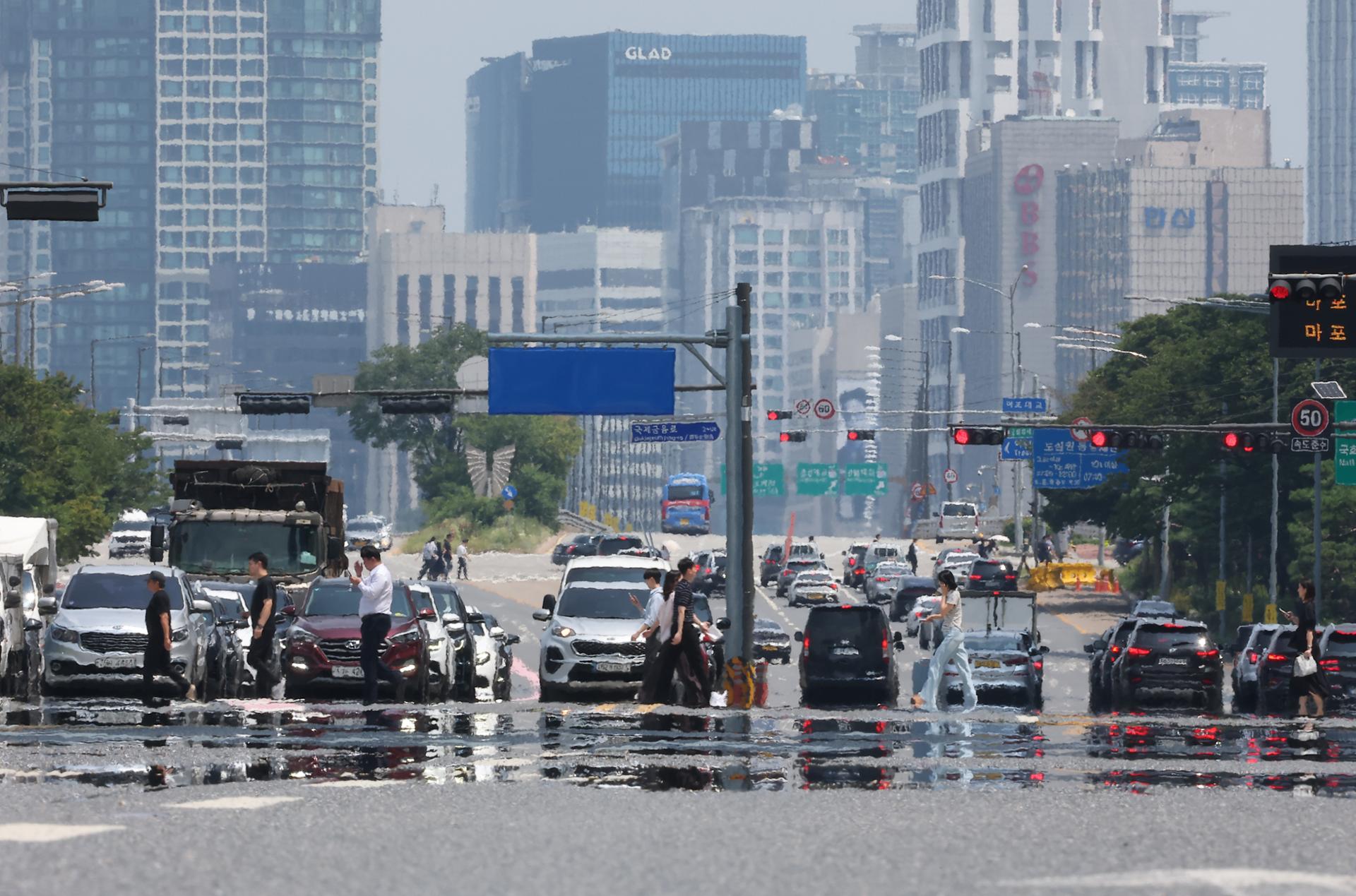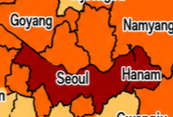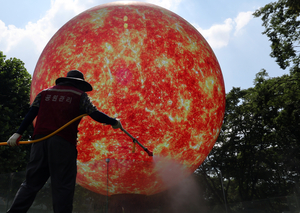
A sun-inspired installation is seen by Seokchon Lake in southern Seoul on Tuesday. (Yonhap) Temperatures neared 40 degrees Celsius in Wednesday's forecast for the Greater Seoul region, where South Korea's highest heat warning remains in effect.Daytime highs are expected to reach 39 C in several cities in Gyeonggi Province, including Gimpo, Ansan, Hanam, Osan, Yeoju, Pyeongtaek and Yongin, according to the Korea Meteorological Administration.Among major cities, Seoul and Gwangju were forecast to reach 38 C, while Daejeon was expected to hit 37 C. Incheon and Daegu were forecast to reach 36 C.The extreme heat followed another sweltering night. Seoul recorded an overnight low of 29 C at the KMA’s main observation station in Jongno-gu, central Seoul. Temperatures remained above 30 C at some observation points, including one in Dongjak-gu.Tropical nights, defined as nights when temperatures do not fall below 25 C, continued across Seoul, Incheon and Gyeonggi Province; the Jeolla provinces and inland parts of the Gyeongsang provinces.The KMA’s Emergency Heat Wave Warning, the highest level in its heat alert system, has been in effect in parts of the Greater Seoul area since 11 a.m. Tuesday.The alert is issued in areas where the daily maximum perceived temperature has remained at or above 35 C for at least two days and is expected to reach 38 C, or where the actual temperature is forecast to climb to at least 39 C.Health authorities said Tuesday that 186 people were treated for heat-related illnesses the previous day, including two who died. The daily figure was nearly five times the 38 cases reported on the same date last year.The latest cases brought the cumulative number of heat-related illness patients reported since May 15 to 2,025, including 19 suspected deaths.The focus of the heat has shifted westward after hot air that had accumulated over southeastern Korea spread toward the capital region and western parts of the country.The KMA attributed the particularly high temperatures in western Korea partly to a foehn effect caused by easterly winds crossing mountain ranges in the eastern part of the peninsula. The air loses moisture as it passes over the mountains and becomes hotter and drier as it descends on the western side, driving temperatures higher in the capital region and other western areas.By contrast, southeastern areas that recorded temperatures above 40 C late last week were expected to experience less extreme conditions Wednesday. Busan was forecast to reach 34 C, while Ulsan was expected to record a high of 33 C.Daytime highs were expected to range from 30 C to 38 C across the country’s major forecast locations. Only mountainous parts of Gangwon Province were expected to remain below 30 C, with Taebaek forecast to reach 29 C.Scattered showers were forecast from the afternoon into the evening along the western coasts of South Chungcheong and North Jeolla provinces and across the southwestern region. Showers were also expected from late afternoon through the evening in Seoul, Incheon and southwestern Gyeonggi Province.The rain, however, was unlikely to provide lasting relief. Although temperatures are expected to ease, they will likely remain above seasonal norms and the humidity could make the heat feel more oppressive.From Sunday through Aug. 15, morning lows are forecast to range from 22 C to 27 C, with daytime highs of 29 C to 36 C nationwide.
Greater Seoul nears 40 C under highest-level heat warning
Temperatures neared 40 degrees Celsius in Wednesday's forecast for the Greater Seoul region, where South Korea's highest heat warning remains in effect. Daytime
548 words~2 min read