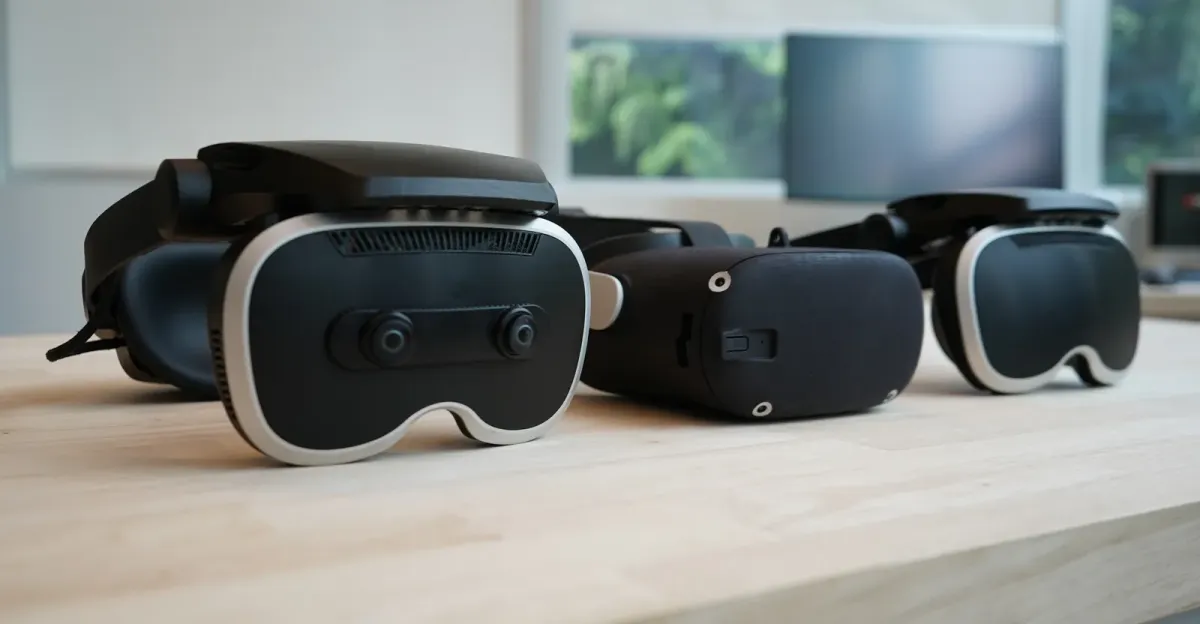
I have shipped XR that gets judged on whether it feels good, and XR that gets judged on whether a doctor can act on the number it produced. They look like the same stack from the outside. Unity, a headset, a scene, a build pipeline. They are not the same job at all, and the gap between them is where most clinical VR projects quietly fall apart.
The shift is small to describe and enormous to build for. A consumer VR app degrades gracefully. If tracking drifts half a degree, the game is slightly worse and nobody files a bug. A diagnostic that reports where a patient looked, how fast they reacted, or how far they could reach is only as good as the measurement underneath it, and a clinician is going to make a decision on that measurement. The moment your output is a number someone relies on, you are not writing an app with a medical theme. You are writing an instrument.
Here is what actually changes when you cross that line.
The headset stops being a display and becomes a sensor
The most useful reframe I know for clinical VR: you are not choosing hardware for what it renders, you are choosing it for what it captures.