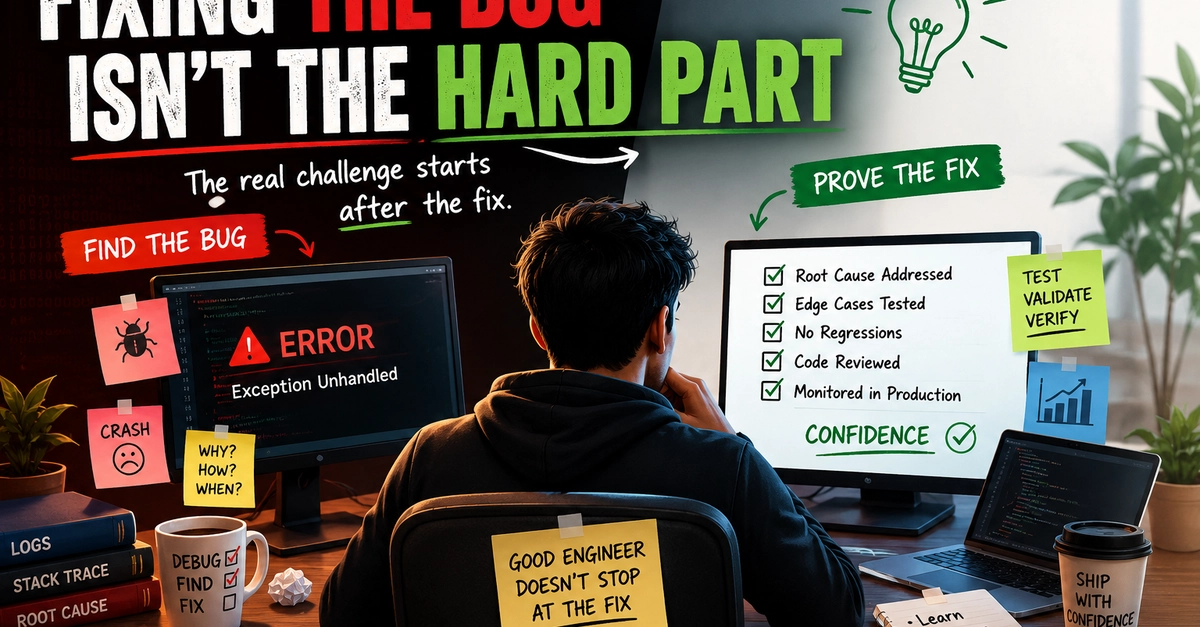
When you encounter a bug, the quickest fix is to "eliminate the symptoms." If an error occurs, wrap it in a try-catch and swallow it. If it breaks only with a specific value, avoid that value via hardcoding. If the precision is off, boost it with a heuristic keyword to fake the result. All of these seem to work temporarily.
However, these quick fixes will inevitably come back to bite you. Because the root cause remains alive, the same problem will resurface through a different entry point. Swallowed errors leak downstream in much more cryptic forms. Hardcoded conditions become landmines for the next developer making a change.
When working with AI coding agents (like Claude Code), this temptation actually intensifies. Agents can suggest "fixes that work for now" at high speed. This is precisely why it is effective to explicitly impose a principle on the agent: "Ban quick fixes; always strive for the root cause resolution." In this article, I will introduce a pattern for investigation—reaching the root cause without hiding the symptoms—using three bugs I actually encountered while developing a voice conversion app.
The Grand Principle: Eliminate the Root Cause, Not the Symptom
First, let me establish the decision-making criteria that run through this article. When a proposed fix is presented, ask yourself the following: