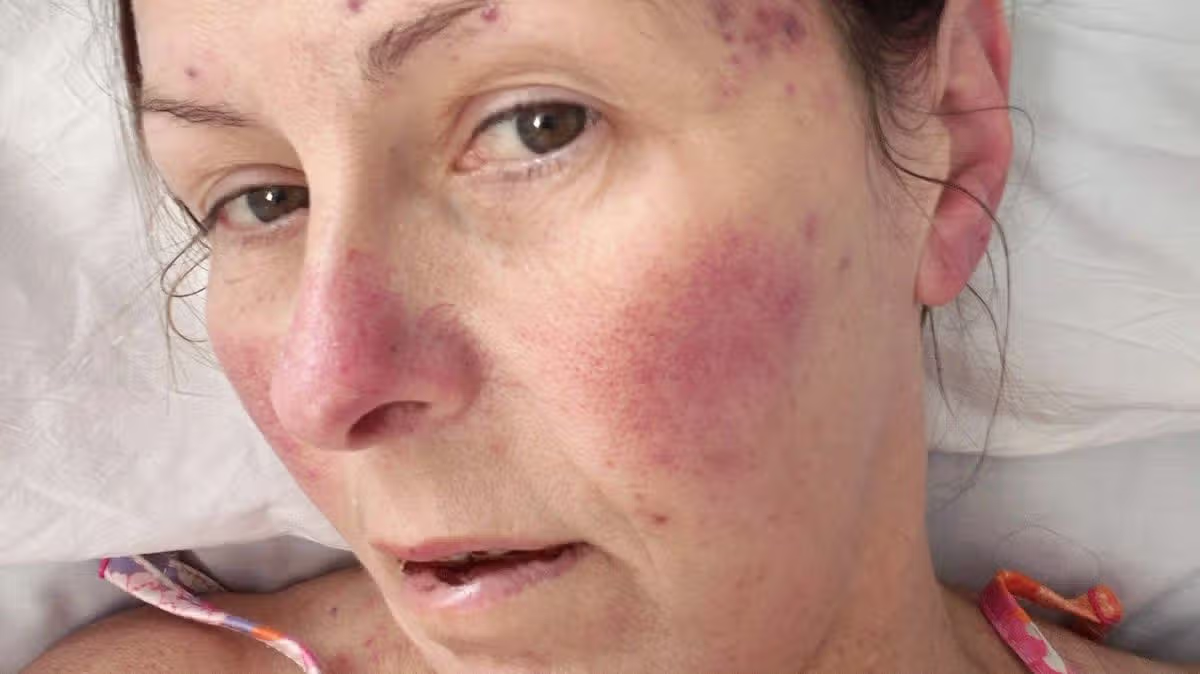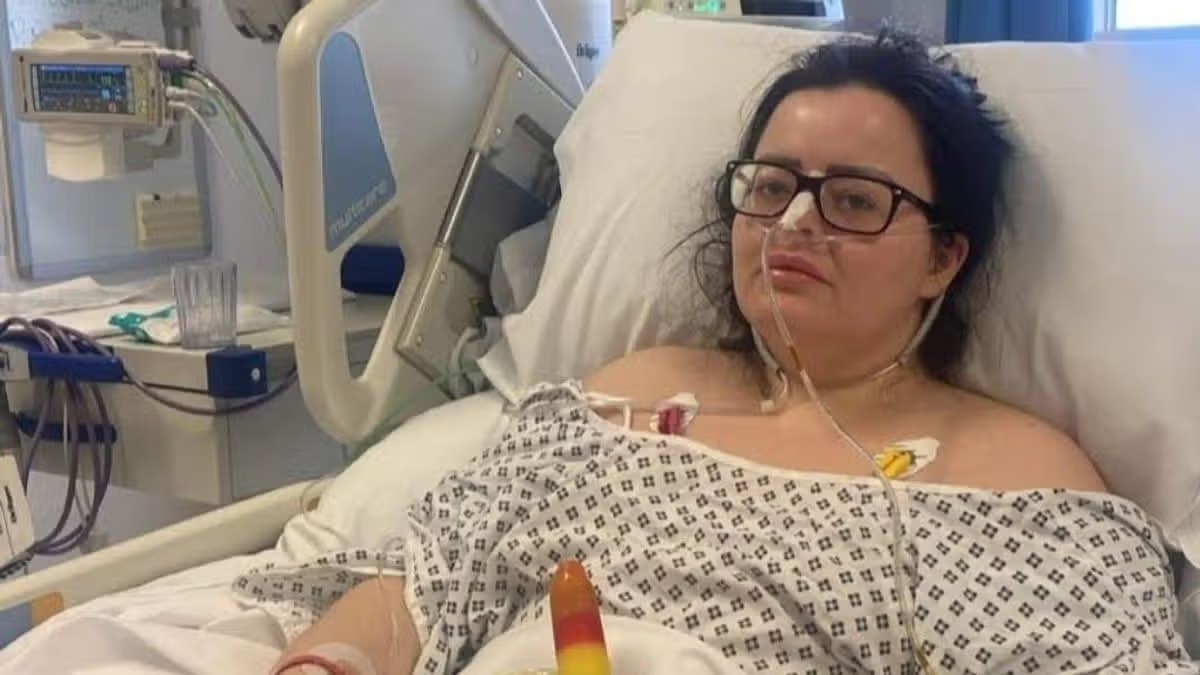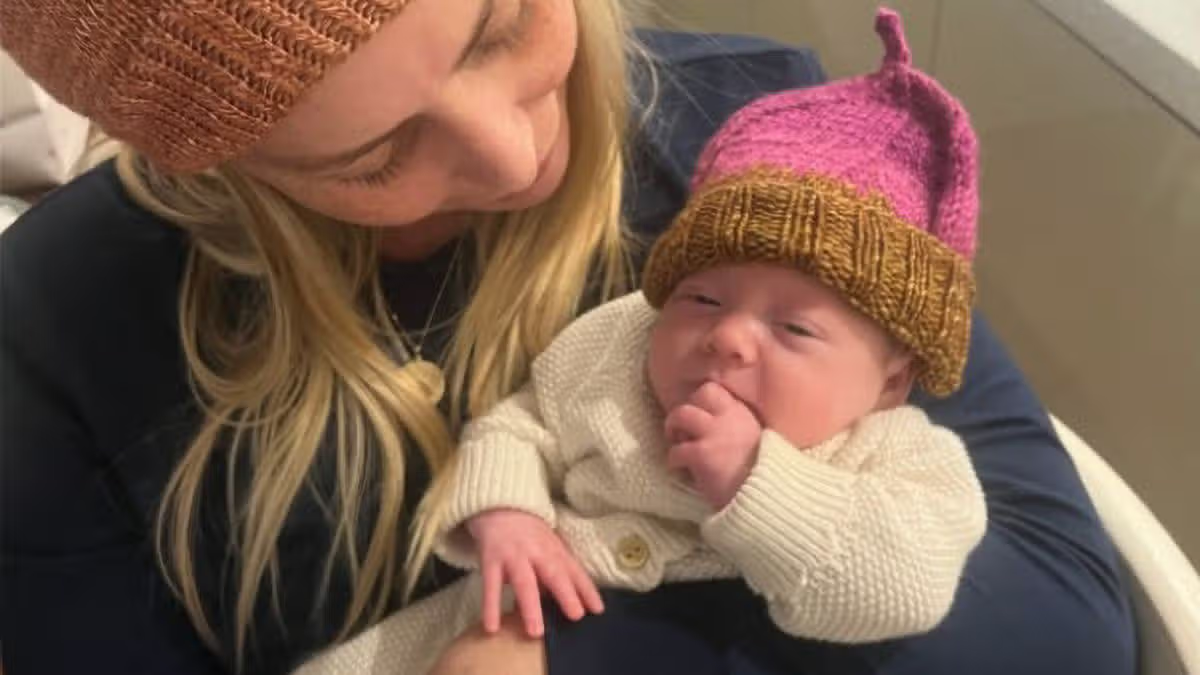
One day in September 2025, I woke up feeling as if someone was holding a blow torch to my esophagus. It was the kind of intense heartburn I’d only ever experienced at the end of each of my pregnancies.As the day went on, not only did I have raging heartburn, but I was overcome with wave after wave of nausea, until I wretched bile into the toilet that evening. My husband was coaching my son’s travel soccer game a few towns over and I was home alone with my 5-year-old daughter and brand new, rambunctious labradoodle puppy. I called my mom, who sped on the seven-minute drive to my house, took one look at me pathetically hanging my head over the toilet bowl and announced she would be taking me to urgent care.After a quick examination, the doctor said I had a stomach virus. I was told to go home, hydrate and eat a bland diet for the next few days.But the next few days followed a similar pattern of gut-churning heartburn, periodic vomiting and relentless nausea. It felt so much like the misery of early pregnancy that I even peed on several sticks despite being on birth control.Along with the debilitating stomach issues, I developed a hacking cough. I texted my aunt who works at the front desk of my gastroenterologist and she was alarmed enough by my symptoms to prompt the doctor to personally call me.My gastroenterologist agreed that my symptoms had been going on too long for a typical “stomach bug.” Instead, she theorized that my already-diagnosed irritable bowel syndrome had triggered some type of acidic flare-up. This would also account for the coughing, since acid traveling up your throat can cause a coughing reflex. She called in a super-strength antacid and an anti-nausea medication.I dutifully took the meds and waited to feel better. I felt worse. A lot worse. My entire 9-to-5 job in marketing consists of talking on the phone to my colleagues and I found myself canceling more and more conference calls because of the deep cough I had developed. I was also bone-tired because my cough seemed to increase at night when I tried to sleep. By Day 9 of this hellish illness, I was losing weight rapidly. I texted my aunt again, and my doctor called me 30 seconds later and told me to meet her at the hospital. Suspecting it was my gallbladder or pancreas, she requested STAT scans of those organs. When I spoke with the technician who would be scanning my abdomen, I had to constantly pause to have coughing fits. I couldn’t even finish a sentence without coughing.The scans at the hospital showed that all my lower organs were functioning beautifully. My vitals reflected vitality. My bloodwork was also near perfect. Normal white and red blood cell counts; no red flags. On paper, I was a healthy 41-year-old mom of two who had been training for a half-marathon just weeks ago. Now, I could barely hold down toast, my voice was hoarse from coughing, and walking up a single flight of stairs left me winded.Another week passed. More of the same. Constant nausea, no appetite, coughing fits that left me gasping for air. My abs were sore from coughing. My back ached. I lay awake each night and played a dangerous game with Dr. Google. I became convinced that I had lung cancer even though I was very much a nonsmoker. If it wasn’t cancer, maybe it was pneumonia. Or an autoimmune disease.“I’m pretty sure I’m dying,” I told my husband for the 100th time.“Call your doctor again. Advocate for yourself. Do not give up until we figure this out.”So I called my general practitioner and asked for the soonest appointment. They were able to squeeze me in that same day. More blood was drawn and I left with a script for a chest X-ray, an antibiotic and a steroid. We were throwing everything at this thing. To credit my doctors, I felt listened to and validated in my concerns. Never once was I written off as “anxious” or a hypochondriac, which I know happens all too often ― especially to women. They were just as baffled as I was and just as determined to get to the bottom of this mystery illness. At this point, it had been nearly a month of worsening symptoms. I was taking an antacid, an anti-nausea pill, an antibiotic, a steroid, and every vitamin and supplement I could get my hands on. When I went for my chest X-ray, part of me was disappointed when it turned out to be normal. If they had found something, at least I would have an answer and could start the correct course of treatment. On Oct. 8, I woke up with a coughing fit that was ... different. Each time I coughed, I felt an acute stabbing pain in my chest like an ice pick was poking each individual rib. Any movement caused another sharp pain that took my breath away. When I was in labor with my son and trying to decide if I wanted the epidural, the nurse would ask me to rate my pain “on a scale from zero to 10, 10 being the worst pain I’d ever felt in my life.” The pain in my chest was an 11.My husband had already left for work and I was attempting to pack school lunches for my kids. I was bent over the counter coughing, unable to stand up straight, and when I looked down at my hand, to my horror, it was splattered with blood. I was coughing up blood.Dizzy with panic, I called my husband in tears. He promptly left work and told me he was going to drop the kids at school, then we were going straight to the hospital. Enough was enough.After countless needles, another clear chest X-ray, a negative panel for the flu, COVID and RSV, the ER resident was at a loss. My oxygen saturation was 100% but I felt like I was breathing through a straw. Nothing made sense, and while I tried to remain calm, I think the female doctor assigned to my case sensed my distress. She gave my shoulder a reassuring squeeze and said she was going to order a “Hail Mary chest CT scan” as a last resort.That decision saved my life.The chest scan showed bilateral pulmonary embolisms. In other words, I had blood clots in my lungs. Had I waited any longer, or had they sent me home, there’s an extremely good chance I would not be here today. Untreated cases of pulmonary embolism have a mortality rate of 30%. The clots were determined to be provoked by the hormones in my birth control. I was told to stop taking it immediately.The next six months were devoted to recovery. I was prescribed blood thinners to take every 12 hours to not only help dissolve the clots but also, most importantly, prevent more from forming. I saw a hematologist, cardiologist and pulmonologist and, together, we developed a plan to help my lungs slowly but surely start functioning as they should. I had been sick for so long that scar tissue had developed. I went from regularly running and lifting weights to taking leisurely walks around the block with my dog and then needing a nap. The smallest of tasks, like loading the dishwasher, wiped me out. I tried to be gentle with myself, but as a chronic overachiever, I was frustrated and disheartened at my lack of energy.Luckily my heart remained strong. Many people with pulmonary embolisms also end up with heart strain.I was willing to take any wins that came my way.When I came off the blood thinners, I requested genetic testing. The idea that birth control was the single cause of such a catastrophic health event just didn’t sit right with me. I lost my father less than two years ago to a genetic heart defect he was unaware of until his mid-60s. Knowledge is power; medical knowledge is lifesaving.Nearly a year after my baffling symptoms began, I finally had my answer: I have the prothrombin gene mutation, better known as Factor II. Carriers of the Factor II mutation have a 16-fold increased risk of developing a deep vein thrombosis (DVT) or pulmonary embolism (PE) when taking hormonal birth control or hormone replacement therapy. I was prescribed oral birth control at the ripe old age of 17, to regulate my erratic cycle. As I got older, I also took it to prevent pregnancy.In the 20-plus years I was on birth control, I was simply told by my OB-GYN not to smoke and to get up and move around during long flights. Easy. I thought taking my daily birth control pill was about as harmless as taking a multivitamin.And while hormonal birth control does pose risks for blood clots, studies have shown that, for most people, those risks are low. However, people should be aware of the risks and consult with a medical professional before making any decisions about their health.Finding out you have a rare genetic blood disorder might sound daunting, but here’s why I feel incredibly fortunate to be armed with this knowledge.For the entire year after my diagnosis, I had held onto the notion that my body had betrayed me. I had done all the “right things” and still gotten gravely ill. Every little ache, pain or tingle sent me into a downward spiral of worst-case scenarios. I was afraid to go to sleep. I even returned to the ER once because I was short of breath and convinced myself my clots were back. In reality, my anxiety had just never left.I was so afraid of dying that I stopped living.But once I knew what was happening and what I needed to do to stay healthy, I regained control of my body. That’s the gift I’ve found hidden in this diagnosis: I’m not afraid anymore.Do you have a compelling personal story you’d like to see published on HuffPost? Find out what we’re looking for here and send us a pitch at pitch@huffpost.com.
At 41, I Woke Up With Unbearable Chest Pain. A Female Doctor’s Split-Second Decision Saved My Life.
“Nearly a year after my baffling symptoms began, I finally had my answer.”
1,684 words~8 min read