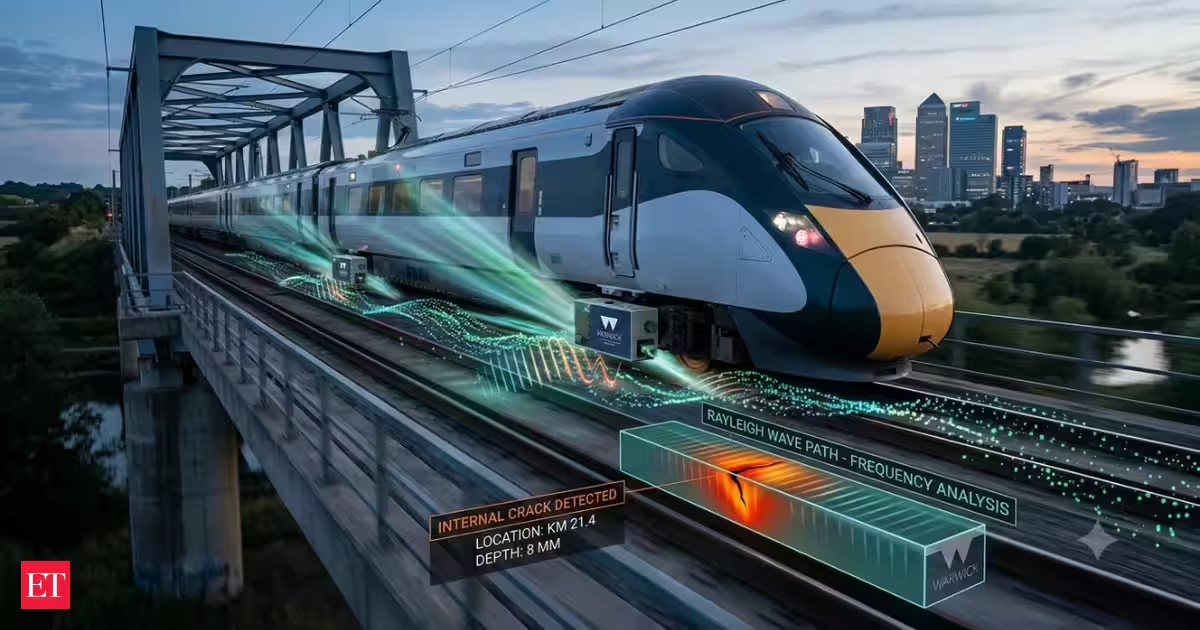
SynopsisUniversity of Warwick researchers developed a new non-contact rail crack detection technology. This system uses electromagnetic acoustic transducers to generate and detect ultrasonic waves. The technology can identify cracks hidden beneath the rail surface at high speeds. It offers potential for continuous rail monitoring without disrupting traffic flow.How scientists detect hidden rail flaws (Photo: AI/Gemini)In 2004, researchers at the University of Warwick developed a new way to detect cracks and flaws in railway tracks without requiring inspection equipment to make contact with the rails. The technology was designed to work at high speeds and had the potential to be attached to ordinary passenger or freight trains, potentially transforming every train into part of a 24-hour network of rail crack detectors without disrupting the rail network, as per a report.At the time, existing ultrasonic inspection methods could only detect defects at much slower speeds of around 20 to 30 miles per hour. Although a handful of specialist inspection trains already used conventional ultrasonic techniques, they could only operate under limited conditions without disrupting normal rail traffic.A non-contact approach to finding hidden cracksThe research team, led by Dr. Steve Dixon, Dr. Rachel Edwards and John Reed from the University of Warwick's Department of Physics, developed a system based on electromagnetic acoustic transducers (EMATs), as per a AZoM report.Unlike conventional ultrasonic equipment, the EMATs generated and detected ultrasonic waves without touching the rail. The system used a low-frequency wide-band Rayleigh wave that traveled along the surface of the rail while penetrating several millimetres below it.By using a wide range of frequencies within a single Rayleigh wave pulse, the researchers could examine different depths inside the rail, allowing them to detect cracks hidden beneath the surface.You Might Also Like:Measuring both the location and depth of cracksAs the Rayleigh wave traveled along the rail at about 3,000 metres per second, its interaction with a crack altered the signal. Different frequency components were either blocked to varying degrees or reflected by the crack.The researchers found they could determine the location of a crack by measuring the loss of signal as it was blocked or, at lower speeds, by observing the enhancement in signal created when reflected waves interfered with newly generated waves. They also determined the depth of a crack by analyzing how the frequency content of the Rayleigh wave changed after passing through the damaged section.Potential for continuous rail monitoringThe researchers also reported results suggesting the technique could help identify changes in the rail's microstructure and stress levels, which could help identify sections of track that were more likely to crack or fail. However, they said more testing on a wider range of rails was needed before they could confirm this additional use.You Might Also Like:The research was published in the June issue of the British Institute of Non-Destructive Testing journal Insight and was also presented at the 7th International Railway Engineering Conference in London.Dr. Steve Dixon said that, “Given the will and funding this technology could transform every train in the country into an army of highly sophisticated rail monitors with zero disruption to the rail network,” as quoted by AZoM.Read More News on(Catch all the US News, UK News, Canada News, International Breaking News Events, and Latest News Updates on The Economic Times.) Download The Economic Times News App to get Daily International News Updates....moreless
In 2004, scientists found a way to detect hidden rail flaws without stopping trains
Learn how scientists from the University of Warwick developed a groundbreaking non-contact method for detecting rail flaws, transforming trains into advanced rail monitoring systems without disruption.
552 words~3 min read