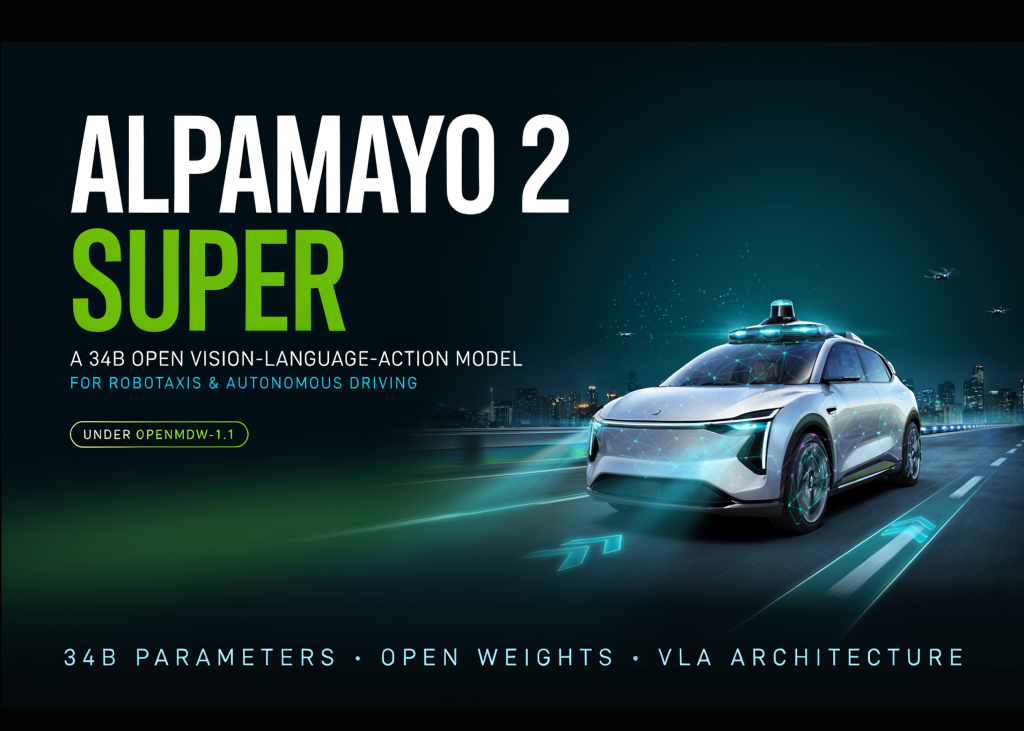
Nvidia wants self-driving cars to explain themselves. The company has released Alpamayo 2 Super, an open AI model for robotaxis that does not just plan a route but reasons about why, and it is now available for commercial use.
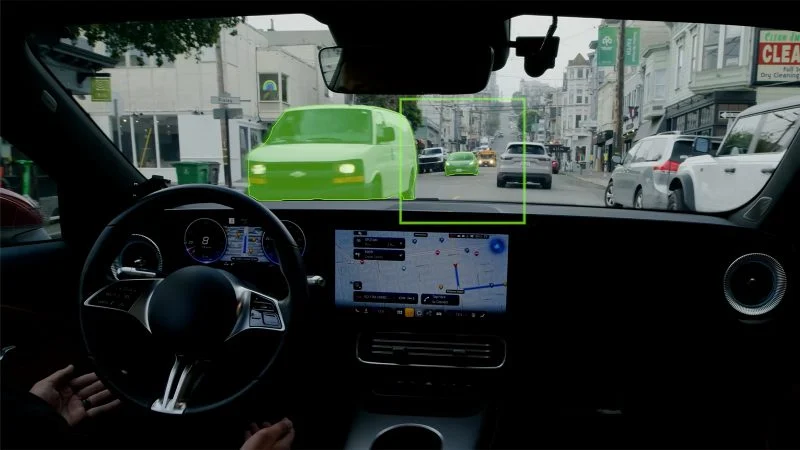
The model is Nvidia’s pitch for a more interpretable kind of autonomy. Rather than a black box that spits out a steering angle, Alpamayo produces a chain of reasoning, a trajectory, and a plain-language account of the decision behind it.
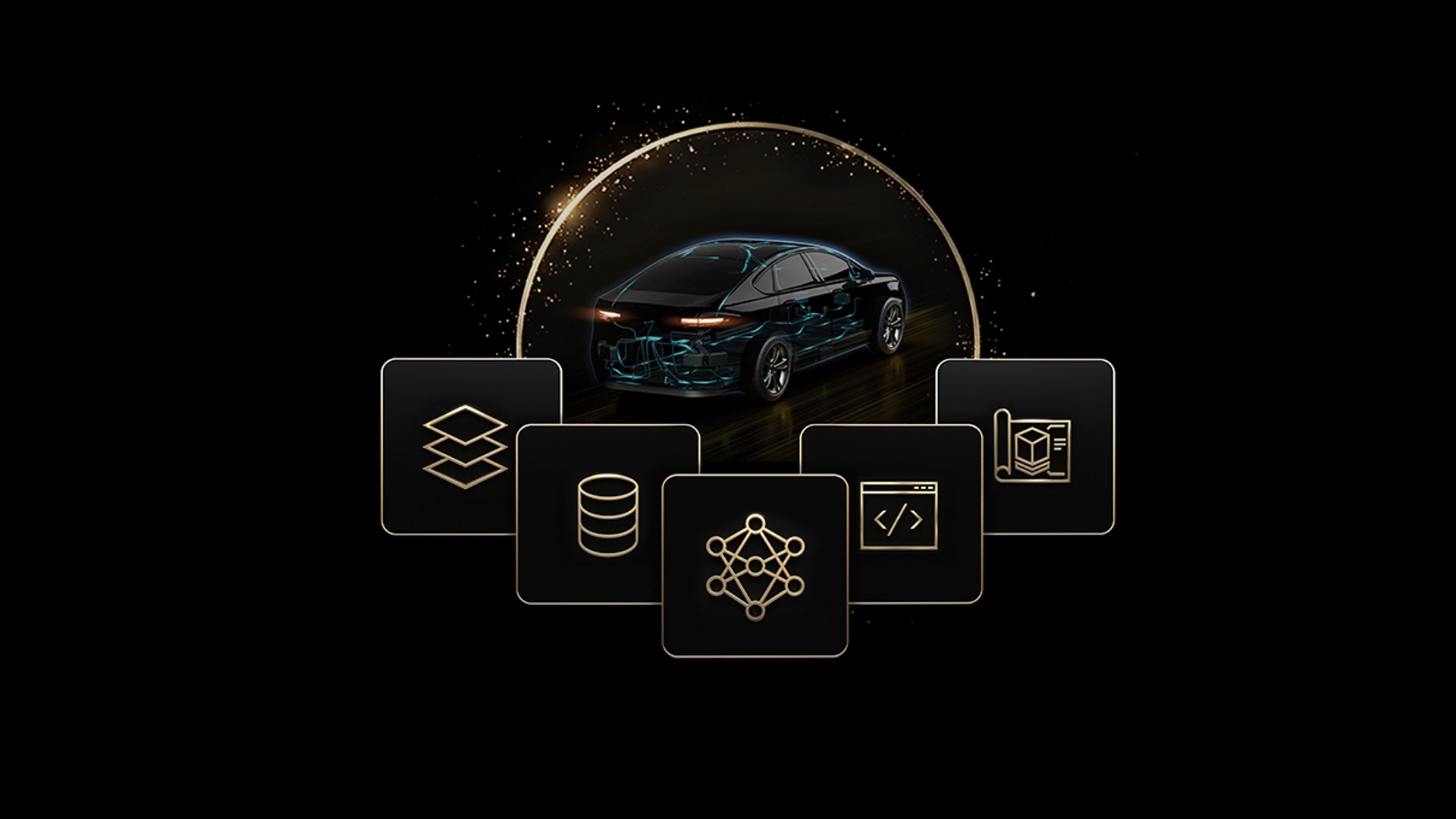
Under the hood it is a vision-language-action model of about 34 billion parameters, built on Nvidia’s open world models, the Cosmos family it has been pushing as a foundation for robotics and physical AI. It pairs a large reasoner with a smaller action expert that turns thought into a driving path.
The model takes in video from up to seven cameras for a full 360-degree view, and it is aimed squarely at Level 4 driving, the tier where a car handles everything within a defined area without anyone at the wheel.
The headline feature is what Nvidia calls a chain of causation. The model can show the reasoning behind a decision, whether to yield, change lane, or stop, which matters enormously in a domain where regulators and courts will want to know why a car did what it did.