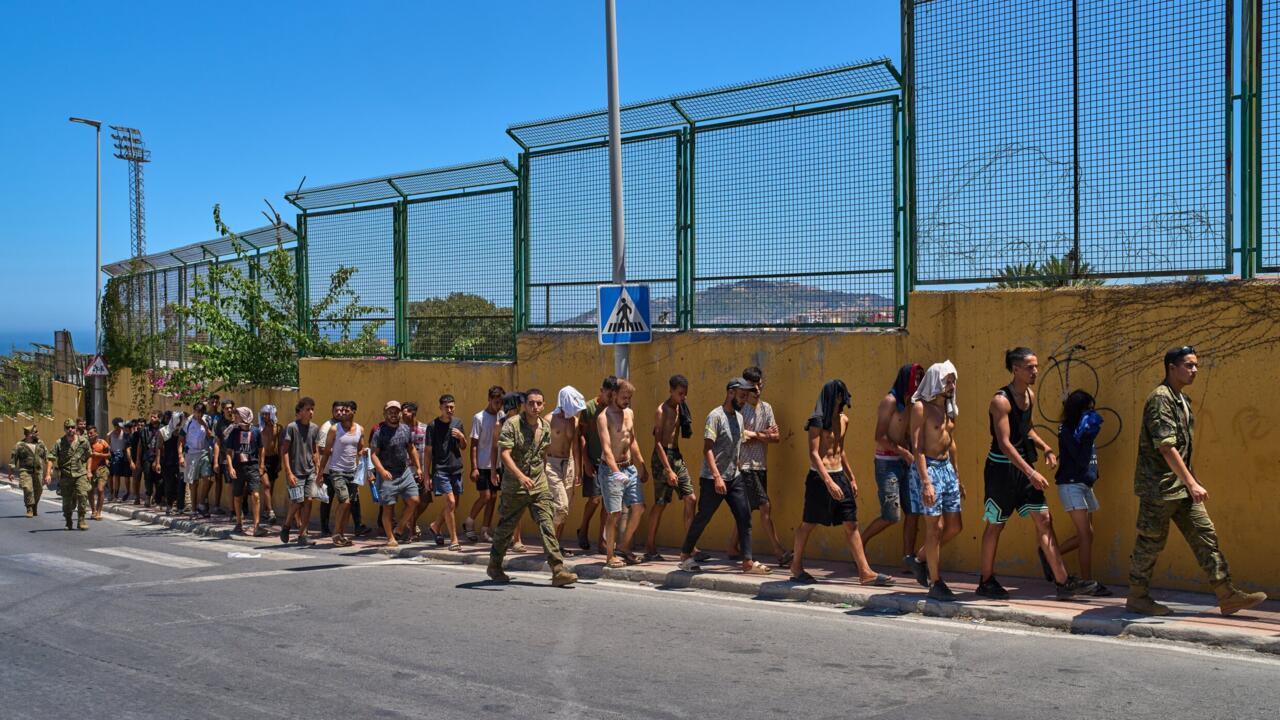
Last week's deadly surge of migrants into Spain's North African enclave Ceuta did not "compromise" the European Union's visa-free Schengen travel zone, the Spanish interior minister said on Tuesday, following an emergency meeting at which member states affirmed their solidarity with Spain.
Issued on: 04/08/2026 - 17:23
3 min Reading time
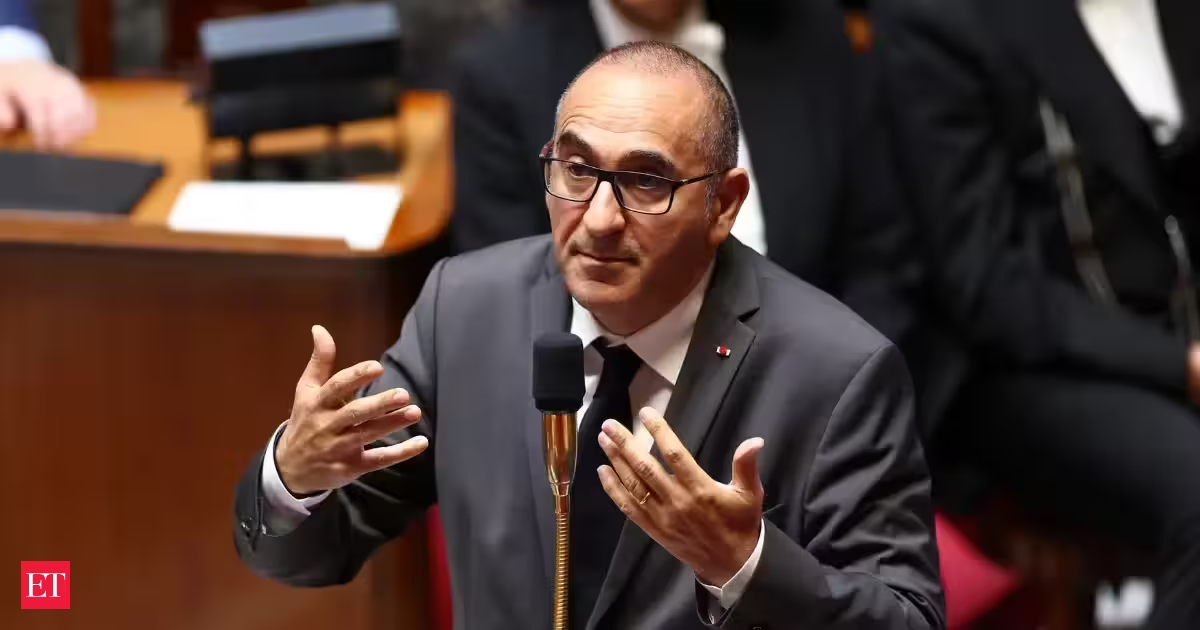
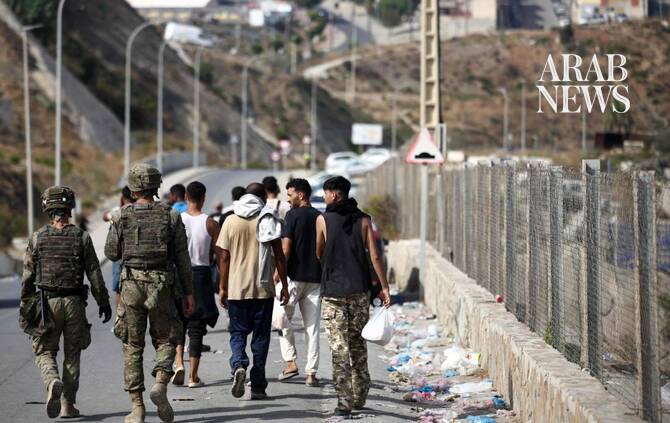
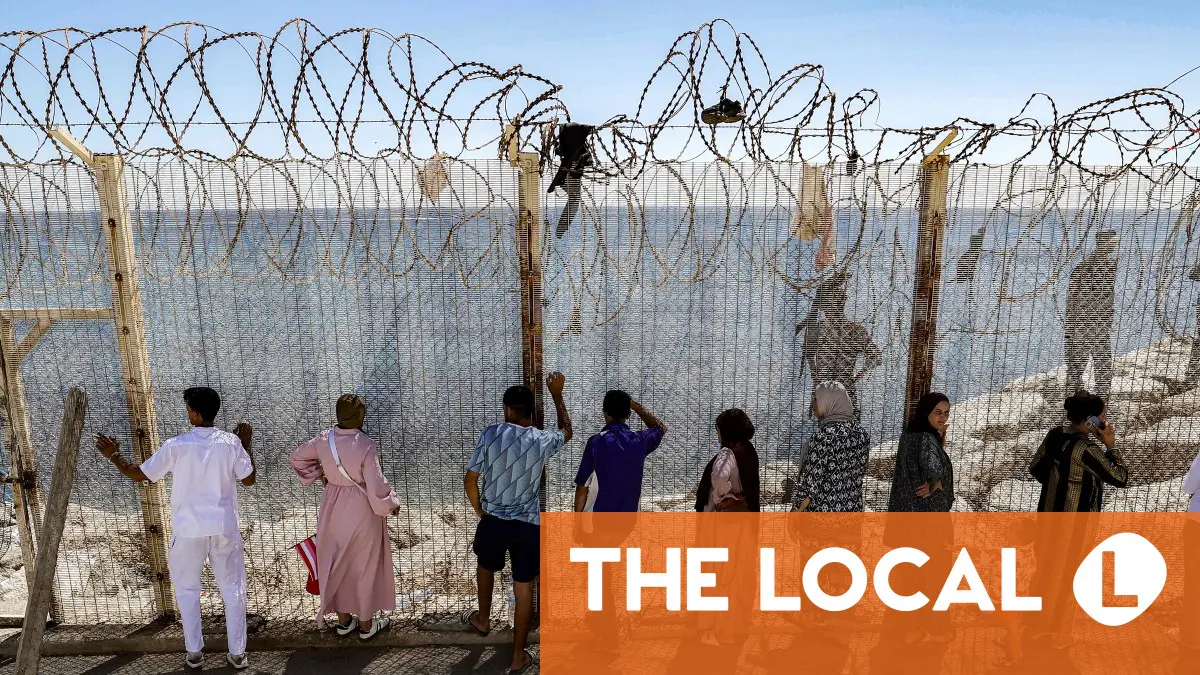
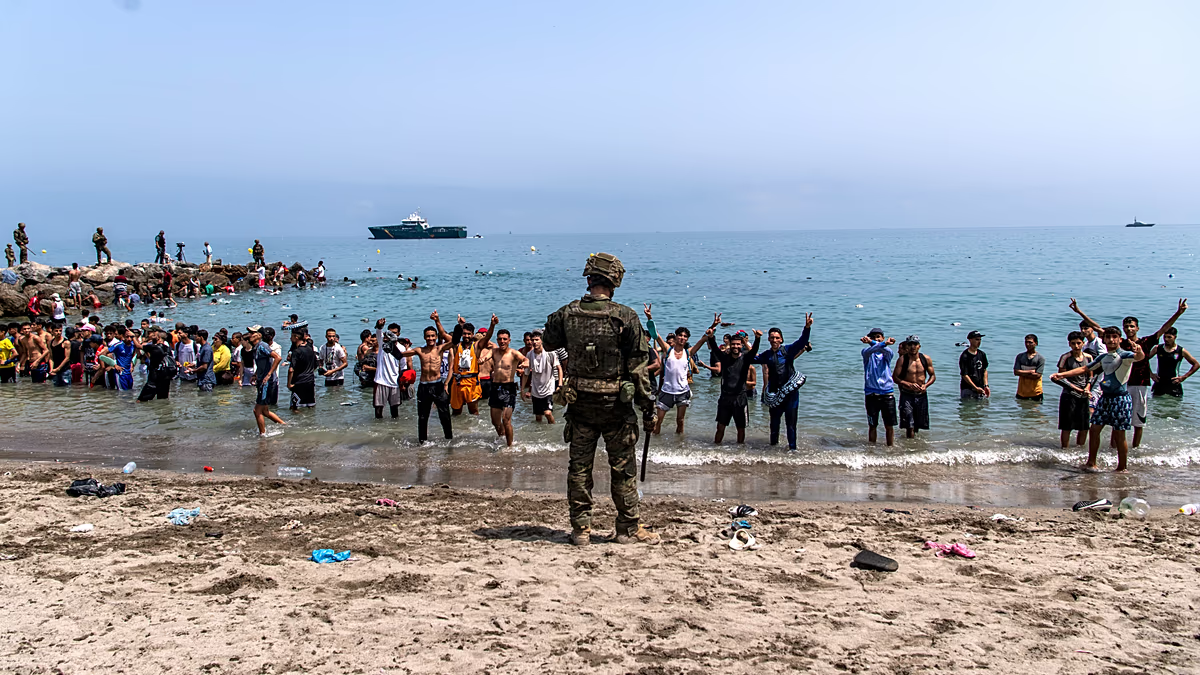
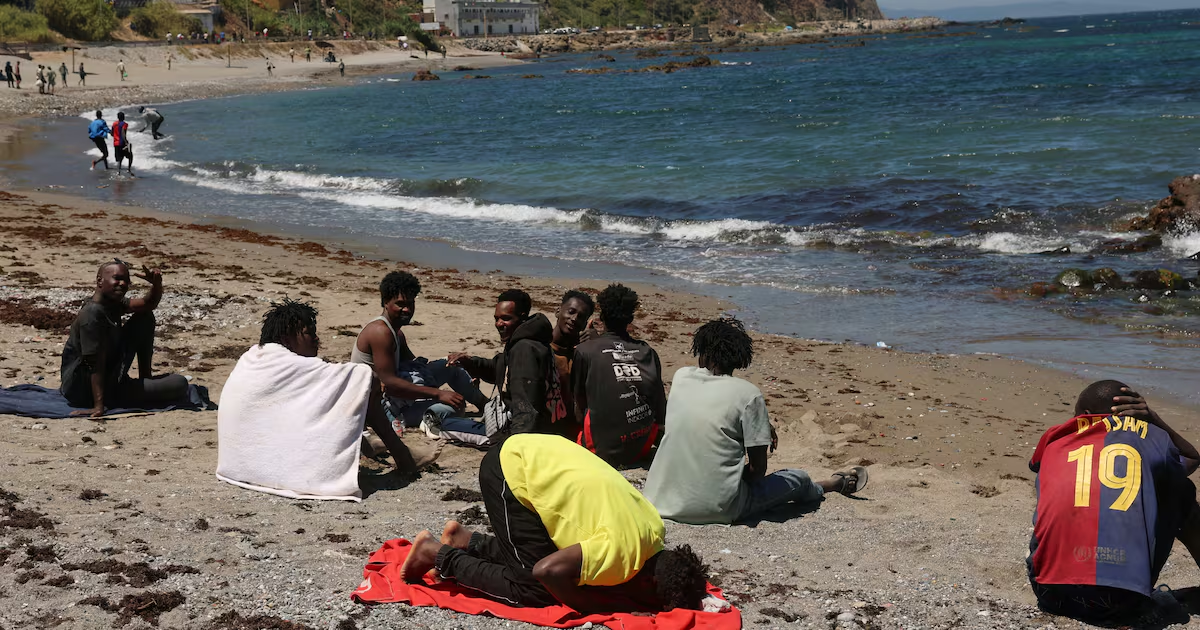
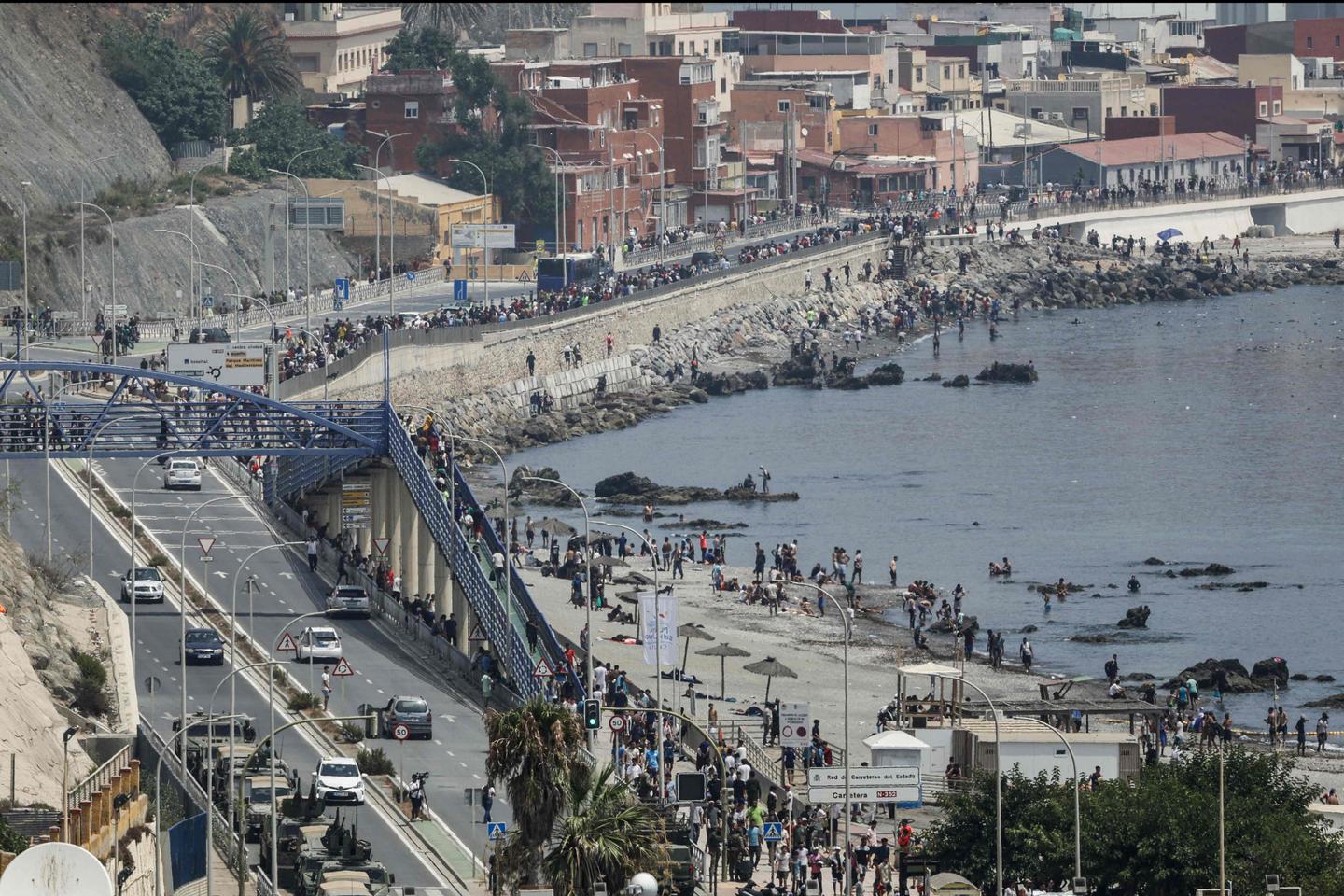
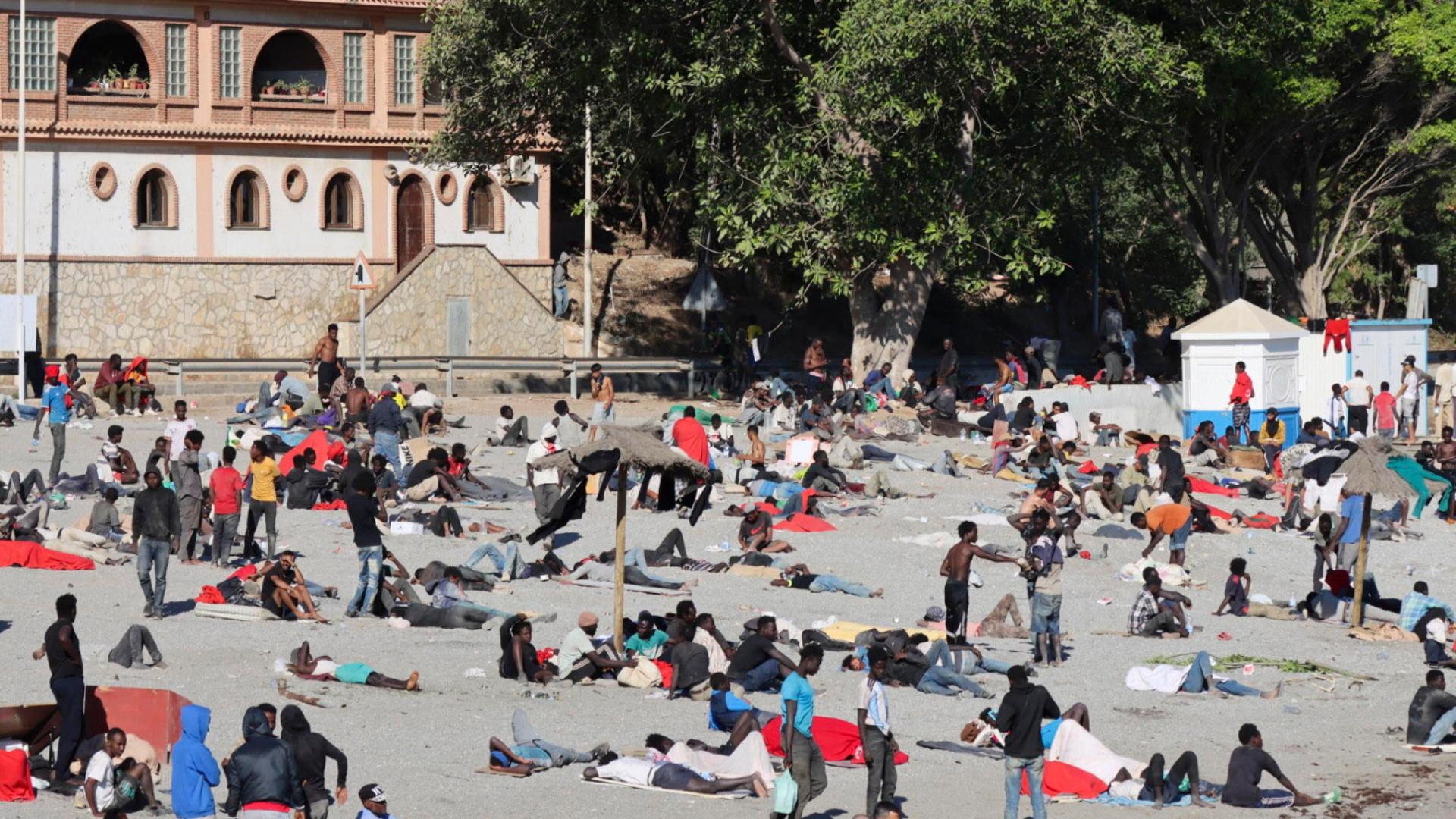
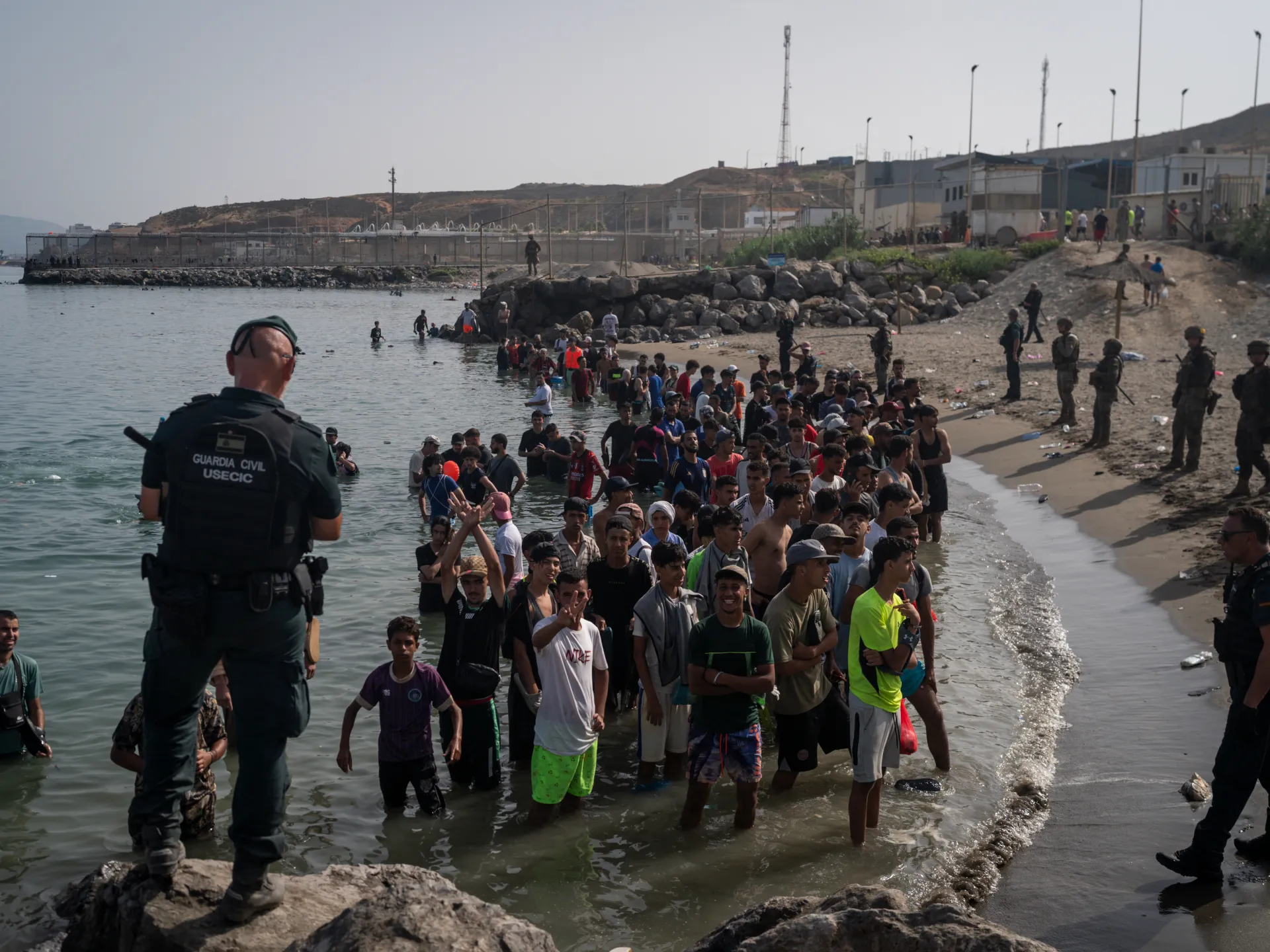
"It is clear that in no way was the Schengen area compromised in this crisis," Spanish Interior Minister Fernando Grande-Marlaska told reporters in Madrid, following emergency talks with his EU counterparts on Tuesday. "We all agreed that the Schengen zone was never in the least danger," he said, adding that "there was no possibility of any secondary movement" of migrants from Ceuta to continental Europe. Last week's influx of migrants into Ceuta from neighbouring Morocco sparked tensions with Spain's EU partners, with Italy and Denmark calling for the country to be suspended from the bloc's Schengen border-travel zone. The unprecedented rush claimed 75 lives, mostly from drowing, the Spanish government's delegation in Ceuta said, raising the toll from 72. Grande-Marlaska added that Spain had already returned 70,000 of the 72,000 migrants who reached Ceuta to Morocco, also raising an earlier figure of 50,000 arrivals. The Spanish government announced a package of €25 million to help the authorities in Ceuta provide emergency care to unaccompanied minors – of which charity Save the Children estimated there are 1,000. Ceuta migrants caught between humanitarian disaster and diplomatic row 'Constructive tone' Tuesday's meeting was expected to be tense, but Marlaska said it passed off "in an absolutely constructive tone". A statement following the meeting said ministers commended Spain for its "swift and effective" response, noting that "there has been no onward movement to mainland Spain or other member states". But they also conceded "communication" at such moments could be made "more coherent" – in a tacit acknowledgement that on that front, the European response this time around fell short. The EU's commissioner for migration, Magnus Brunner, said the bloc had successfully "passed a test" of its border security and "resilience to disinformation" in the handling of the situation. French Interior Minister Laurent Nunez also said that ministers had agreed the Schengen zone was "not the problem" and "all member states, without exception, affirmed their solidarity with Spain". Call to beef up Frontex Denmark said it was "very satisfied" with Madrid's response to the crisis, but warned that border control was key. "I am very satisfied that Spain acted quickly by deploying, among others, police and military forces, and that many migrants have already returned to Morocco," Danish Immigration and Integration Minister Morten Bodskov said in a statement. "But these events show that it is absolutely crucial that we have control over the EU's borders," he said. Copenhagen wants to beef up European border control agency Frontex to improve monitoring and forecasting among other things. "Uncontrolled immigration poses a threat to Europe and Denmark," Bodskov stressed. "It is therefore collectively incumbent on European countries to secure the external borders and to strengthen cooperation with the countries in our neighbouring regions so that fewer people flee to Europe." Pope Leo urges US and Europe to do more for migrants on 4th July anniversary Amnesty scheme Spain's Socialist Prime Minister Pedro Sanchez has defended a more open approach to undocumented immigration, in contrast with tougher policies promoted by European peers. This year his government launched a scheme to grant legal status to undocumented migrants already living in Spain, which is expected to benefit around 500,000 people, mostly Latin Americans. Italian Prime Minister Giorgia Meloni has openly attacked Madrid's migration policies, but her interior minister Matteo Piantedosi began his address on Tuesday by expressing "sincere solidarity" with Madrid – before doubling down on a tough line. Spurred by Italy among others, the EU has significantly tightened its migration rules in recent months, including by allowing member states to send failed asylum seekers to so-called "return hubs" located outside the bloc's borders. According to a transcript shared by his office, Piantedosi argued "the time has now come" for EU countries to set up return centres on the model of a deal between Rome and Albania. He suggested the EU should use trade measures to pressure Morocco – which he accused of "failing to cooperate on repatriation [while it] enjoys significant advantages in its trade relations with Europe". (with AFP)