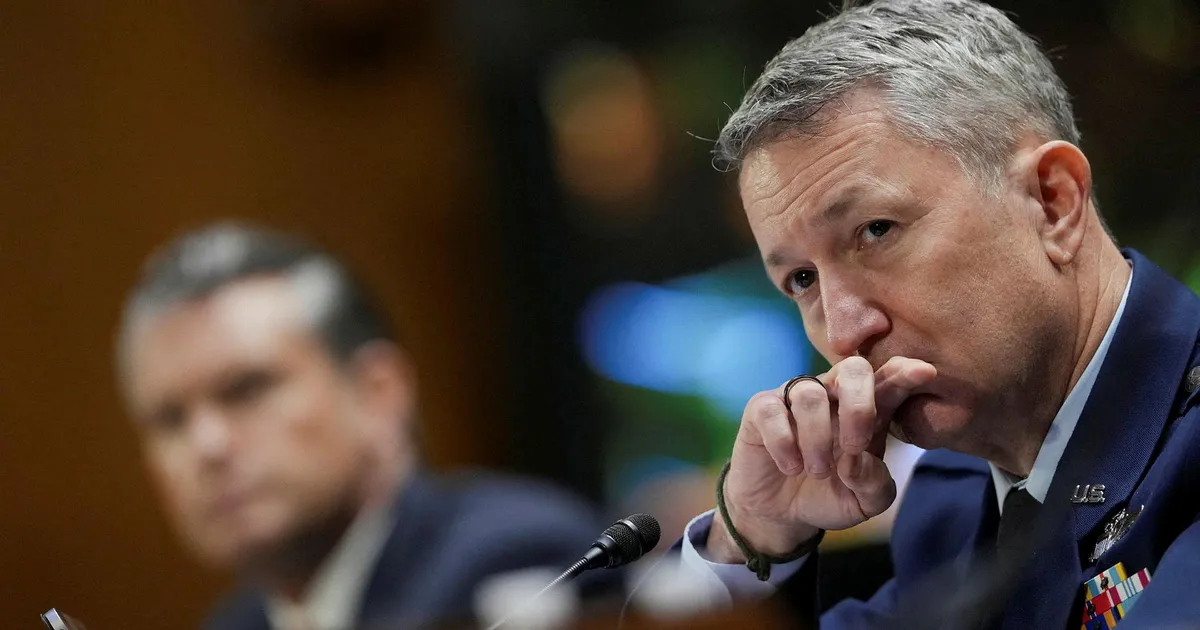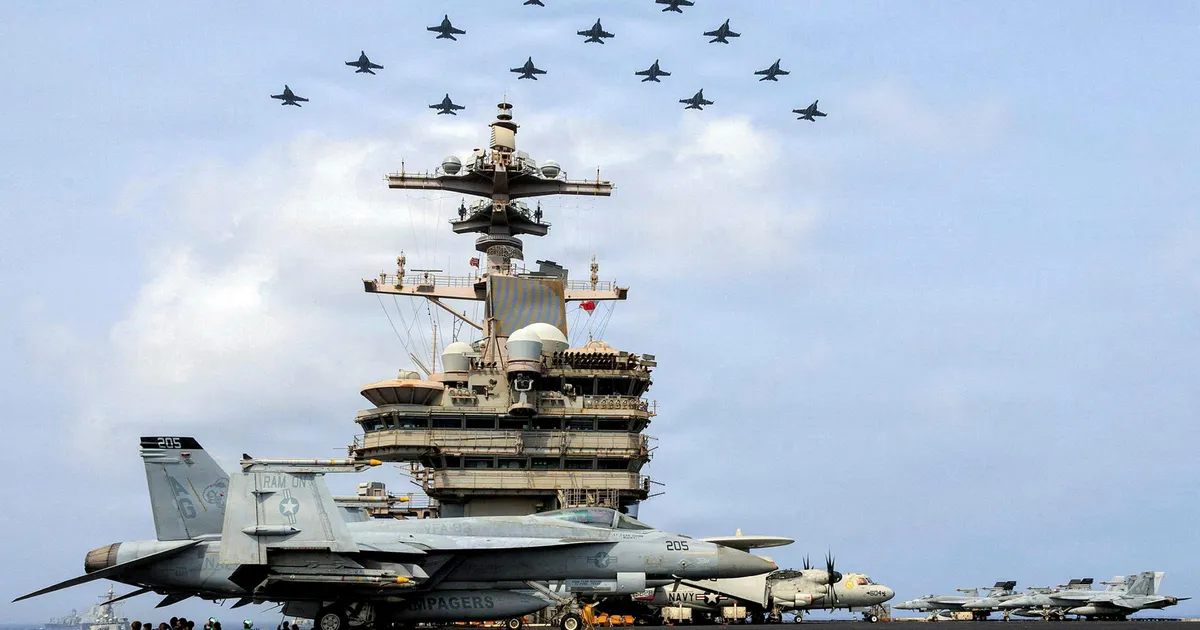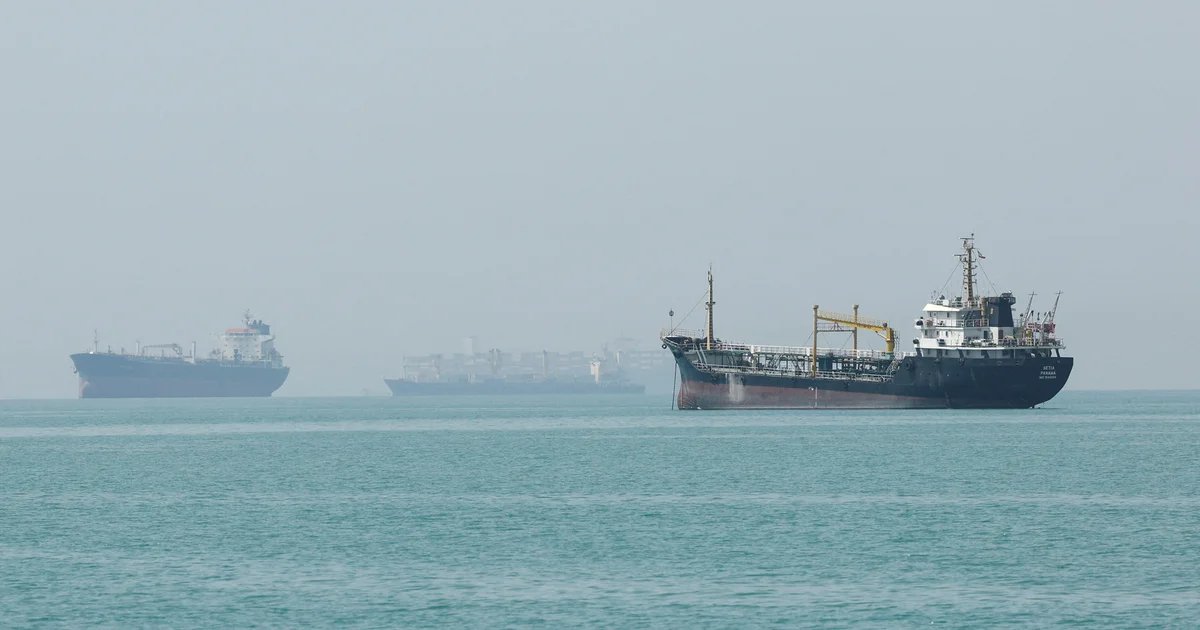
LiveLive Updates August 04, 2026Share to FacebookShare to XArticle printing is available to subscribers onlyPrint in a simple, ad-free formatSubscribeComments: Zen reading is available to subscribers onlyAd-free and in a comfortable reading formatSubscribeAugust 04, 2026UpdatesRubio says there is 'progress' in Iran talks on Hormuz, 'nothing final'U.S. Secretary of State Marco Rubio speaks during a cabinet meeting at Camp David in Thurmont, Maryland, Friday. Credit: Daniel Heuer/ReutersU.S. Secretary of State Marco Rubio speaks during a cabinet meeting at Camp David in Thurmont, Maryland, Friday. Credit: Daniel Heuer/ReutersU.S. Secretary of State Marco Rubio said there has been progress with Iran on reopening the Strait of Hormuz, adding that an agreement has yet to be reached."Nothing final," he said, adding that he hopes a deal "will happen very shortly."IDF advances deeper into Lebanon while shelling area, local media reportsThe village of Hadatha in southern Lebanon, where the IDF reportedly advanced on Tuesday.The village of Hadatha in southern Lebanon, where the IDF reportedly advanced on Tuesday.Israeli military vehicles advanced deeper into Lebanese territory while shelling the area of the new incursion, Lebanon's National News Agency reported.IDF vehicles reportedly advanced north from the village of Hadatha, which lies in the IDF-occupied buffer zone in southern Lebanon, into the nearby village of Ayta al-Jabal, about a mile northeast.According to the agency, the Israeli army carried out the new incursion while shelling the two villages and flying drones over the area.Report: Trump gives Iran Tuesday deadline for deal, threatens 'decapitation'U.S. President Donald Trump answers questions from the media after signing an executive order establishing the President's Military Spouse Commission to be chaired by Jennifer Rauchet, wife of Secretary of Defense Pete Hegseth, in the Oval Office at the White House in Washington, Monday. Credit: Evelyn Hockstein/ReutersU.S. President Donald Trump answers questions from the media after signing an executive order establishing the President's Military Spouse Commission to be chaired by Jennifer Rauchet, wife of Secretary of Defense Pete Hegseth, in the Oval Office at the White House in Washington, Monday. Credit: Evelyn Hockstein/ReutersU.S. President Donald Trump set Tuesday as the deadline for Iran to agree to a deal with Washington before facing "decapitation," Bloomberg reported."I want to give them every last chance before decapitation," Trump told reporters, according to Bloomberg. "You'll find out today or tomorrow," he added."I mean, they're going to go quickly, one way or the other. It's not very complex." According to Bloomberg, Trump said the Tuesday deadline is the "last chance" to reach a deal.Trump no longer calling the shots? Iran and Oman take control of Hormuz talks | AnalysisAfter U.S. President Donald Trump canceled the massive attack he had planned to launch against Iran, at the request of Tehran and "other Middle Eastern Countries," he at least managed to convince the capital markets that he is in control of reality, even if that's the fruit of his own imagination. Oil prices plunged and stock markets soared.But it seems that Trump, who managed to convince the markets that Iran is already negotiating with him, is no longer exactly in control of events. Shortly after he announced that Iran had sought to resume the talks and that on Monday, they were about to restart imminently, Iranian Foreign Ministry spokesman Esmail Baghaei poured a bucket of cold water on his head.President Donald Trump speaks during a meeting about military families, in the Oval Office of the White House, Monday, in Washington. Credit: Alex Brandon/AP President Donald Trump speaks during a meeting about military families, in the Oval Office of the White House, Monday, in Washington. Credit: Alex Brandon/AP Iran didn't seek to restart the talks, Baghaei stressed in his weekly briefing for journalists. Moreover, the only negotiations it is currently holding are with Oman, over a temporary solution to the issue of the Strait of Hormuz.And even on that, he didn't recommend that anyone hold their breath. Even if an agreement is reached between Iran and Oman, he said, navigation through the Persian Gulf won't resume until America fulfills all its commitments under the memorandum of understanding, including withdrawing American troops from the region and ending the naval blockade on Iran.In practice, it seems as if the negotiations on renewing navigation through the Strait of Hormuz have been privatized. Initially, back in April and May, this issue was an inseparable part of the direct American-Iranian talks.Read the full articleIran threatens to target U.S. warships if Strait of Hormuz blockade continuesIran will not allow a U.S. naval blockade to continue and will target American warships if they enter what Tehran considers an unauthorized route through the Strait of Hormuz, Mohsen Rezaei, military adviser to Iran's Supreme Leader Mojtaba Khamenei, said on Iranian state television.Rezaei's remarks came after U.S. Central Command said Monday that it had redirected 44 commercial vessels, disabled two and boarded two others as part of the naval blockade, which Washington reimposed last month following the collapse of a cease-fire agreed as part of a memorandum of understanding between the United States and Iran."If the United States brings warships into the illegal route in the Strait of Hormuz, we will target them," Rezaei said.A child plays at the beach, with vessels in the Strait of Hormuz visible near the beach of Bandar Abbas, Iran, May. Credit: Majid Asgaripour/REUTERSA child plays at the beach, with vessels in the Strait of Hormuz visible near the beach of Bandar Abbas, Iran, May. Credit: Majid Asgaripour/REUTERSHe accused Washington of violating the memorandum of understanding by launching attacks without first referring disputes to the agreement's dispute resolution committee. The United States resumed strikes on Iran in early July after Tehran attacked several ships transiting the Strait of Hormuz along a route it had not authorized.Rezaei said Washington must first fulfill conditions agreed upon in the memorandum. "They should start by returning our funds, declaring they are not at war with Iran, and ceasing the creation of insecurity in the Strait of Hormuz. Allow us to assist global trade through our own arrangements, even better than before."When the U.S. begins fulfilling its obligations – "which they had briefly begun to implement for a few days as a preliminary step" – Iran would view it as a change in behavior, Rezaei added.He also said Iran "will under no circumstances allow any route through the Strait of Hormuz other than Iran's route to be opened."Houthis say they struck Saudi target near southern Saudi Najran airportYemen's Iran-backed Houthis said they carried out a strike against a Saudi target near Najran airport in southern Saudi Arabia, according to a statement from the group.Najran airport in southern Saudi ArabiaNajran airport in southern Saudi ArabiaThe Houthis did not provide further details on the target or the nature of the attack. Saudi authorities have not immediately commented on the claim.The reported strike comes amid heightened tensions in the region after the Houthis threatened to target Saudi shipping in the Red Sea, prompting some oil tankers to divert around Africa to avoid the Bab al-Mandeb Strait.U.S. used 'virtually all' of its long-range missiles during five-month Iran war, sources say The United States has used up most of its stockpile of key long-range precision missiles during its five-month war with Iran, raising concerns among U.S. officials over military readiness for future conflicts, according to Reuters.The depleted weapons include the Army Tactical Missile System and the newer Precision Strike Missile, with sources familiar with U.S. military data saying the Pentagon has used "virtually all" of both systems. The U.S. has also used nearly half of its global stockpile of Tomahawk cruise missiles, one source said.An Army Tactical Missile System is displayed during the inauguration of a new artillery plant of ammunition maker Rheinmetall, in Unterluess, Germany, last August. Credit: Annegret Hilse/REUTERSAn Army Tactical Missile System is displayed during the inauguration of a new artillery plant of ammunition maker Rheinmetall, in Unterluess, Germany, last August. Credit: Annegret Hilse/REUTERSThe drawdown has sparked internal discussions within the Trump administration over how long Washington can continue strikes against Iran without reducing its ability to respond to other threats, according to the report.ATACMS and PrSM missiles allow U.S. forces to strike targets from long distances without risking aircraft and are considered important weapons in a potential conflict with China or other heavily armed adversaries.One source said the administration's reliance on the missiles reflected a decision to avoid riskier attacks involving piloted aircraft. The sources declined to disclose the remaining number of missiles in U.S. inventories.Military officials have also warned in recent weeks that stocks of defensive weapons are falling. A recent analysis by the Center for Strategic and International Studies estimated that about 65 percent of U.S. Patriot interceptors and at least 38 percent of THAAD missile interceptors had been used during the war.A U.S. Navy Tomahawk missile launch during the war with Iran in March. Each missile costs about $2.6 million. Credit: U.S. Navy via APA U.S. Navy Tomahawk missile launch during the war with Iran in March. Each missile costs about $2.6 million. Credit: U.S. Navy via APThe White House rejected concerns over U.S. readiness, with President Trump saying the military has "far more munitions than anyone in the world" and that defense companies are rapidly increasing production.Pentagon spokesperson Sean Parnell said the U.S. military has "everything it needs" to carry out operations ordered by the president while maintaining capabilities to protect U.S. interests.5 hours agoIsrael, Lebanon begin next round of talks; U.S. urges Hezbollah disarmament, IDF withdrawal from pilot zonesIsraeli and Lebanese representatives are set to begin a three-day round of U.S.-mediated talks in Rome on Tuesday, the seventh session of direct negotiations since the cease-fire between Iran, the United States and Israel was declared in April.Israel will be represented by its ambassador to Washington, Yechiel Leiter. Lebanon's delegation is expected to be led by its ambassador, Nada Hamadeh Mouawad, and diplomat Simon Karam, a former Lebanese ambassador to the United States.An explosion in southern Lebanon last week. Credit: AFP/AMMAR AMMARAn explosion in southern Lebanon last week. Credit: AFP/AMMAR AMMARAccording to an Israeli source who spoke to Haaretz, military delegations will also participate in the talks, which will be divided into working groups. Israel's military team will include representatives from the IDF, the Defense Ministry and the National Security Council.The source added that the parties will review the implementation of the pilot zones already in operation, focusing on the limited area near Zawtar al-Gharbiyah from which the IDF withdrew last month, as well as the villages of Froun and Srifa, where the Lebanese Army has since deployed. The sides are also expected to discuss expanding the pilot-zone program to additional areas.The talks will also cover land and maritime border issues. On Monday, the Lebanese Al-Akhbar newspaper reported that Beirut had expanded its delegation to include maritime border expert Najib Massihi, a move the newspaper said could signal Lebanon's willingness to revisit the 2022 maritime border agreement with Israel.Read the full articleIran seeks control over inbound Hormuz route, senior Iranian source saysIran wants control over inbound shipping through the Strait of Hormuz and visibility over outbound traffic, with the ability to intervene if necessary, under a plan being discussed with Oman to reopen the strategic waterway, a senior Iranian source told Reuters on Tuesday.Vessels at the Strait of Hormuz, as seen from Musandam, Oman, June. Credit: Stringer/REUTERSVessels at the Strait of Hormuz, as seen from Musandam, Oman, June. Credit: Stringer/REUTERSThe source, who is involved in the talks, said this is "the general idea currently being discussed", and specified that the outbound lane would follow a route between Iran and Oman, with exit clearance granted through Oman after notifying Iran."Tehran is unlikely to change its position," the source added.In late July, Iranian Deputy Foreign Minister Kazem Gharibabadi said Tehran had rejected an Omani proposal for an equal division of transit routes between the two countries, saying such a plan did not address Tehran's security concerns until long-term regional stability is achieved.Control of the strait, the narrow waterway between the Gulf and the Indian Ocean that is the main route for about a fifth of world oil supplies and other vital goods, has been a main sticking point in efforts to resolve the U.S.-Israeli war on Iran.It has been largely blocked since the start of the war in late February. RECAP: Round of talks between Israel and Lebanon begins in RomeHere are Tuesday's latest updates:■ Israel and Lebanon began a new round of talks in Rome, as Hezbollah leader Naim Qassem rejected direct negotiations with Israel and urged the Lebanese government to cooperate with the group instead.■ Iranian President Masoud Pezeshkian said Tehran would defend its borders but does not seek a broader war, a day after U.S. President Donald Trump said talks with Iran were underway despite Tehran's denial.■ Iran said it had prepared strikes on three locations in Ukraine after an alleged Ukrainian attack on an Iranian merchant ship in the Caspian Sea, but canceled the operation after Kyiv said the strike was accidental.■ A mass funeral was held in Gaza City for 112 Palestinians whose remains were recovered from the rubble of buildings destroyed in Israeli strikes in November 2023. Rescue teams said about 157 bodies are still believed to be trapped.■ Gaza's Health Ministry said an average of three cancer patients die each day due to a lack of treatment, claiming about 4,000 patients approved for care abroad remain unable to leave the Strip. The figures could not be independently verified.■ Palestinian media reported that Israeli settlers torched vehicles, homes and other property in the West Bank villages of Talfit and Jalud, south of Nablus. There was no immediate comment from the Israeli military or police.■ A Liberia-flagged cargo ship was struck by an unidentified projectile while transiting the Strait of Hormuz. The crew abandoned the vessel after a fire and complete electrical blackout, and one crew member is reported missing.■ Houthi threats against Saudi shipping have forced Saudi oil tankers to reroute around Africa, cutting crude flows through the Bab al-Mandeb Strait by about 50 percent and increasing shipping costs, according to a report by CNN.In the NewsMichigan Voters Head to Polls in 2026's Most Consequential Primary on IsraelVindicated! A Plant That Darwin Thought Was Carnivorous Really IsA Concentration Camp Turned Paintball Arena Is Testing Serbia's Holocaust MemoryIsrael Captured 230 Square Miles of Lebanon, Razed Villages and Built New BasesThe Time Has Come to Move Beyond Zionism and Become IsraelisRemembering and rebuilding two years laterICYMIThis Israeli ultra-Orthodox Feminist Activist Has a Warning for U.S. JewsNetanyahu Says Israel Has 'Special Forces' Ready if He's Arrested on NY VisitHow Israel's Elbit Armed the United Arab EmiratesTwo Female Israeli Soldiers Die by Suicide as IDF Mental Health Crisis DeepensDozens of IDF Soldiers Desert Sde Teiman Base in Protest of Commander'I Tried, I Got Crushed by AIPAC': Andy Levin Is All-in for El-Sayed
Live updates • Report: Trump gives Iran Tuesday deadline for deal, threatens 'decapitation'
Israel-Lebanon talks in Rome end, will resume on Wednesday. Rubio says there is 'progress' in Iran talks on Hormuz, 'nothing final'. IDF advances deeper into Lebanon while shelling area, local media reports
2,458 words~11 min read