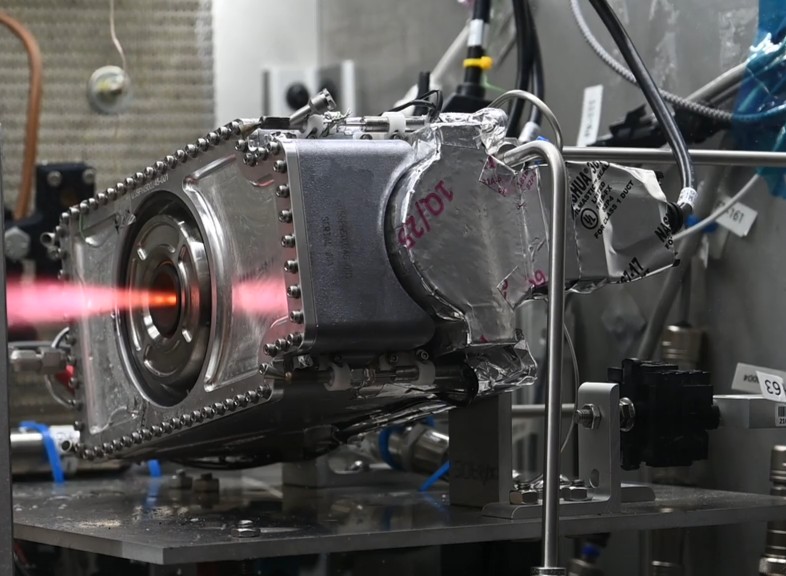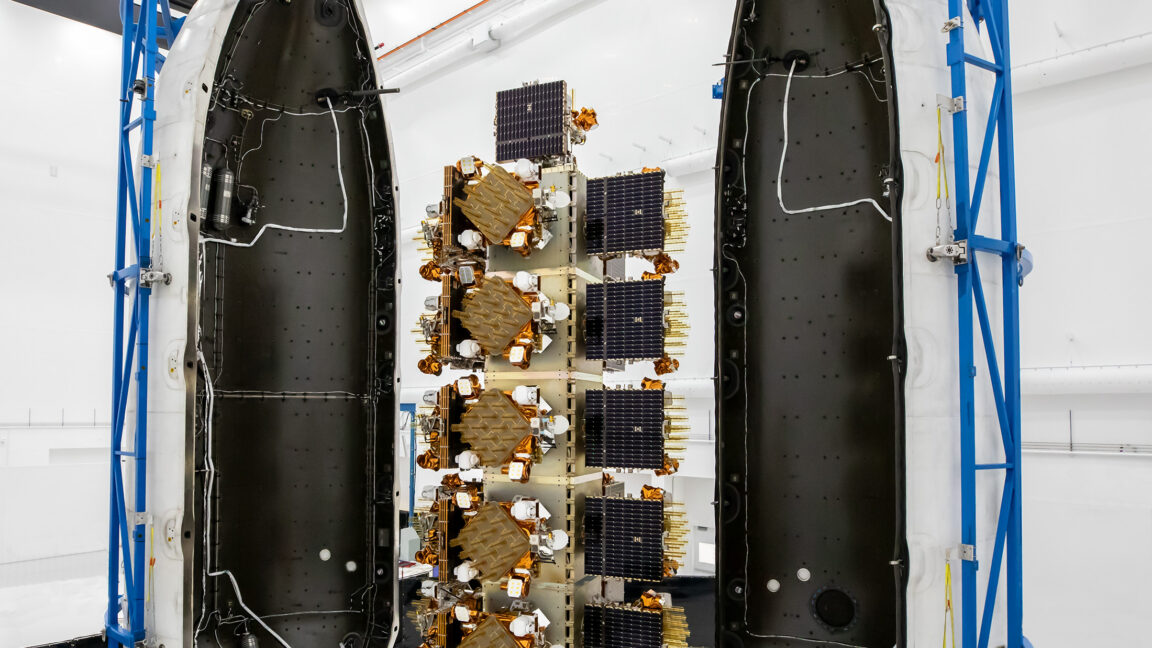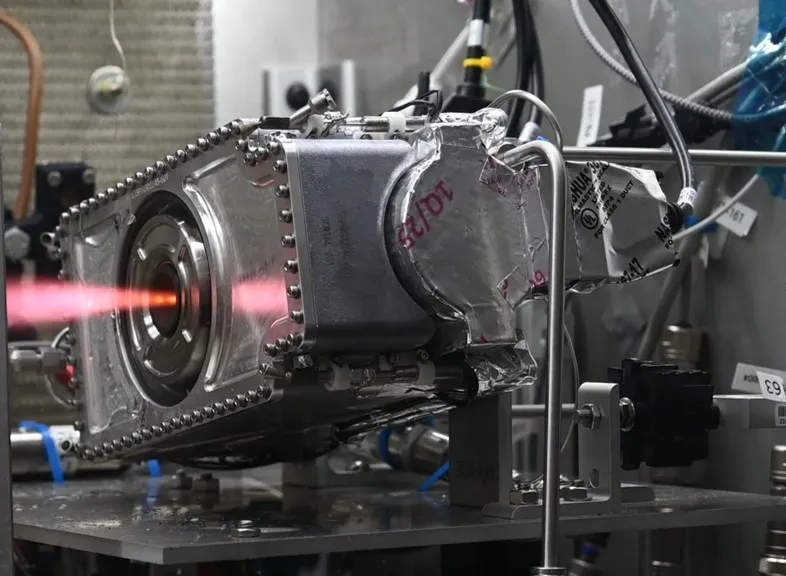
The Dense Orbital Transfer System (DOTS) prototype is seeking to demonstrate a higher thrust and rapid maneuver capability for small satellites. Credit: Parabilis Space Technologies
An increasingly competitive market is forming around a capability military satellites have historically used sparingly: propulsion after launch.
Startups and established spacecraft manufacturers are investing in engines designed to give small satellites more freedom to change orbit, maintain lower altitudes and respond to changing conditions in space. Recent tests, product launches and acquisitions suggest that companies see an opening in national security programs focused on what the military calls dynamic space operations — the ability to move spacecraft as part of an operational mission rather than simply keep them in a predetermined orbit.
The development of the market is in its early stages. Many of the systems are still in ground testing, flight demonstration or initial production. The Space Force is also working through how frequently satellites would maneuver, which missions would benefit and what supporting technologies would be required.
The trend is closely tied to the military’s adoption of smaller satellites. Most propulsion systems are intended to perform routine station keeping or minor collision avoidance maneuvers, but not the larger or more frequent orbital changes envisioned in emerging military concepts.