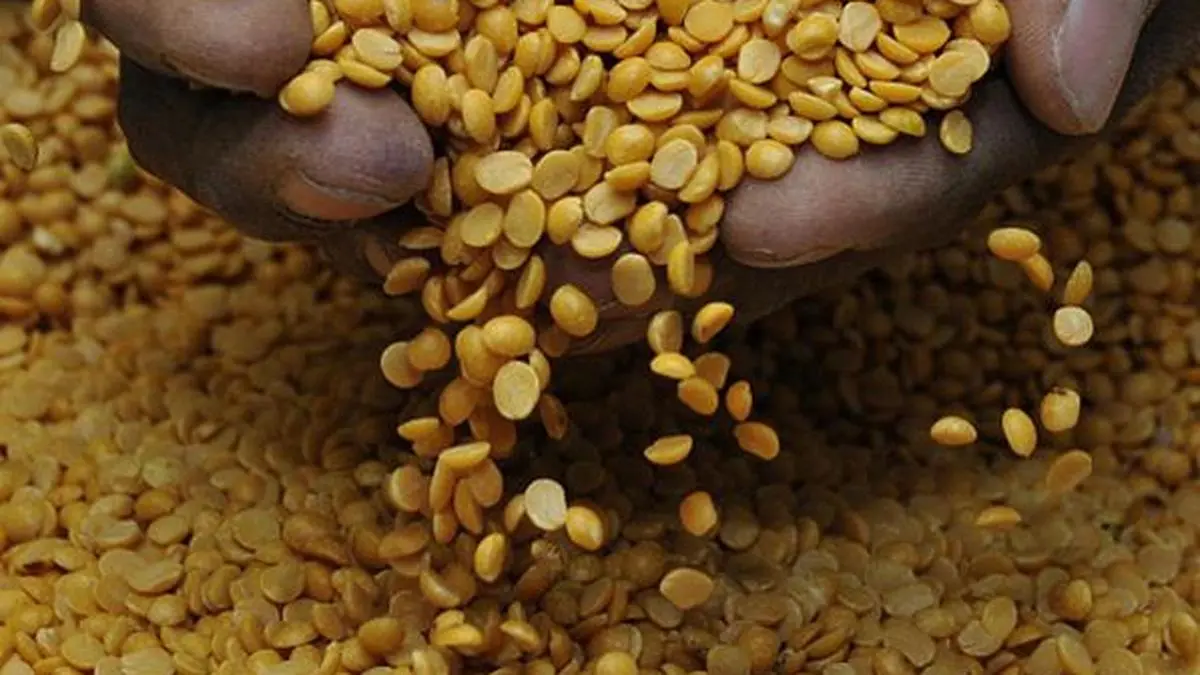
FILE PHOTO: The complete genome assembly covers all 11 chromosomes and identifies over 36,500 genes, providing a valuable resource for advanced breeding, gene discovery and genome-editing research.
| Photo Credit:
Indian Council of Agricultural Research (ICAR) on Tuesday announced that it has developed India’s first fully annotated telomere-to-telomere (T2T) reference genome of pigeonpea (Cajanus cajan L. Millsp.) variety ‘Asha’.The newly developed T2T genome sequence comprises 752.65 million base pairs, assembled into 92 contigs, providing a complete representation of all 11 chromosomes of pigeonpea. The genome assembly, designated NIPB_CcT2T_4, has been deposited in the global database (NCBI), ICAR said in a statement.The genome assembly comprises all 11 chromosomes, including their centromeres and telomeres, demonstrating chromosome-level completeness. A comprehensive genome annotation identified 36,557 genes, producing 48,008 mRNAs (coding sequences). Transcriptome (RNA sequence) mapping recorded more than 99.9 per cent read alignment, confirming the high accuracy and completeness of the genome.Landmark milestone for pulse researchPopularly known as ‘Arhar’ or ‘Tur’, pigeonpea is one of India’s most important pulse crops and a major source of dietary protein. It plays a vital role in ensuring the country’s food and nutritional security.In 2011, ICAR–National Institute for Plant Biotechnology, New Delhi, had published the world’s first draft genome of pigeonpea variety ‘Asha’, the first crop genome to be sequenced entirely in India. An improved draft genome was published in 2017.Boost to climate-resilient breeding and food securityThe fully annotated T2T reference genome will serve as a valuable national genomic resource for advanced gene and pangenome analyses, discovery of genes associated with important agronomic and nutritional traits, and the application of molecular breeding and genome-editing technologies, it said.“The development is expected to accelerate the breeding of climate-resilient, high-yielding and nutritionally enriched pigeonpea varieties, thereby strengthening the country’s pulse improvement programme. The achievement will provide a major impetus to research and innovation, benefit scientists, breeders and farmers, and contribute to enhanced productivity, improved farmer livelihoods, and India’s food and nutritional security,” it said.Focus on achieving pulse self-sufficiencyAmid the launch of the Mission for ‘Aatmanirbharta in Pulses’ (2025-26 to 2030-31) to achieve self-sufficiency in pulse production, Union Agriculture Minister Shivraj Singh Chouhan in July had called upon the scientific community to look for non-genetically modified organism (GMO) solutions to raise productivity in pulses. “If countries without access to GM seeds can get better yields in pulses, why can’t India?” Chouhan had said at the 98th Foundation Day of ICAR.Published on August 4, 2026