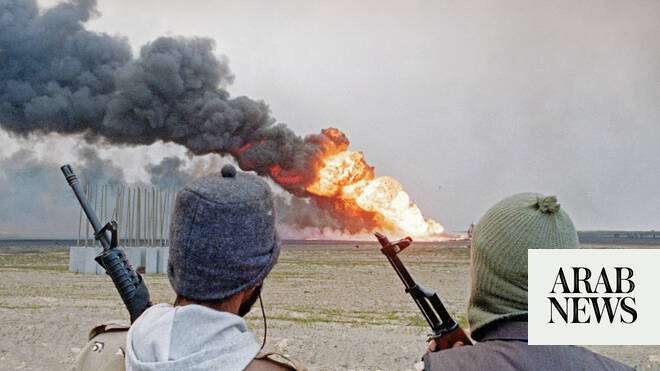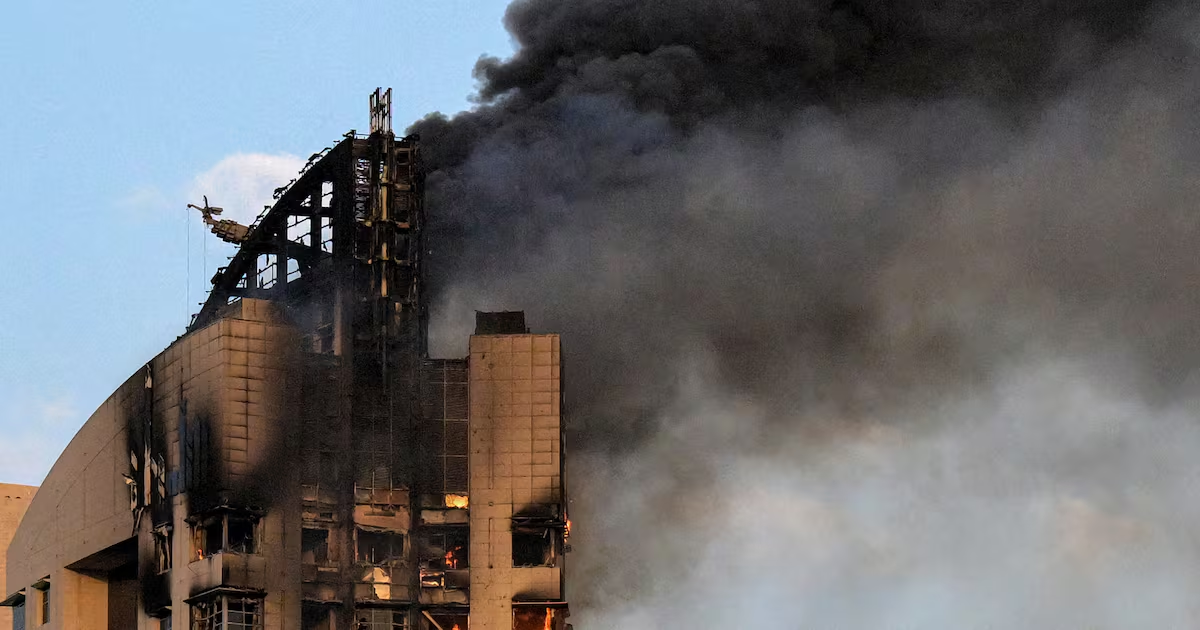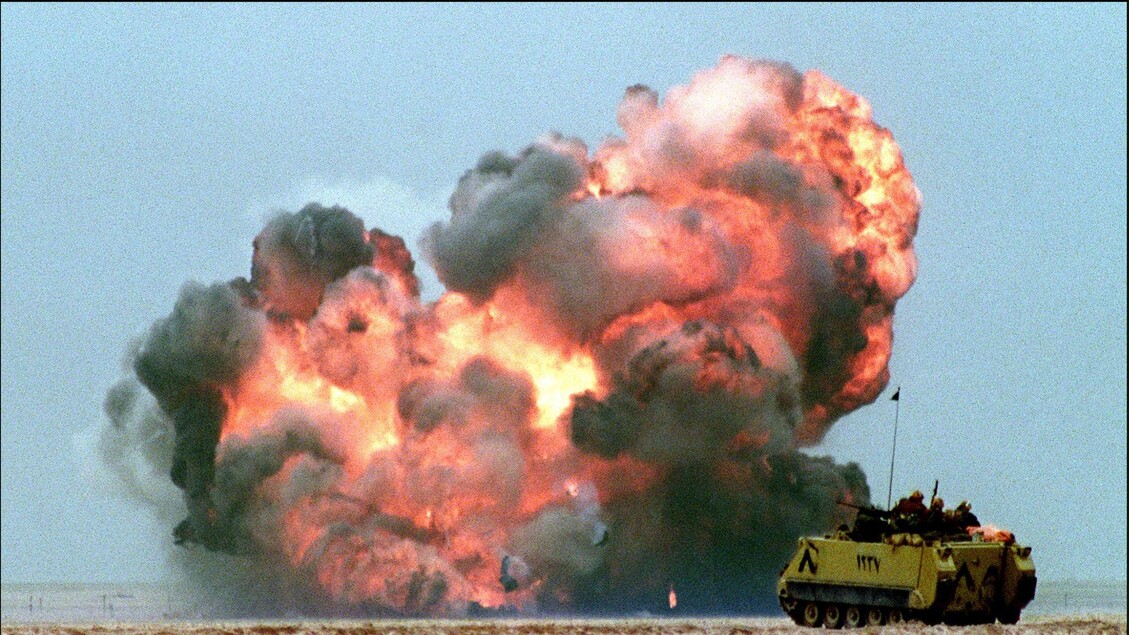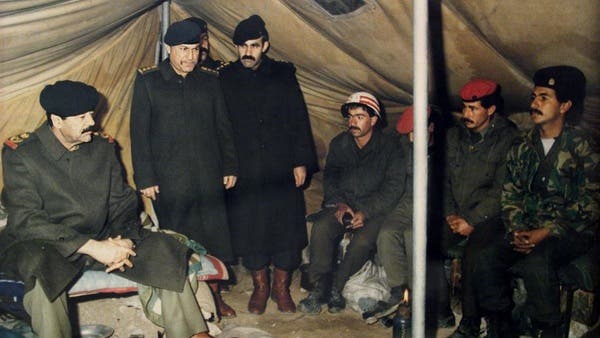
These days bring back memories of August 1990, when Saddam Hussein’s regime invaded Kuwait and plunged the Gulf into the greatest danger it had faced up to that point.For all the latest headlines, follow our Google News channel online or via the app.Was the invasion a surprise? Perhaps in terms of its timing, but not in terms of its ideological and political roots. Baathist hostility toward the Gulf monarchies had long been present in the literature and political rhetoric of the Baath Party. The expansionist ambitions of the Iraqi regime at the time had also become clearly evident through its war with Iran and its attempts to impose itself as the dominant power in the Gulf.According to many assessments at the time, the occupation of Kuwait was merely the beginning of a broader project aimed at redrawing the balance of power in the region through force. It was therefore no coincidence that the Gulf states established their council 10 years before the invasion of Kuwait without including Saddam’s regime. They had sensed both the Iraqi and Iranian threats and established the Gulf Cooperation Council in 1981 as a framework for political, security and defense coordination in a deeply unstable region. Saddam Hussein made no secret of his displeasure at the Gulf states forming their own exclusive bloc. He later sought to establish a rival Arab grouping, the Arab Cooperation Council, but it was short-lived and effectively came to an end with the invasion of Kuwait.On the other side, Iran was not significantly different in its regional ambitions, even though its ideology was different. Since its establishment in 1979, it has adopted a revolutionary discourse based on exporting the revolution and has expanded its influence by building networks of allies and armed groups in several Arab countries. As a result, its regional project has become one of the main sources of instability in the Middle East over the past four decades.The anniversary of the invasion of Kuwait this year should therefore not be an occasion for remembrance alone, but also an opportunity to reflect on the lessons of history. What happened in 1990 demonstrated that the collapse of the Kuwaiti state immediately threatened Gulf security and created a regional and international danger that affected the global economy and energy security. That reality remains true today and may have become even clearer amid the complexities of the current strategic shifts.However aggressive and malicious Iran may appear, its attacks have now also reached Jordan and Egypt. Tehran today is struggling to preserve both its regime and its regional influence at the same time, making it more inclined to take risks than it was during previous periods.To understand Iran’s thinking, we must recognize that its domestic calculations are the most important consideration for its leadership.Accepting a settlement that is interpreted domestically as a defeat could weaken the regime’s legitimacy in the eyes of both its supporters and opponents, particularly after years of economic pressure, internal protests and defeats in Syria, Lebanon and its broader regional project.For this reason, Tehran may seek to compensate for its losses through other means. Following its defeats and Israel’s success in weakening Hezbollah’s capabilities in Lebanon, Iran appears determined to reposition itself across the region. In my view, Iran will focus more heavily on Iraq and Yemen, where it exercises direct influence over armed militias and the Houthis, in an effort to apply pressure and compensate for what it has lost in other arenas.This places the Gulf states before an extremely dangerous strategic challenge. The potential scenario may not involve a direct, conventional military confrontation, but rather a return to the model of proxy warfare, in which Iran manages the conflict through its proxies and opens fronts against the Gulf states rather than Israel, under different slogans and pretexts.At the same time, if the United States is not fighting Iran today, it would be unwise to assume that Washington will return in the future to wage another war in defense of its allies in the way it did in 1991, even if existing security partnerships continue.The most important lesson that should be recalled on the anniversary of August 1990 is therefore that Gulf security cannot be built on assumptions or external guarantees alone. It must instead be based on developing greater independent military strength, strengthening defense integration, expanding the industrial and military base, and raising the level of political and economic preparedness to confront a period that may be more dangerous and more complex than anything the region has experienced in recent decades. After this war, the Gulf will be on its own.
On the anniversary of the Kuwait invasion, the risk of invasion remains
These days bring back memories of August 1990, when Saddam Hussein’s regime invaded Kuwait and plunged the Gulf into the greatest danger it had faced up to
764 words~3 min read