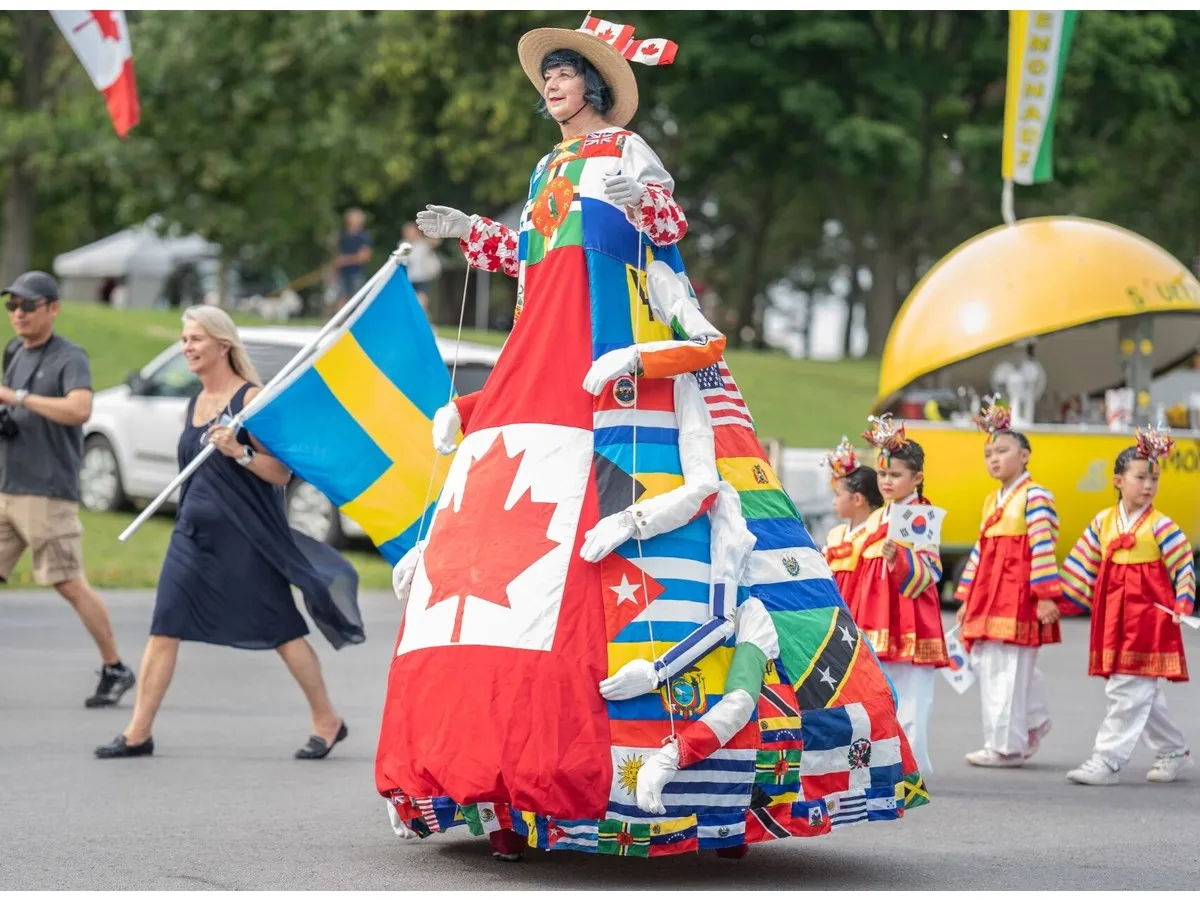
Skip to Content Subscribe Our Offers My Account Manage My Subscriptions FAQ Newsletters Canada Canadian True Crime Canadian Politics Health World Israel & Middle East Financial Post NP Comment Longreads Puzzmo Diversions Comics NP News Quiz New York Times Crossword Horoscopes Life Eating & Drinking Style Sponsored Play for Ontario Travel Travel Canada Travel USA Travel International Cruises Travel Essentials Culture Books Celebrity Movies Music Theatre Television Business Essentials Advice Lives Told Tails Told Shopping Buy Canadian Home Living Outdoor Living Kitchen & Dining Tech Style & Beauty Personal Care Entertainment & Hobbies Gift Guide Travel Guide Amazon Prime Day Deals Savings National Post Store More Sports Hockey Baseball Basketball Football Soccer Golf Tennis Driving Vehicle Research Reviews News Gear Guide Obituaries Place an Obituary Place an In Memoriam Classifieds Place an Ad Celebrations Working Business Ads Archives Healthing Epaper Manage Print Subscription Profile Settings My Subscriptions Saved Articles My Offers Newsletters Customer Service FAQ Newsletters Canada World Financial Post NP Comment Longreads Puzzmo Diversions Life Shopping Epaper Manage Print Subscription HomeNewsCanadaMajority of Canadians attached to ancestral origins, even more to national identity: pollQuebecers and British Columbians are the most likely to say they are "very attached" to their ancestry, at 33 and 32 per cent respectivelyLast updated 28 minutes ago You can save this article by registering for free here. Or sign-in if you have an account.Participants in an annual ethnic festival parade in Belleville, Ontario reflect a multiplicity of identities. The four-day event included a full lineup of food, dance and song. Photo by Derek Baldwin /Derek BaldwinAlmost two-thirds of Canadians say they are attached to their ethnic origins or ancestry, according to a new survey conducted by Leger for the Association for Canadian Studies (ACS). However, attachment to being Canadian remains considerably stronger, the survey shows.Enjoy the latest local, national and international news.Exclusive articles by Conrad Black, Barbara Kay and others. Plus, special edition NP Platformed and First Reading newsletters and virtual events.Unlimited online access to National Post.National Post ePaper, an electronic replica of the print edition to view on any device, share and comment on.Daily puzzles including the New York Times Crossword.Support local journalism.Enjoy the latest local, national and international news.Exclusive articles by Conrad Black, Barbara Kay and others. Plus, special edition NP Platformed and First Reading newsletters and virtual events.Unlimited online access to National Post.National Post ePaper, an electronic replica of the print edition to view on any device, share and comment on.Daily puzzles including the New York Times Crossword.Support local journalism.Create an account or sign in to continue with your reading experience.Access articles from across Canada with one account.Share your thoughts and join the conversation in the comments.Enjoy additional articles per month.Get email updates from your favourite authors.Create an account or sign in to continue with your reading experience.Access articles from across Canada with one accountShare your thoughts and join the conversation in the commentsEnjoy additional articles per monthGet email updates from your favourite authorsSign In or Create an AccountorAttachment to ancestry is widespread across the country. It reaches 67 per cent in Quebec and Atlantic Canada, 66 per cent in British Columbia and 65 per cent in Ontario. In Alberta, and Saskatchewan and Manitoba, 57 per cent said they are attached to their ethnic origins.The survey found that 64 per cent of Canadians say they are attached to their ancestry, including 28 per cent who described themselves as “very attached.” Quebecers and British Columbians are the most likely to say they are “very attached” to their ancestry, at 33 and 32 per cent respectively.Get a dash of perspective along with the trending news of the day in a very readable format.By signing up you consent to receive the above newsletter from Postmedia Network Inc.A welcome email is on its way. If you don't see it, please check your junk folder.The next issue of NP Posted will soon be in your inbox.We encountered an issue signing you up. Please try again“British Columbia’s relatively high ‘very attached’ result is more likely connected to its demographic diversity, immigration history and sizeable Asian, European and Indigenous populations,” Jack Jedwab, president of the ACS, told National Post in an email. “Many British Columbians may have relatively recent or clearly identifiable ancestral connections.”Meanwhile, 82 per cent of Canadians told Leger that they are attached to Canada, including 50 per cent who are very attached. Though, there are significant regional differences. Attachment to Canada climbs to 92 per cent in Atlantic Canada, compared with 73 per cent in Quebec. In Alberta, 84 per cent feel attachment to Canada. It was 88 per cent in B.C., and Saskatchewan and Manitoba.Only 33 per cent of Quebecers are “very attached” to Canada, compared with 63 per cent in Atlantic Canada, 58 per cent in Alberta, 55 per cent in British Columbia and 49 per cent in Saskatchewan and Manitoba.The survey reflects some generational differences in that Canadians aged 18 to 24 (36 per cent) and 55 to 64 (34 per cent) are almost equally “very attached” to their ethnic origins and ancestry, while respondents in the age groups in between are less likely to say they are “very attached” (between 22 and 24 per cent).“Among those age 18-24, ancestry may be especially relevant because identity is being explored and actively defined,” Jedwab said. “Younger Canadians have also grown up in an environment where ethnic identity, diversity and cultural recognition are openly discussed.” For survey respondents aged 55 to 64, Jedwab said, “attachment may reflect a later-life return to genealogy, inherited traditions and memories of parents or grandparents. Some members of this cohort are also immigrants or children of postwar immigrants for whom ancestral culture remains personally significant.”The survey also looked at gaps between attachment to Canada and ancestry. For example, among the youngest and oldest cohorts this gap was identical at 22 points. Though, this represents different considerations, says Jedwab. “Among 18–24-year-olds, attachment to both identities is substantial: 85 per cent are attached to Canada and 63 per cent to their ancestry. Their Canadian attachment is broad but comparatively less intense. Only 40 per cent say they are ‘very attached’ to Canada. In effect, young Canadians can value ancestry while still regarding Canada as the larger political and social community to which they belong.”In contrast, among respondents aged 65 and older, attachment to Canada reaches 89 per cent, compared with 67 per cent for ancestry.Perhaps unsurprisingly, the survey found immigrants are far more likely than non-immigrants to feel attached to their ethnic background — 78 per cent compared with 62 per cent — but they are also slightly more likely to feel attached to Canada (85 per cent versus 81 per cent). Similarly, noted Jedwab, 75 per cent of racialized respondents report attachment to their ethnic origins, compared with 62 per cent of white respondents, while both groups report the same level of attachment to Canada, at 82 per cent.The primary language spoken by respondents revealed another important dimension of attachment. For anglophones there is a 22-point gap between attachment to Canada and attachment to their ancestry — 84 per cent compared with 62 per cent. For allophones, attachment is high on both measures: 89 per cent to Canada and 84 per cent to their ethnic origins. Francophones only show a five-point gap, but attachment for them on both measures is lower at 70 per cent to Canada and 65 per cent to ethnic origins.Jedwab suggests that the lower numbers among francophones is due to their identity “often (being) expressed through attachment to Quebec, the French language and a distinct national or cultural community. A francophone whose family has lived in Quebec for several centuries may not think of France — another ancestral country — as central to their identity. Their principal collective identity may be Québécois or French Canadian.”Quebec respondents made way for one of the survey’s most counterintuitive findings, Jedwab said. Quebecers aged 18 to 24 are more attached to Canada than Quebecers overall, with 84 per cent of the youngest group reporting attachment to Canada, compared with 71 per cent across Quebec. Although only 37 per cent of young Quebecers say they are very attached, another 47 per cent say they are somewhat attached.“Younger Quebecers may be more open to holding both identities without feeling required to resolve the constitutional question that preoccupied the others,” he said. “(Even though) the sovereignists have been trying to give the impression that a new generation of Quebecers is now driving independence, despite the data not supporting this observation.”Leger surveyed 1,505 Canadians online between July 10 and 12. A margin of error cannot be associated with a non-probability sample in a panel survey for comparison purposes. A probability sample of the same size would have a margin of error of plus or minus 2.5%, 19 times out of 20.Our website is the place for the latest breaking news, exclusive scoops, longreads and provocative commentary. Please bookmark nationalpost.com and sign up for our daily newsletter, Posted, here. Join the Conversation This website uses cookies to personalize your content (including ads), and allows us to analyze our traffic. Read more about cookies here. By continuing to use our site, you agree to our Terms of Use and Privacy Policy.
Majority of Canadians attached to ancestral origins, even more to national identity: poll
Survey conducted for the Association for Canadian Studies says 28 per cent of Canadians are “very attached” to their ancestral background.
1,533 words~7 min read