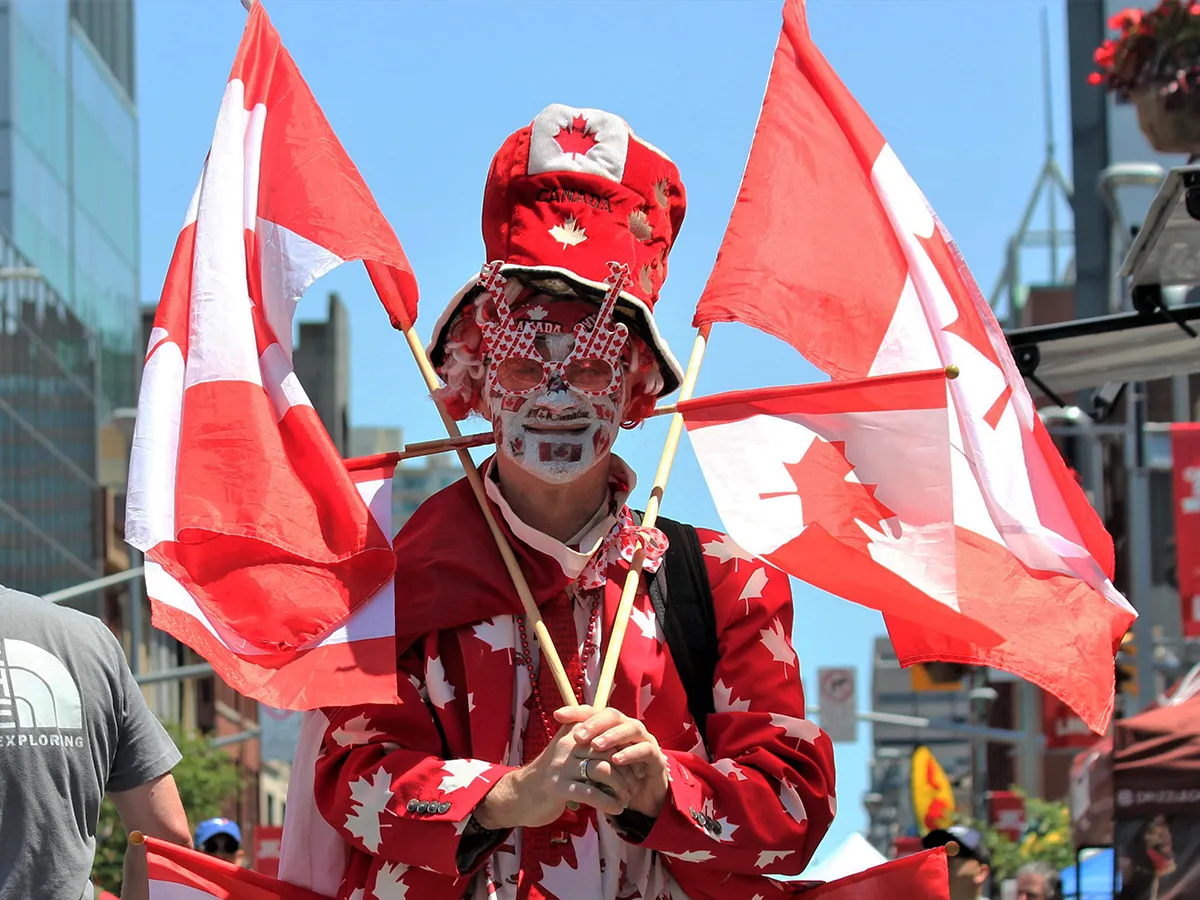
Skip to Content Subscribe Our Offers My Account Manage My Subscriptions FAQ Newsletters Canada Canadian True Crime Canadian Politics Health World Israel & Middle East Financial Post NP Comment Longreads Puzzmo Diversions Comics NP News Quiz New York Times Crossword Horoscopes Life Eating & Drinking Style Sponsored Play for Ontario Travel Travel Canada Travel USA Travel International Cruises Travel Essentials Culture Books Celebrity Movies Music Theatre Television Business Essentials Advice Lives Told Tails Told Shopping Buy Canadian Home Living Outdoor Living Kitchen & Dining Tech Style & Beauty Personal Care Entertainment & Hobbies Gift Guide Travel Guide Amazon Prime Day Deals Savings National Post Store More Sports Hockey Baseball Basketball Football Soccer Golf Tennis Driving Vehicle Research Reviews News Gear Guide Obituaries Place an Obituary Place an In Memoriam Classifieds Place an Ad Celebrations Working Business Ads Archives Healthing Epaper Manage Print Subscription Profile Settings My Subscriptions Saved Articles My Offers Newsletters Customer Service FAQ Newsletters Canada World Financial Post NP Comment Longreads Puzzmo Diversions Life Shopping Epaper Manage Print Subscription HomeNewsCanadaOne in four Canadians aren't confident that Canada will still be a country in 50 yearsThe poll found supporters of the separatist Bloc Québécois are more optimistic (66 per cent) about national unity than Conservative supporters (58 per cent)Last updated 0 minutes ago You can save this article by registering for free here. Or sign-in if you have an account.After a year of U.S. President Donald Trump's "51st state nonsense," the number of Canadians who say they are "very" or "somewhat" proud to be a Canadian has gone up to 84 per cent. Photo by Dale Carruthers/The London Free Press/Postmedia/FileWhile Canadians are a patriotic lot, one in four are not overly confident in the country’s long-term future, according to a new Postmedia-Leger poll.Enjoy the latest local, national and international news.Exclusive articles by Conrad Black, Barbara Kay and others. Plus, special edition NP Platformed and First Reading newsletters and virtual events.Unlimited online access to National Post.National Post ePaper, an electronic replica of the print edition to view on any device, share and comment on.Daily puzzles including the New York Times Crossword.Support local journalism.Enjoy the latest local, national and international news.Exclusive articles by Conrad Black, Barbara Kay and others. Plus, special edition NP Platformed and First Reading newsletters and virtual events.Unlimited online access to National Post.National Post ePaper, an electronic replica of the print edition to view on any device, share and comment on.Daily puzzles including the New York Times Crossword.Support local journalism.Create an account or sign in to continue with your reading experience.Access articles from across Canada with one account.Share your thoughts and join the conversation in the comments.Enjoy additional articles per month.Get email updates from your favourite authors.Create an account or sign in to continue with your reading experience.Access articles from across Canada with one accountShare your thoughts and join the conversation in the commentsEnjoy additional articles per monthGet email updates from your favourite authorsSign In or Create an AccountorFifteen per cent of Canadians said they do not think Canada, “with its current borders and provinces will still exist 50 years from now.”Another 11 per cent aren’t sure what to think.“It’s an interesting time to ask the question, because it’s not just internally that there are questions around our territorial integrity,” said Andrew Enns, executive vice-president of Leger’s Central Canada operations.In addition to Alberta’s looming referendum on separation, United States President Donald Trump continues to taunt Canadians with his “51st state” rhetoric.Get a dash of perspective along with the trending news of the day in a very readable format.By signing up you consent to receive the above newsletter from Postmedia Network Inc.A welcome email is on its way. If you don't see it, please check your junk folder.The next issue of NP Posted will soon be in your inbox.We encountered an issue signing you up. Please try againThat American aggression “hasn’t disappeared from our national conscience,” Enns said. “It still kind of preoccupies our psyche a bit” and may be fuelling Canadian pride. In 2024, 76 per cent of Canadians called themselves proud. After a year of Trump’s “51st state nonsense” that number is now into the 80s, Enns said.However, while most Canadians are “quite bullish” about the country’s national unity, a not insignificant number aren’t so optimistic.The Leger poll found 84 per cent of Canadians say they are “very” (51 per cent) or “somewhat” (33 per cent) proud to be a Canadian, compared to 13 per cent who responded that they are “not very” or not at all proud to be Canadian. One per cent of poll respondents were not Canadian citizens; two per cent didn’t know how they felt, or preferred not to answer.“Total proud” (“very” plus “somewhat”) numbers were highest among residents of British Columbia (89 per cent) and Manitoba and Saskatchewan (87 per cent), but also high among Albertans (82 per cent).Enns thought he’d see a dip in Canadian pride in Alberta, given the separatist movement in the province. “But we don’t really see it,” he said.The October referendum will ask Albertans whether they wish to stay in Canada or begin the process of holding a binding vote on separating.While Quebecers show similar levels of Canadian pride overall, they are “a little less enthusiastic,” Enns said, with only 38 per cent saying they are very proud, compared to the other provinces at 51 per cent or higher.“Total pride” is stable, up one per cent since last June, but the share of the “very proud” increased by six points in Canada.The Leger poll was conducted “the day after Canada won a pretty big soccer game,” Enns said, referring to Canada’s 6-0 win over Qatar. It’s possible there was some extra pro-Canada enthusiasm and sentiment over the men’s national soccer team’s first-ever FIFA World Cup win.Canadians aged 55 and older (90 per cent), women (87 per cent versus 80 per cent of men) and Liberal voters (96 per cent versus 76 per cent of Conservatives) are the most likely to report being proud.The youngest Canadians polled (18- to 34-year-olds) are the least proud age cohort, with only 75 per cent very (31 per cent) or somewhat (44 per cent) proud to be Canadian.“Honestly, it’s sort of a pattern that blows through almost all these questions,” Enns said. Economic worries and frustrations over the housing market could be dampening national pride for younger Canadians.While most Canadians (74 per cent) are confident Canada’s borders and provinces will exist as they are now in half-a-century’s time, confidence varies by party support, with 91 per cent of Liberal supporters confident in Canada’s future, compared to just 58 per cent of Conservative voters.Even supporters of the Bloc Québécois, at its heart a separatist party, are more optimistic (66 per cent) about national unity than Conservatives.Enns said he understands why Conservative supporters may not be thrilled with the direction Prime Minister Mark Carney’s Liberals are taking the country.However, “to me, it’s a little unsettling when your other big national party consists of people who really aren’t overly confident in the long-term future of the country,” he said.The question on the long-term integrity of national borders was rather open-ended and deliberately “not super prescriptive,” Enns said. “We just wanted people to sort of ponder the question: ‘Hey, thinking about Canada, do you think that big pink blob near the top of the globe is going to look the same? Are we going to see people in Alberta pop out? Are they worried there’s going to be a big hole in the middle because Alberta’s not going to be there 50 years from now, or Quebec, for that matter?’”Views on Canada’s system of Confederation are mixed, according to the poll: 23 per cent agree Confederation “works well and treats all regions relatively equally,” 19 per cent believe Confederation is unfair to some regions but works well enough to leave alone, 18 per cent said Central Canada is favoured at the expense of other regions and 17 per cent say Confederation is particularly unfair to Western provinces.Albertans (37 per cent) and British Columbians (31 per cent) are especially likely to say Confederation — which marks its 159th anniversary on July 1 — isn’t working for them.The online survey of 1,528 Canadian adults was conducted by Leger between June 19 and June 22. A margin of error cannot be associated with a non-probability sample in a panel survey. For comparison purposes, a probability sample of this size yields a margin of error no greater than plus or minus 2.5 per cent, 19 times out of 20.National PostOur website is the place for the latest breaking news, exclusive scoops, longreads and provocative commentary. Please bookmark nationalpost.com and sign up for our daily newsletter, Posted, here. Join the Conversation This website uses cookies to personalize your content (including ads), and allows us to analyze our traffic. Read more about cookies here. By continuing to use our site, you agree to our Terms of Use and Privacy Policy.
One in four Canadians aren't confident that Canada will still be a country in 50 years
While 84 per cent of Canadians are proud to be Canadian, 15 per cent don't believe Canada will exist in its current state 50 years from now.
1,488 words~7 min read