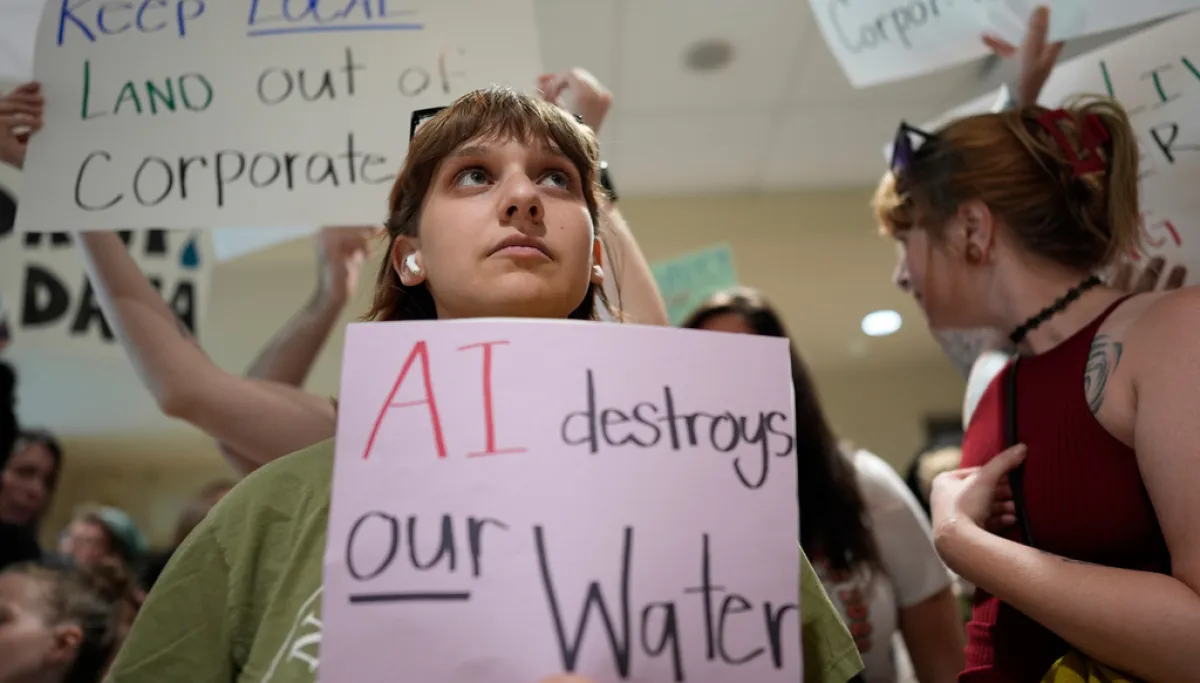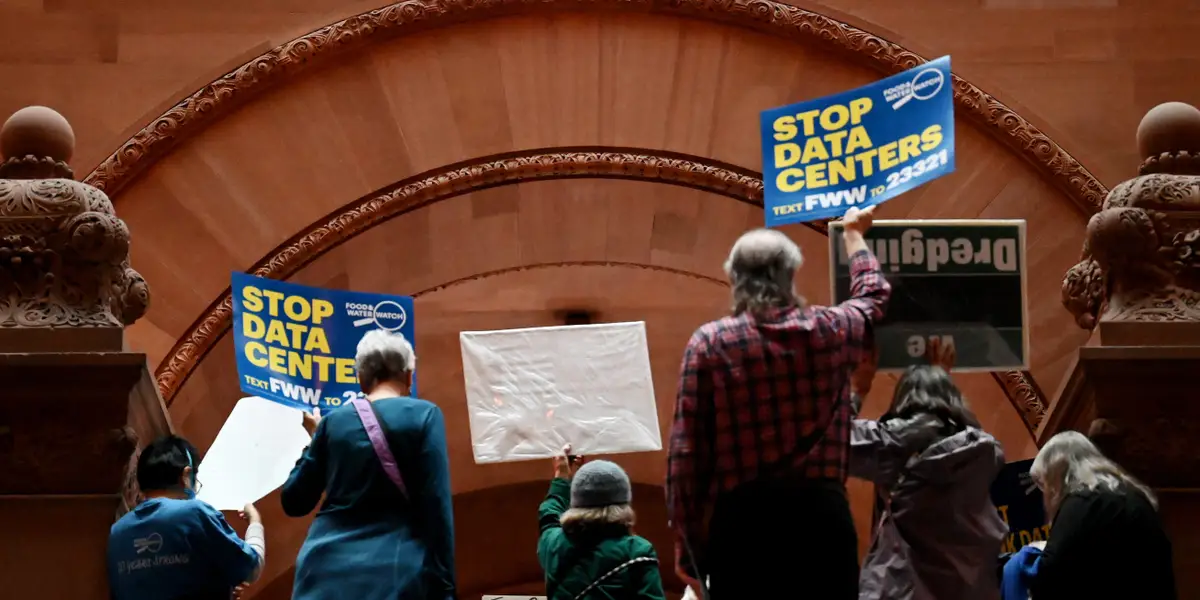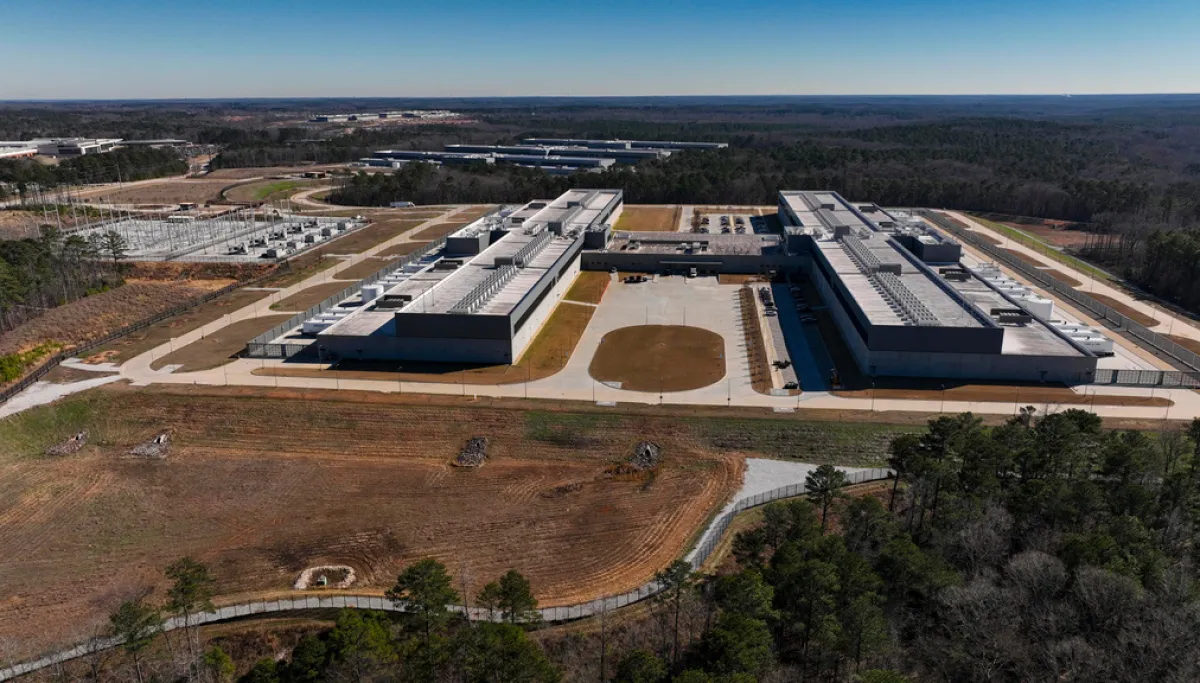
Candidates for governor are offering different visions for how to balance economic development with residents’ concerns over rising electricity demand, land use, and local control as data centers become a prominent issue in state politics.The facilities that power cloud computing and artificial intelligence have become a flashpoint in several states as communities push back against large-scale developments. While few candidates oppose data centers outright, many are proposing new guardrails for where they can be built and how they affect nearby residents. Candidates’ stances on how to regulate data centers generally fall into two categories: moratoriums or keeping energy usage from affecting ratepayers, largely along party lines. Some outliers have offered scant details on their opinions, only promoting local control.
Calling for a moratorium
Several candidates have embraced temporary moratoriums or slower approval processes as a way to combat rapid data center growth, arguing that states should better understand the impact of data centers before allowing additional construction. In Georgia, Democratic candidate Keisha Lance Bottoms has called for a construction moratorium so the state can “reassess” the impact data centers have on local communities. The former Atlanta mayor has emphasized that the Peach State “needs to slow down” on the facilities’ construction. “Keisha will stand up to protect Georgia consumers and communities from high energy bills,” TaNisha Cameron, her campaign communications director, said in a statement to Bloomberg. “Georgia’s status quo of unchecked data center construction without a plan is not acceptable.”Bottoms’s competitor, Republican Rick Jackson, has stopped short of calling for a moratorium, instead saying any decision should be left up to communities. Jackson, who has invested in a Georgia facility, said data centers could provide an economic boon but that the final decision is up to residents. “I would never suggest that happen over the will, the obligation of the people that they want, but I think they ought to take a real good look at it,” Jackson said. “But, make sure it’s done correctly to solve the problems — economics — for that community.” In Florida, Democratic hopeful David Jolly has called for a statewide moratorium on data centers, citing the state’s lack of “necessary environmental protections.”The push for temporary moratoriums has emerged as the populist stance among gubernatorial candidates, with some taking up the fight after previously backing initiatives that promote data center construction. Kansas Democratic state senator and gubernatorial candidate Cindy Holscher previously supported legislation intended to expand data center construction and give tax breaks to developers, but has since reversed course. “I am not opposed to data centers,” Holscher told the Johnson County Post. “I am opposed to asking Kansas families, farmers, and small businesses to subsidize some of the wealthiest corporations on Earth without any clear guarantee that Kansans will benefit.”While many of those in favor of statewide moratoriums fall on the left side of the aisle, Republican gubernatorial hopeful James Fishback has emerged as a GOP supporter of data center halts, pledging to ban all such facilities in the state if he is elected. For many candidates, making their stance on data centers results from fielding questions from voters concerned about the facilities popping up in their backyards. In Wisconsin, socialist candidate Francesca Hong has made a data center moratorium a pillar in her campaign. HERE’S HOW HOMEOWNERS CAN LOWER THEIR ELECTRICITY BILLSHong proposes a moratorium similar to other candidates, but she has made it one of the main issues on her campaign website. “Fran is the only candidate in this race who’s calling for a data center moratorium, pausing data center construction until we have a full record of their environmental and energy risks and how to mitigate them, because she knows we need to understand what we’re signing up for before we commit ourselves to it,” her website reads. Making data centers pay their own way