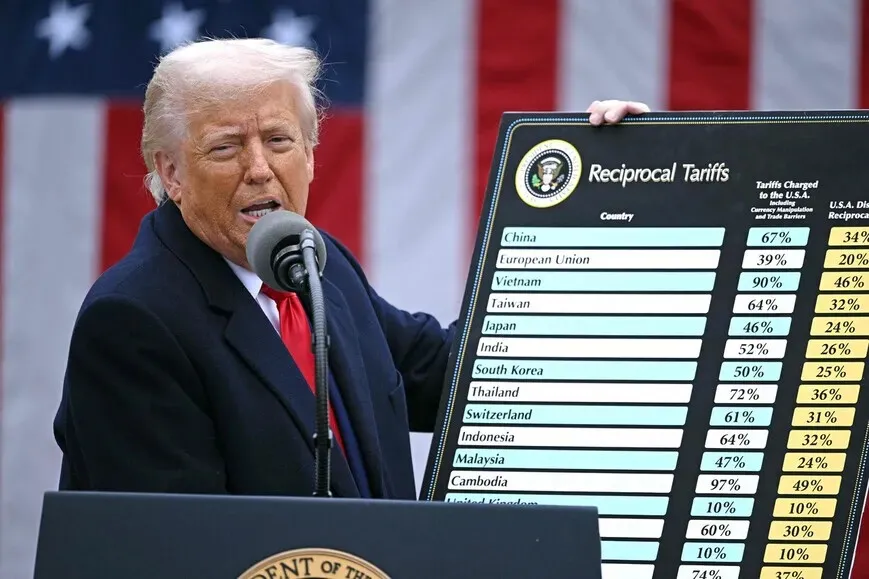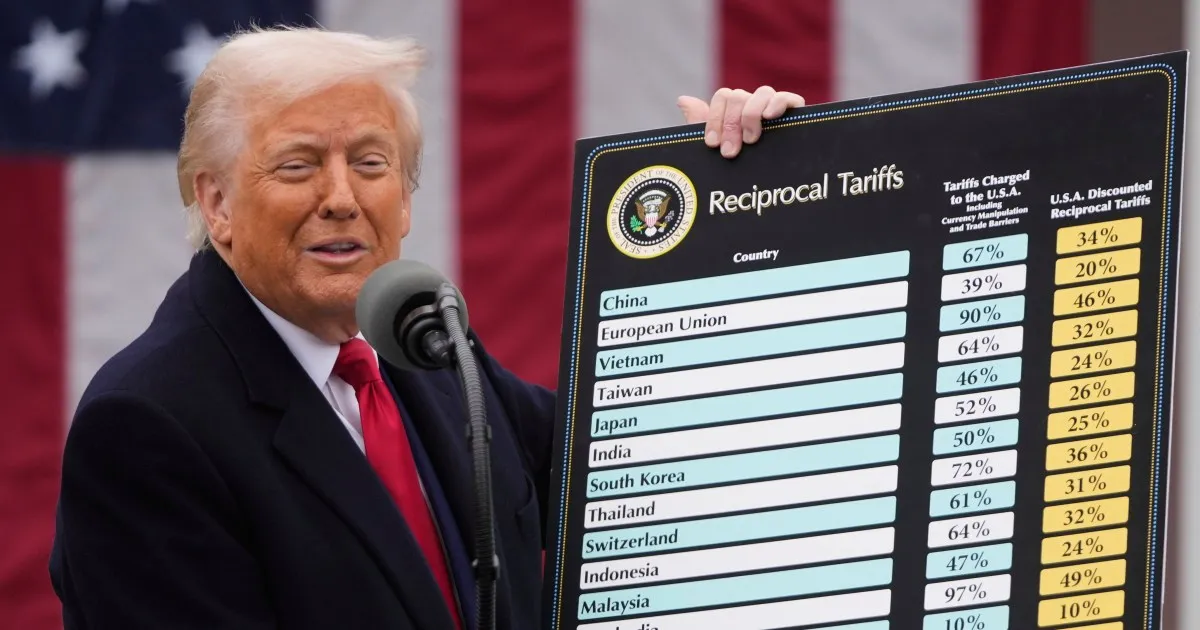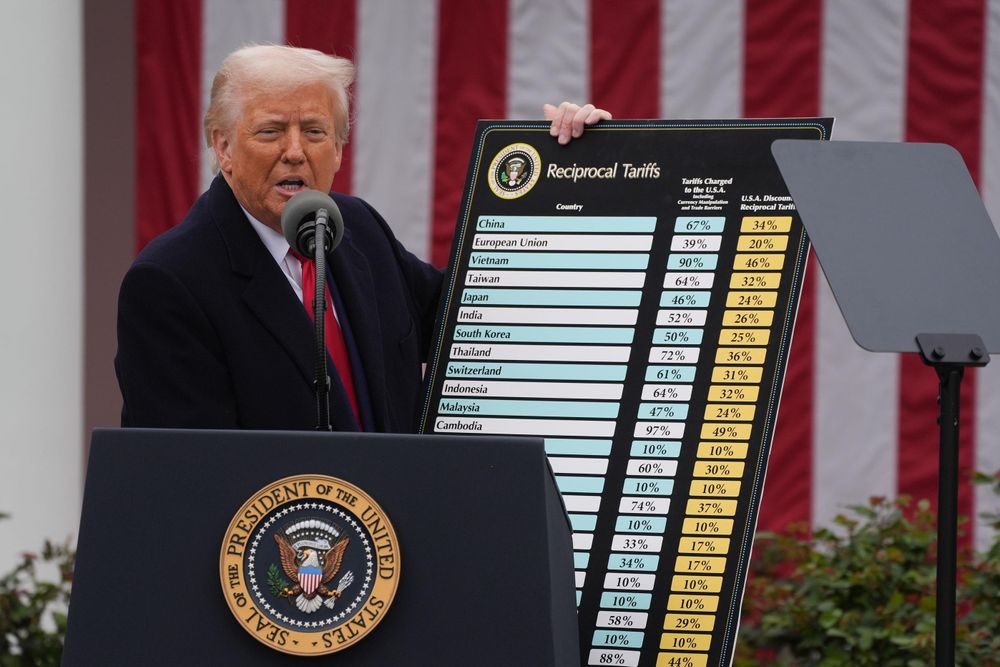
President Donald Trump holds a chart as he announces a plan for tariffs on April 2, 2025.
Steve Hendrix and Anthony Faiola
When President Donald Trump strode into the Rose Garden in April 2025 brandishing a poster board of tariff hikes, the world leaped as if a fire alarm had gone off. Markets shed trillions of dollars, envoys rushed to Washington, more than 75 governments scrambled to negotiate, some scrapping carefully prepped countermeasures in a rush to cut deals.
Sixteen months later, the flabbergasting threats keep piling up - to weaponize trade, annex Canada, seize Greenland, abandon NATO, annihilate Iran - but the alarm bells have gone quiet. World leaders are slower to rattle as they’ve seen the president increasingly fenced in by courts, rebuffed by Congress and strung along by Tehran - his ultimatums evaporating and poll numbers sinking.
When Trump announced a fresh barrage of tariffs last month, this time based on accusations of child labor violations to skirt limits imposed by the Supreme Court, the world didn’t shriek - it shrugged. France’s central bank governor predicted little impact. Britain proclaimed its exporters largely unaffected. Mexico’s economy minister waved it off as one tariff simply replacing another.