Fashion has always sold aspiration. Long before artificial intelligence (AI), it relied on carefully constructed images of beauty through styling, lighting, makeup and, more recently, digital retouching.
While consumers may have understood that these images do not reflect everyday reality, they continued to engage with them. They followed fashion trends and they bought the products being advertised.
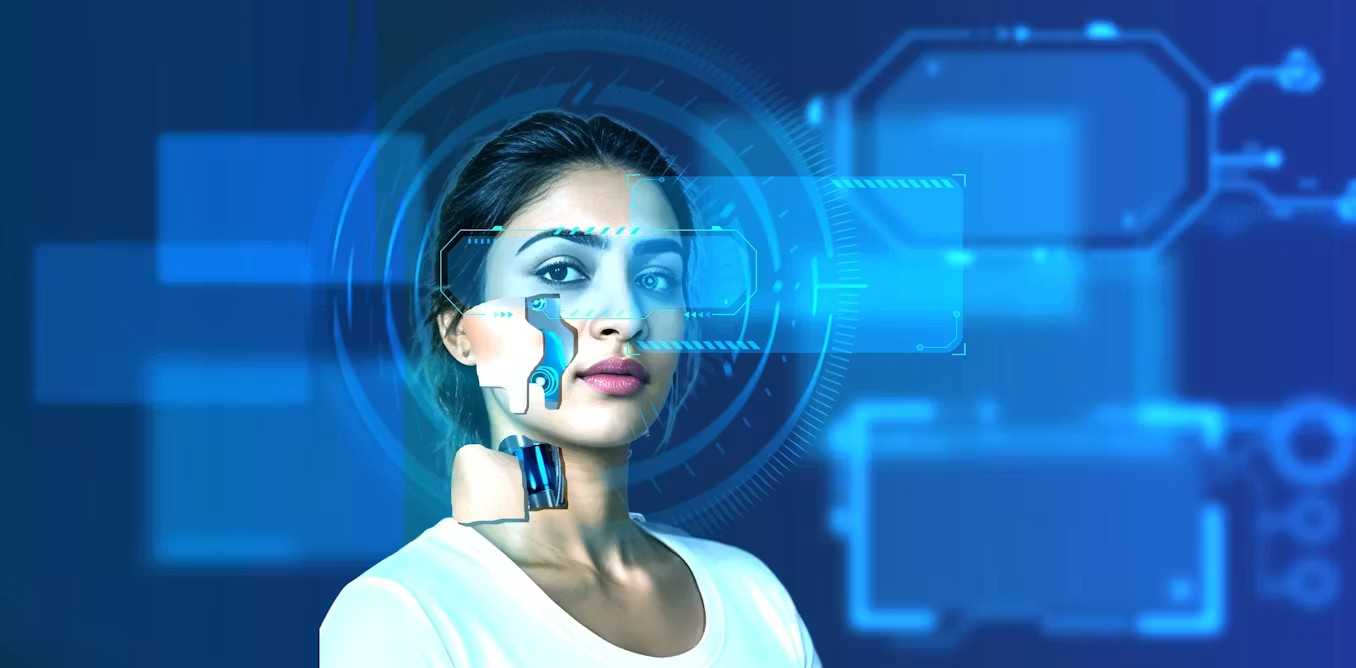
The industry is now moving beyond enhancing images of real people, however. It is beginning to generate the people themselves.
AI-generated fashion models and digital twins (virtual replicas of real models) are becoming increasingly common. Brands like Balmain, Levi’s and H&M have experimented with the technology, arguing that it offers new opportunities to increase diversity, improve efficiency and reduce costs.
But despite consumers’ familiarity with edited and idealised imagery, these developments have sparked a much stronger backlash. So, why does creating a model with AI feel fundamentally different from editing a photograph of a real person?