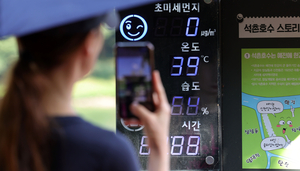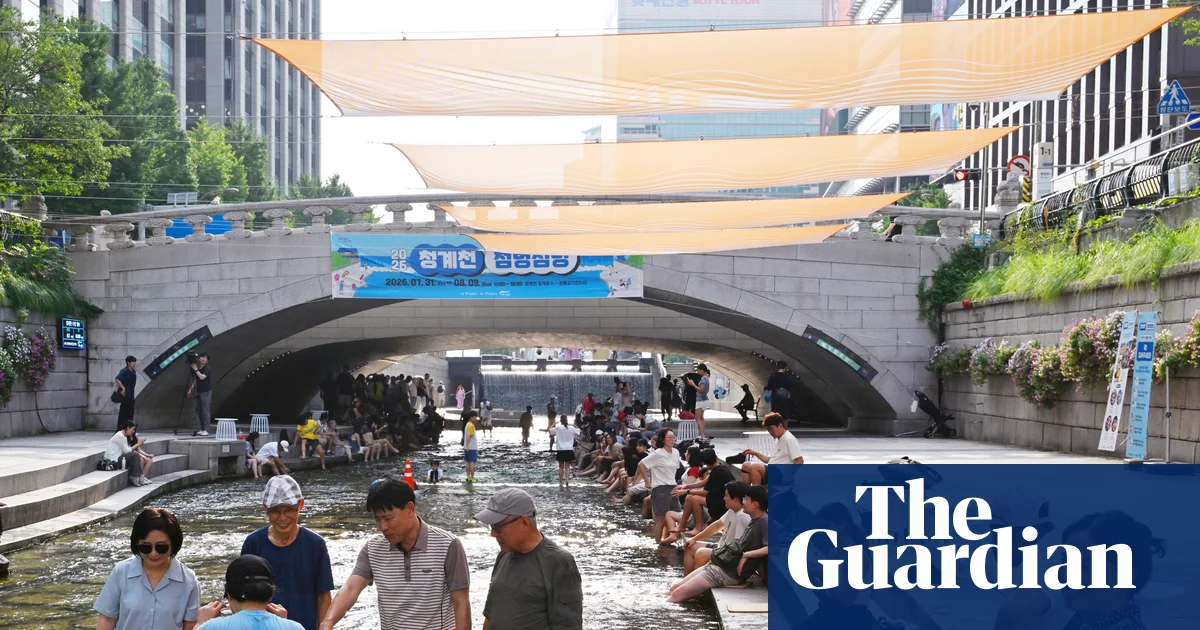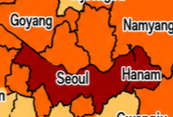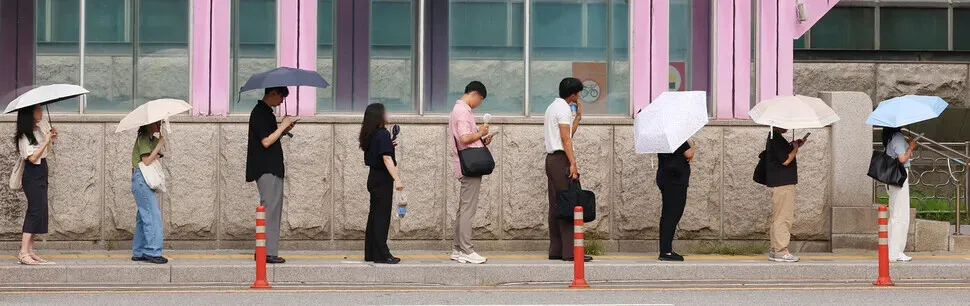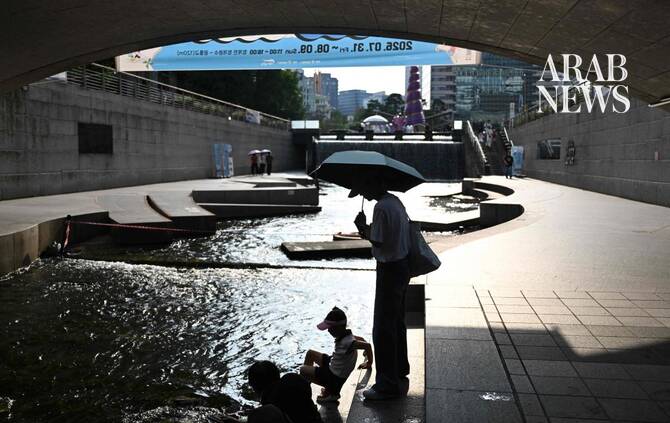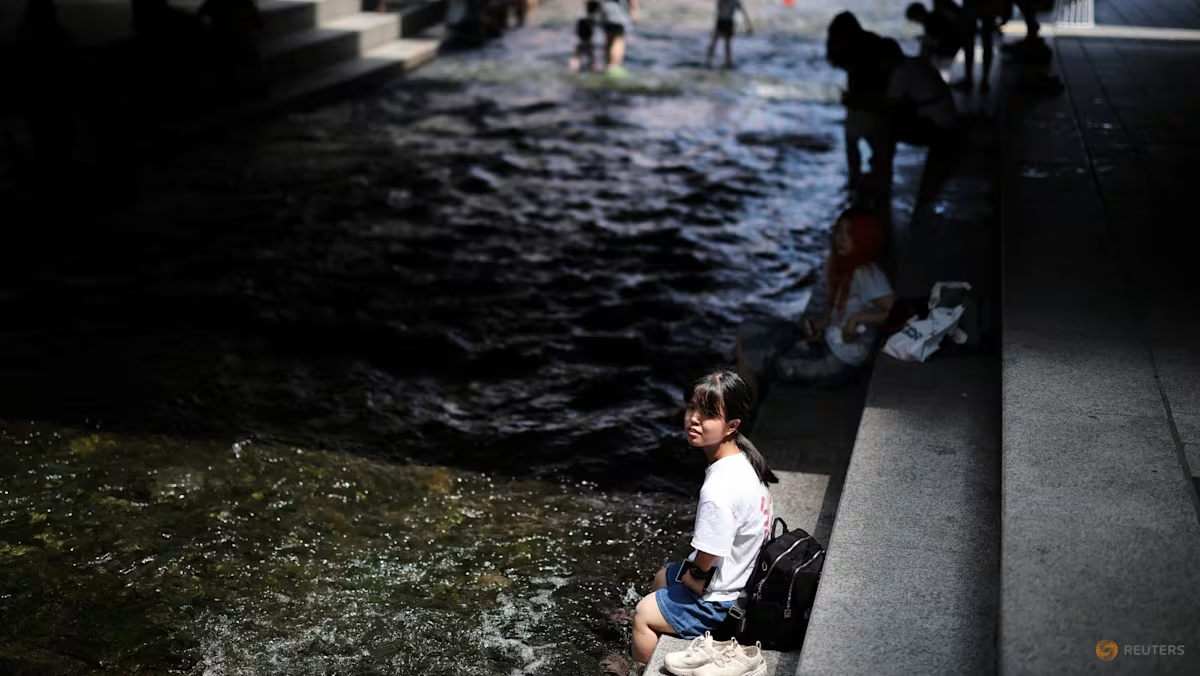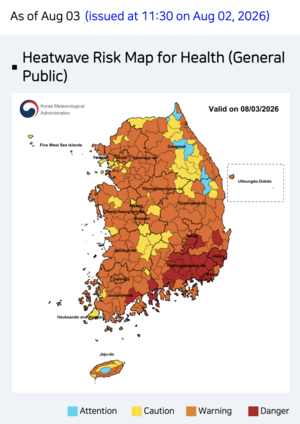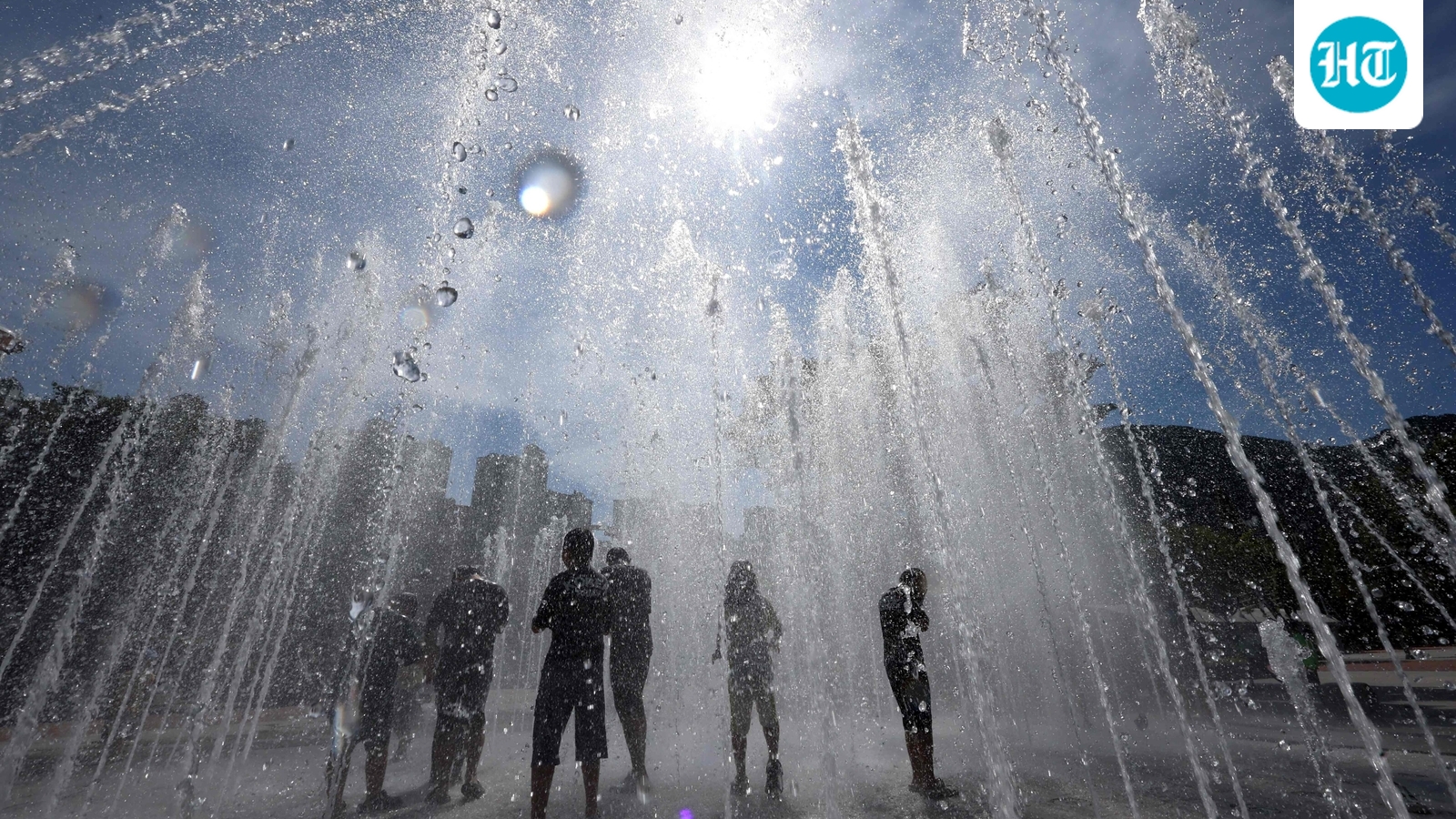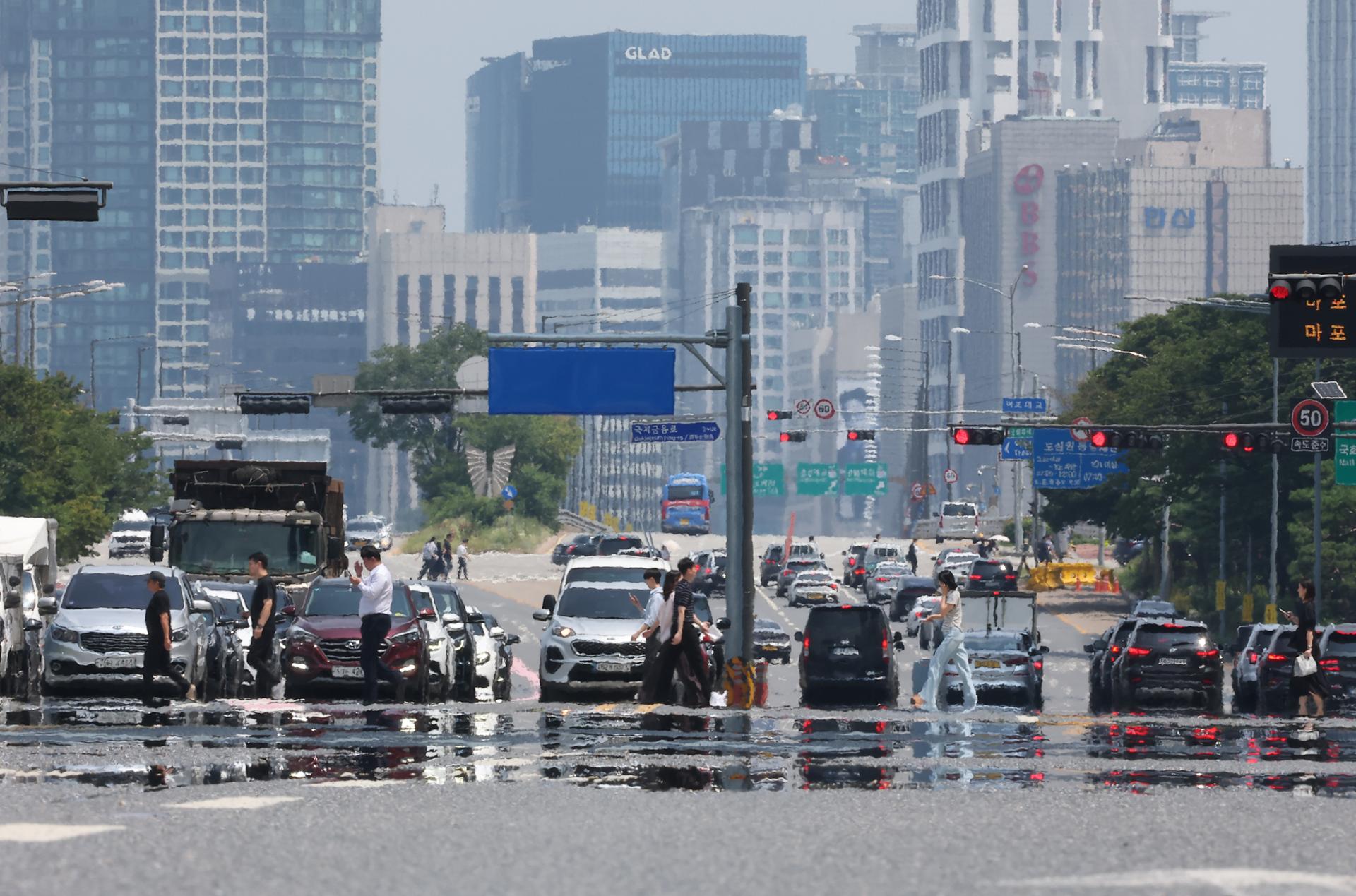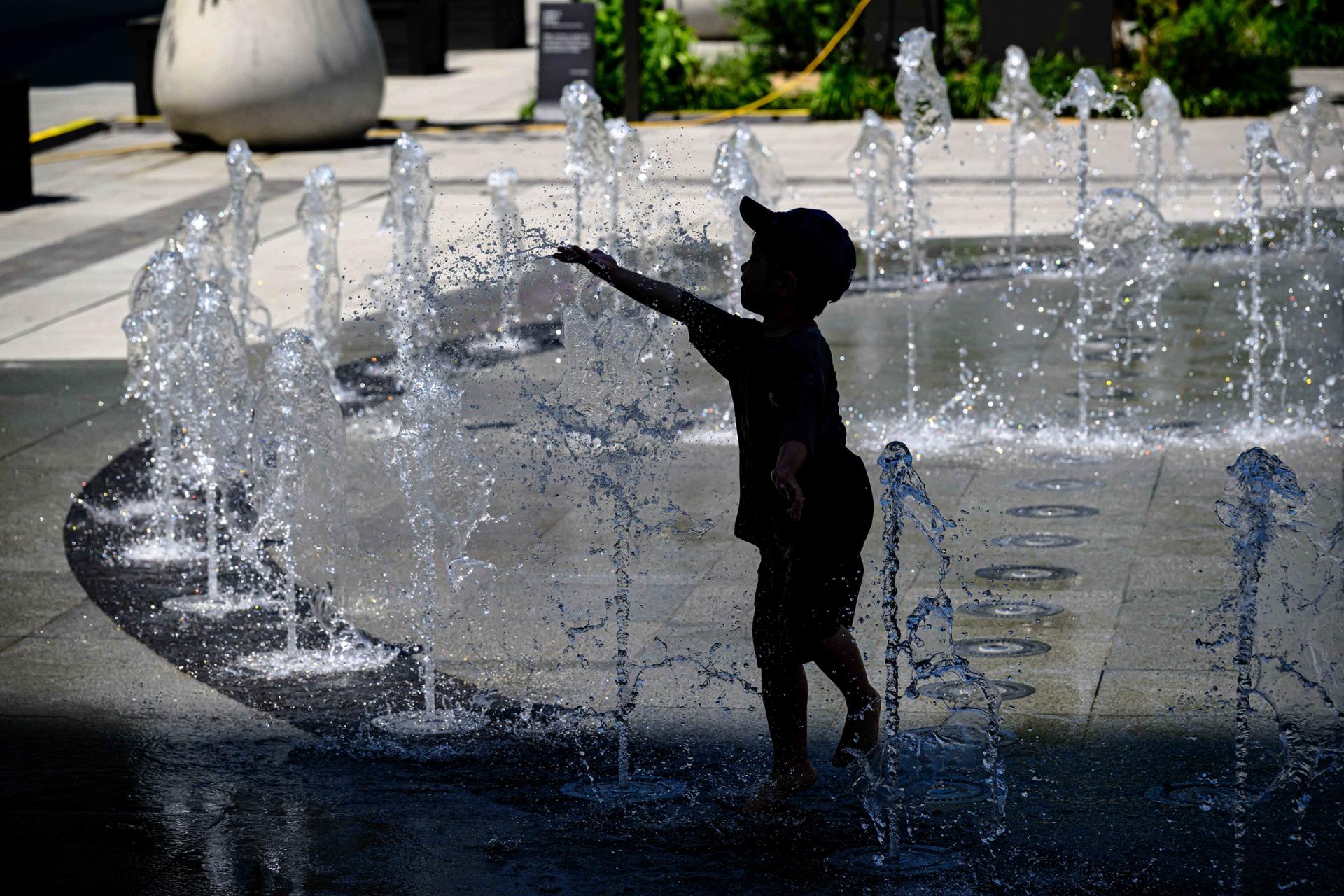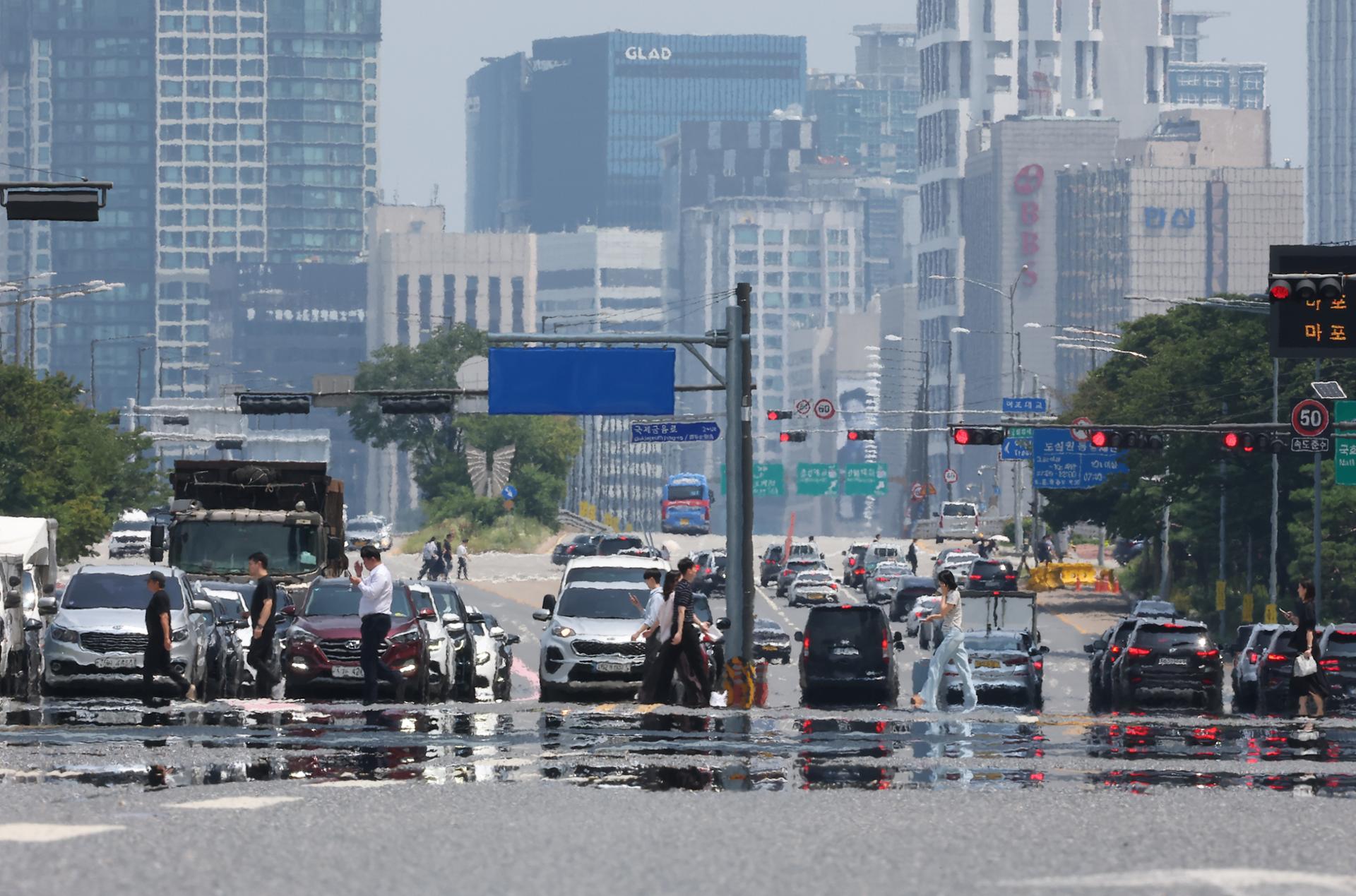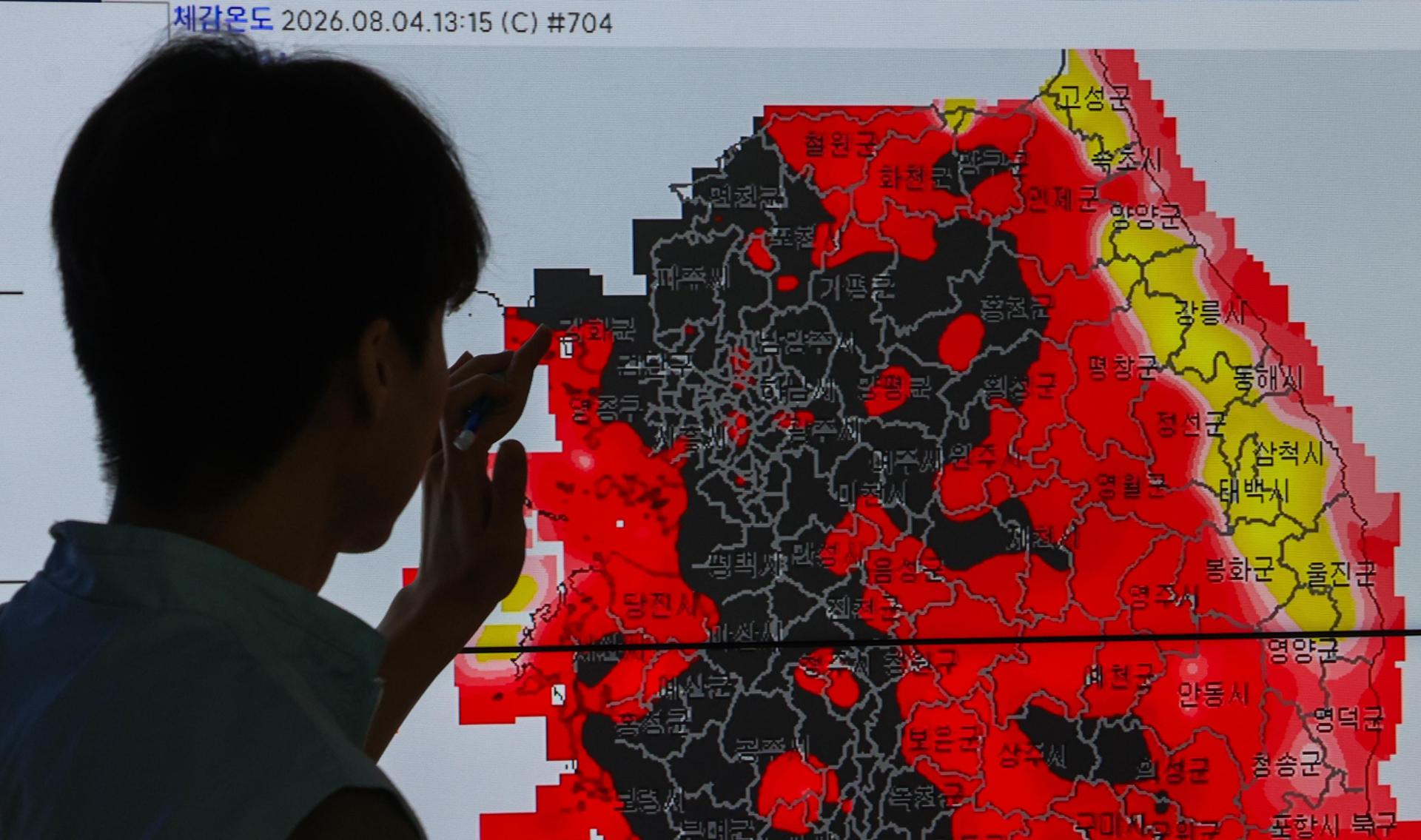
A weather forecaster points to areas under heat alerts on a nationwide weather map at the Korea Meteorological Administration's office in Suwon, Gyeonggi Province, Tursday. Joint Press CorpsAt lunchtime in Seoul Tuesday, the streets around Gwanghwamun were eerily quiet. The rows of outdoor cafes that usually spill over with office workers and tourists were left with more empty chairs than customers.The city’s white igloo-shaped “Haepiso” cooling shelter offered a brief escape from the sun, but even inside the dome, the air felt closer to warm and stuffy than cool.“It feels warm even in here — it’s probably 26 to 27 degrees Celsius with the air conditioner running,” a city staffer who manages the temporary facility told The Korea Times. “This area is usually crowded with people around this time, but not today.”The Korea Meteorological Administration issued the highest-level heat wave warning for the capital’s northeastern and northwestern districts earlier in the day, expanding the designation that had already been in place for the southeastern and southwestern districts.With the latest upgrade, the entire city is now under the heat wave emergency warning as continued scorching heat pushed its daytime temperature to 38 degrees Celsius.Two people take a rest inside a dome-shaped “Haepiso” outdoor cooling shelter at Gwanghwamun Square in central Seoul, Tuesday. Korea Times photo by Jung Min-hoAuthorities issue the highest alert level when an area has already seen at least two days with a daily maximum apparent temperature above 35 degrees Celsius and is forecast to reach an apparent temperature of 38 degrees or a maximum actual temperature of 39 degrees or higher.It is the first time since the new alert system was introduced on June 1 that Seoul has been placed under the top-tier heat warning.In response, the Seoul Metropolitan Government moved to sharply curb outdoor work and expand cooling measures. It ordered a halt to outdoor operations at city-funded construction sites and elderly job programs, making it the default to suspend such activities while city grapples with extreme heat. Meanwhile, road cleaning with water trucks and the operation of cooling roads — pavement sections fitted with spray nozzles — will also be significantly expanded, according to city authorities.The city government also distributed an emergency manual for the extreme heat warning to 126 youth facilities across the city — including national, city-run and private centers — and instructed them to suspend outdoor programs and switch to indoor activities.Meanwhile, the city government is moving to bolster support for vulnerable residents. It will provide 50,000 won ($35) in cooling cost subsidies to about 410,000 vulnerable households and cover two months of air-conditioning bills at welfare facilities, using roughly 20.5 billion won from its disaster relief fund.Heat haze shimmers above a road in Seoul, Tuesday. YonhapThe extreme heat is not confined to the capital. Cities and regions across the country have been put under the same top-tier heat warning, including Goyang, Anseong in Gyeonggi Province, Gwangyang, Yeosu and east Gwangju in Jeonnam (South Jeolla Province)-Gwangju Integrated Special City.In Gyeonggi Province, authorities have issued formal instructions to strengthen protections for outdoor workers and vulnerable residents. They ordered all public construction sites to suspend work during extreme heat and urged private employers to take similar steps. It also called for community care workers and local disaster volunteers to check on field workers and elderly people living alone, while stepping up campaigns on the health risk of heat.At Tuesday’s Cabinet meeting, President Lee Jae Myung framed the searing temperatures as a national emergency, urging ministers to “treat the current situation as a national disaster” and take swift, comprehensive measures to protect the public.“We need to conduct preemptive checks on power supply issues emerging from the surging demand for air conditioning,” he said. “To respond to the normalization of extreme weather, we must fundamentally redesign our disaster response system.”The weather agency warned that most parts of Korea are expected to remain sweltering for several days at least, with maximum apparent temperatures climbing to around 35 degrees.
Seoul's busiest streets sit empty as heat wave emergency grips city - The Korea Times
At lunchtime in Seoul Tuesday, the streets around Gwanghwamun were eerily quiet. The rows of outdoor cafes that usually spill over with office work...
660 words~3 min read