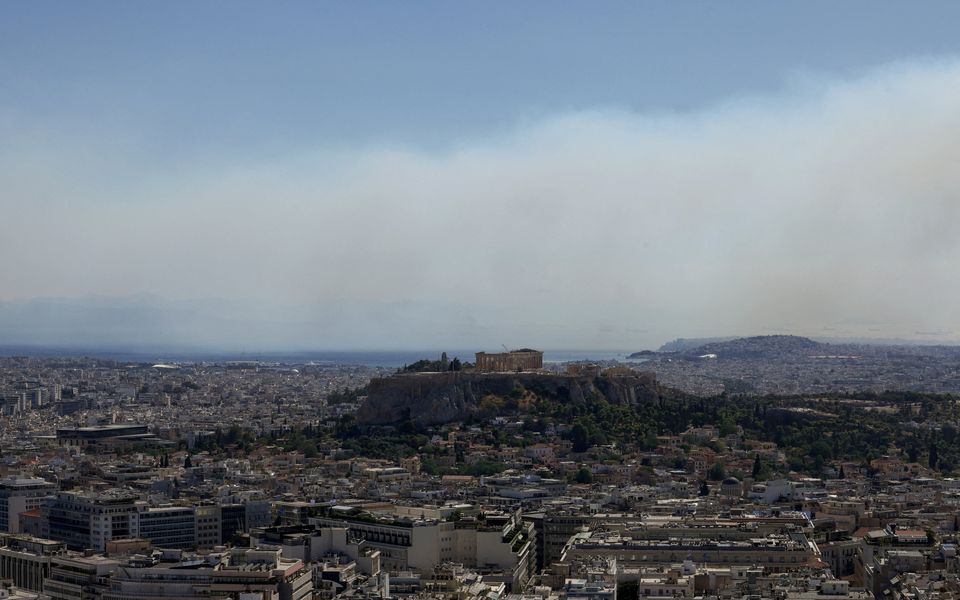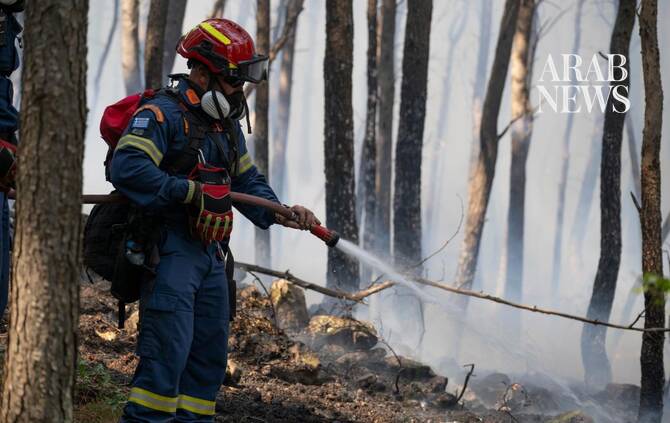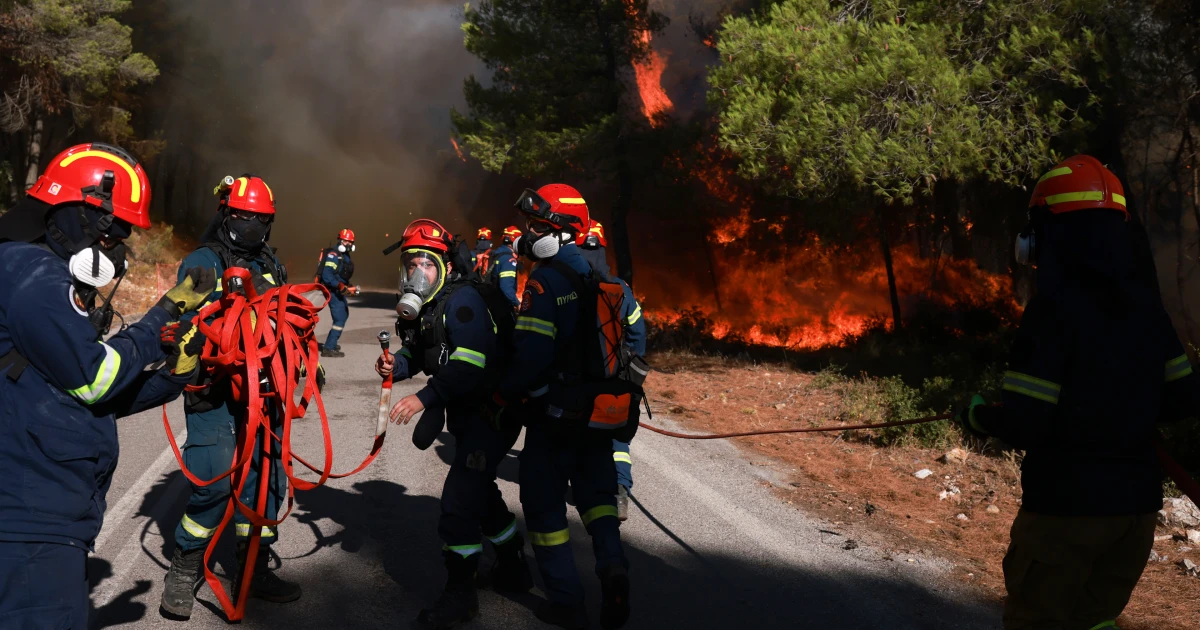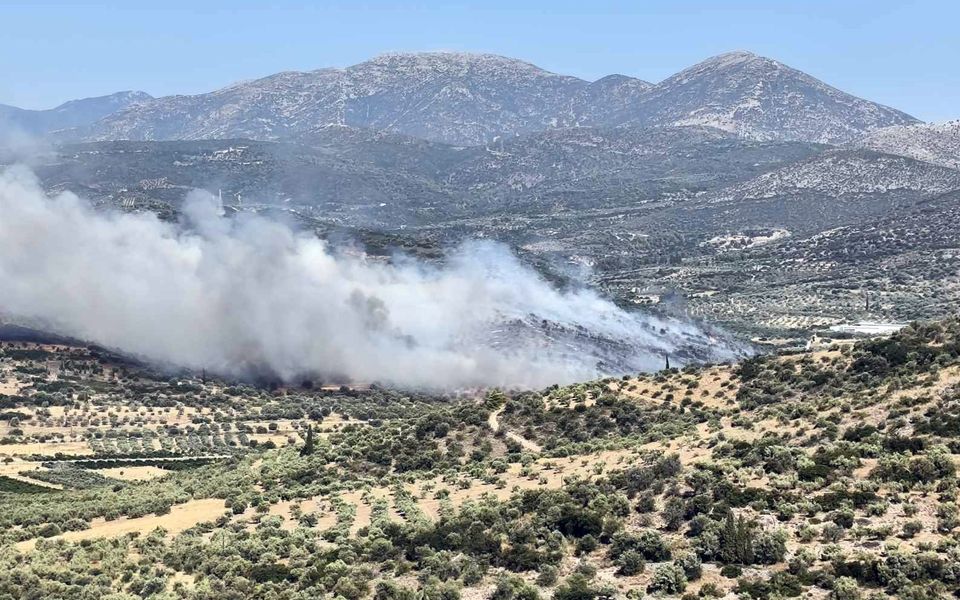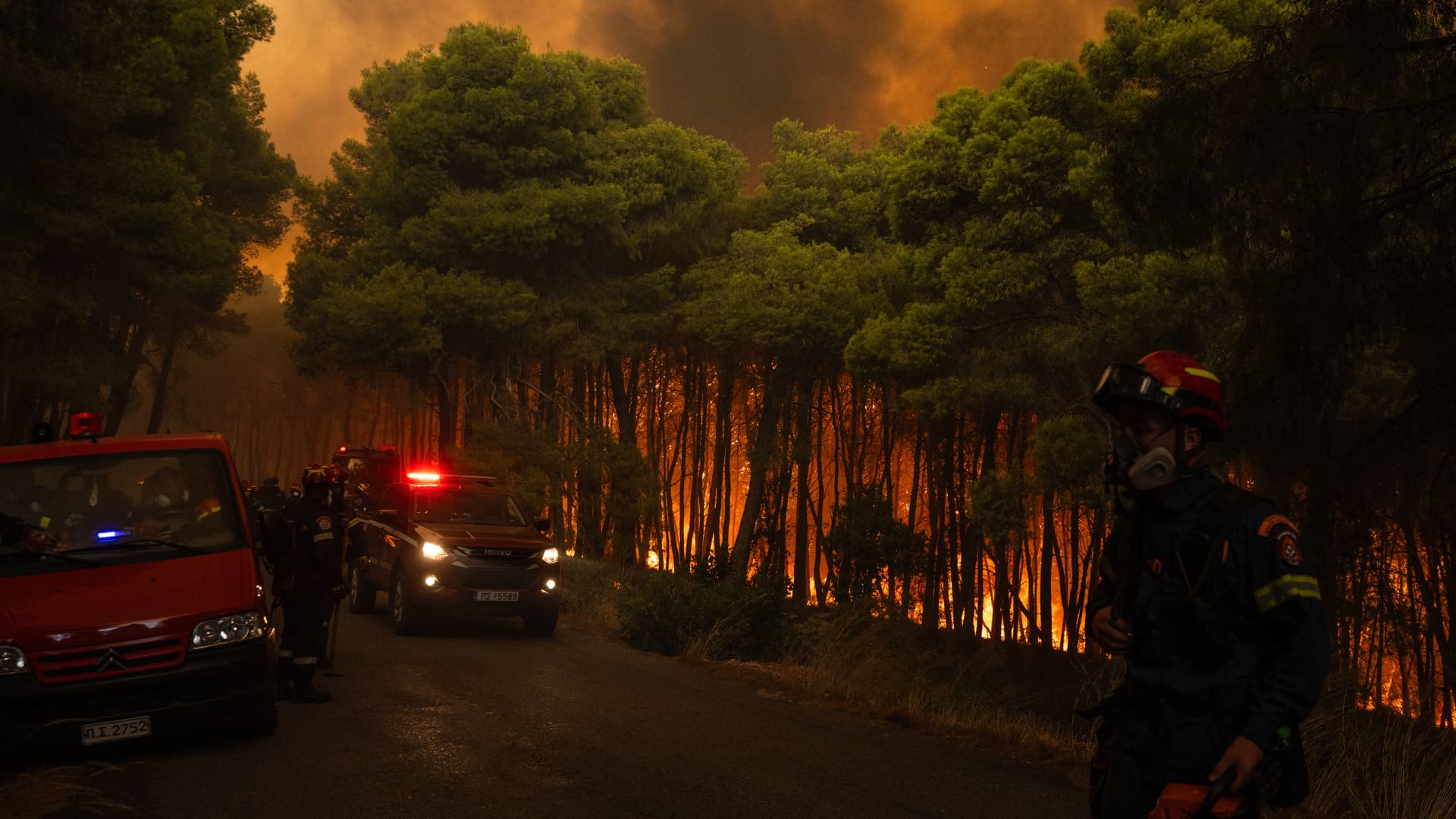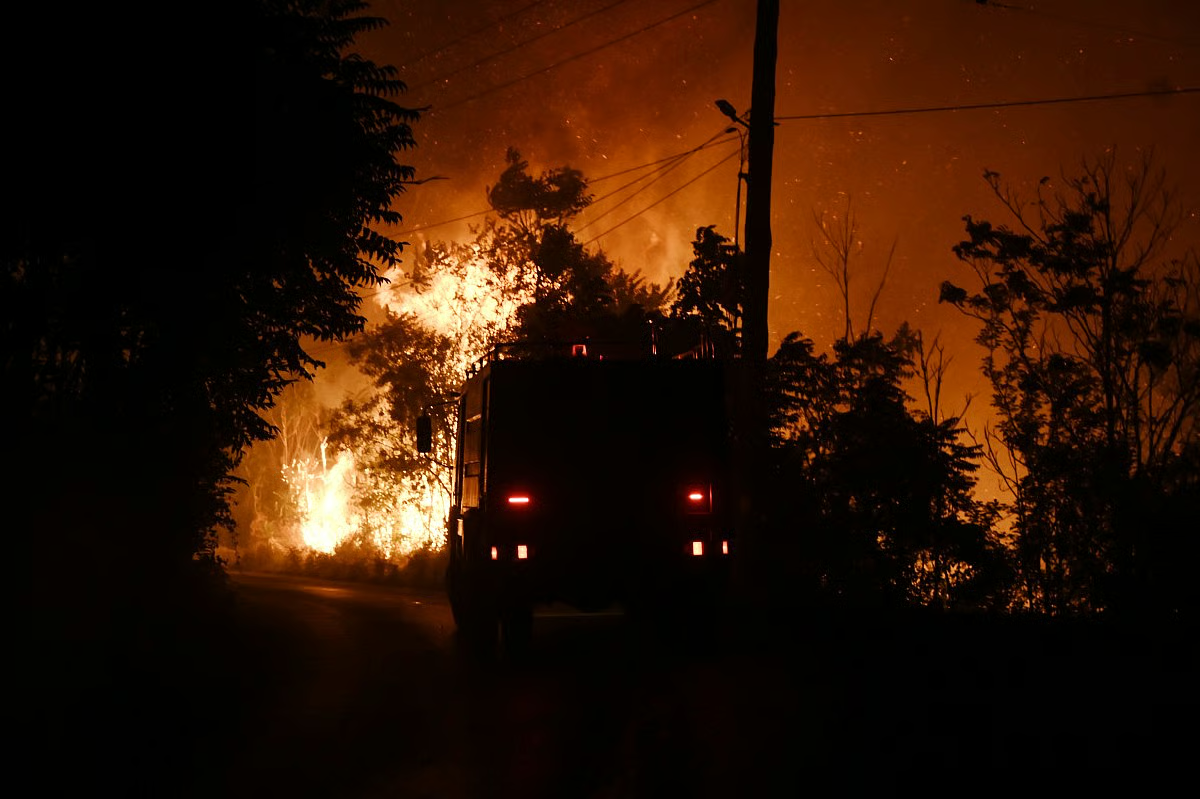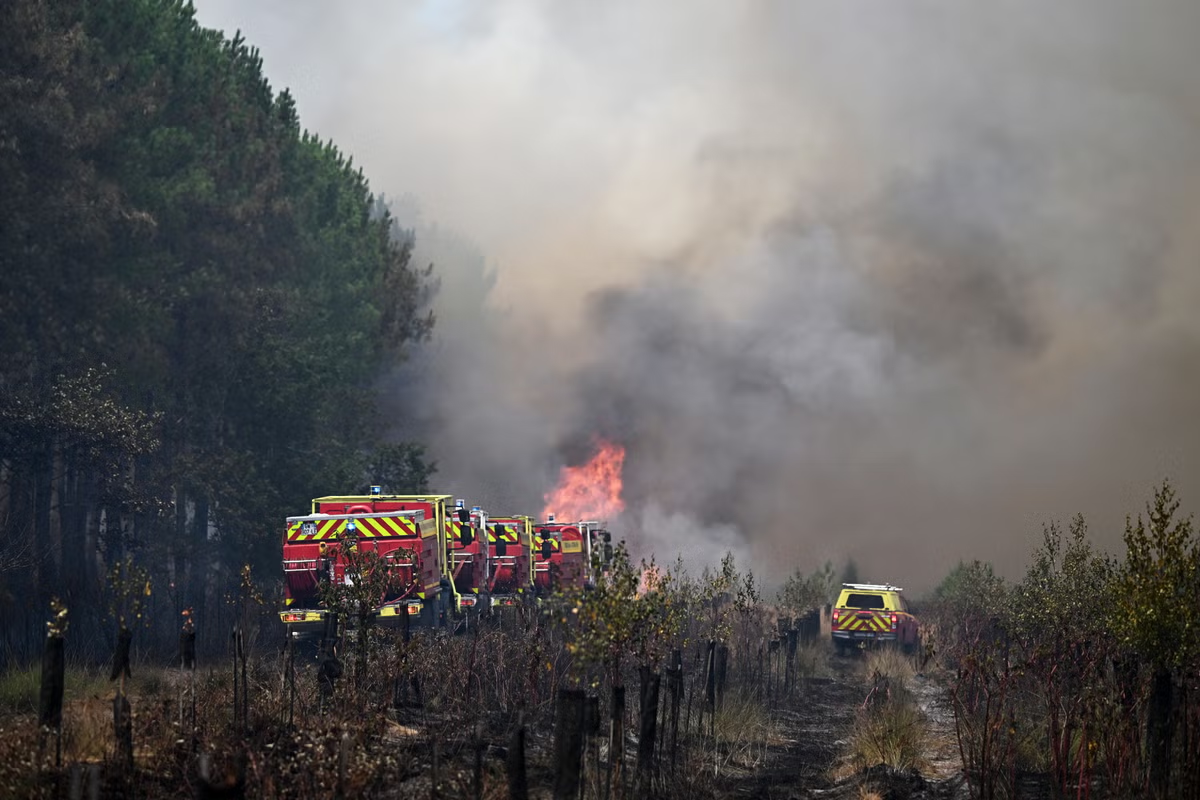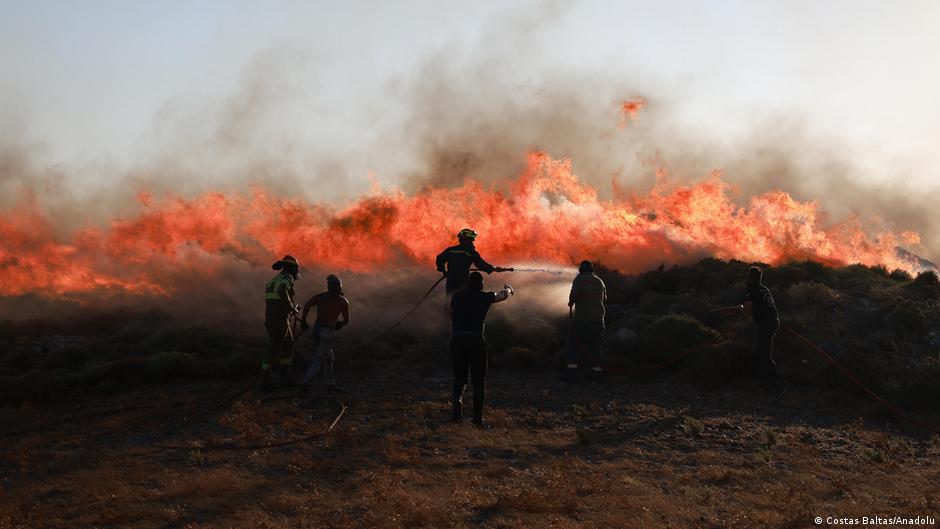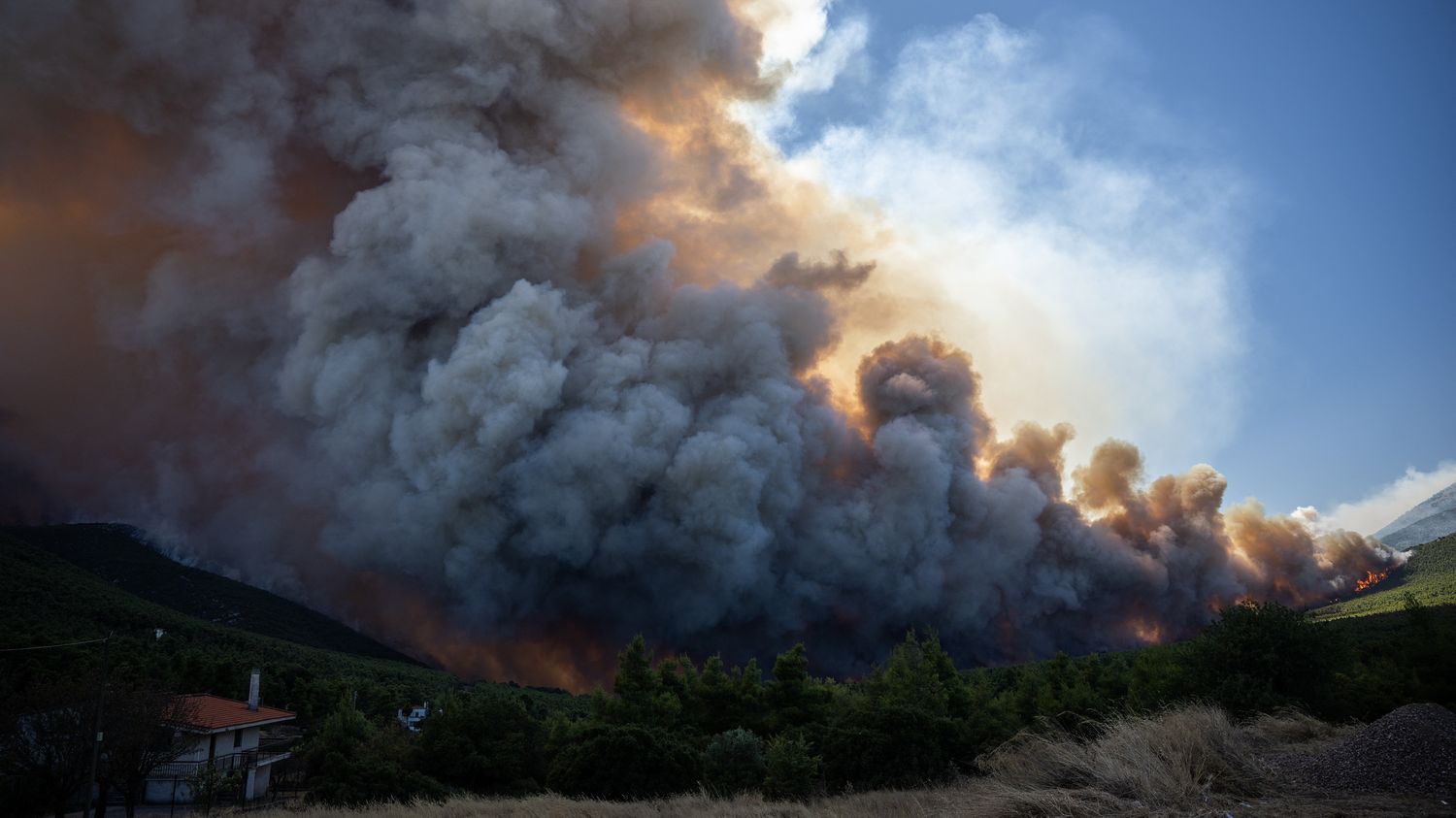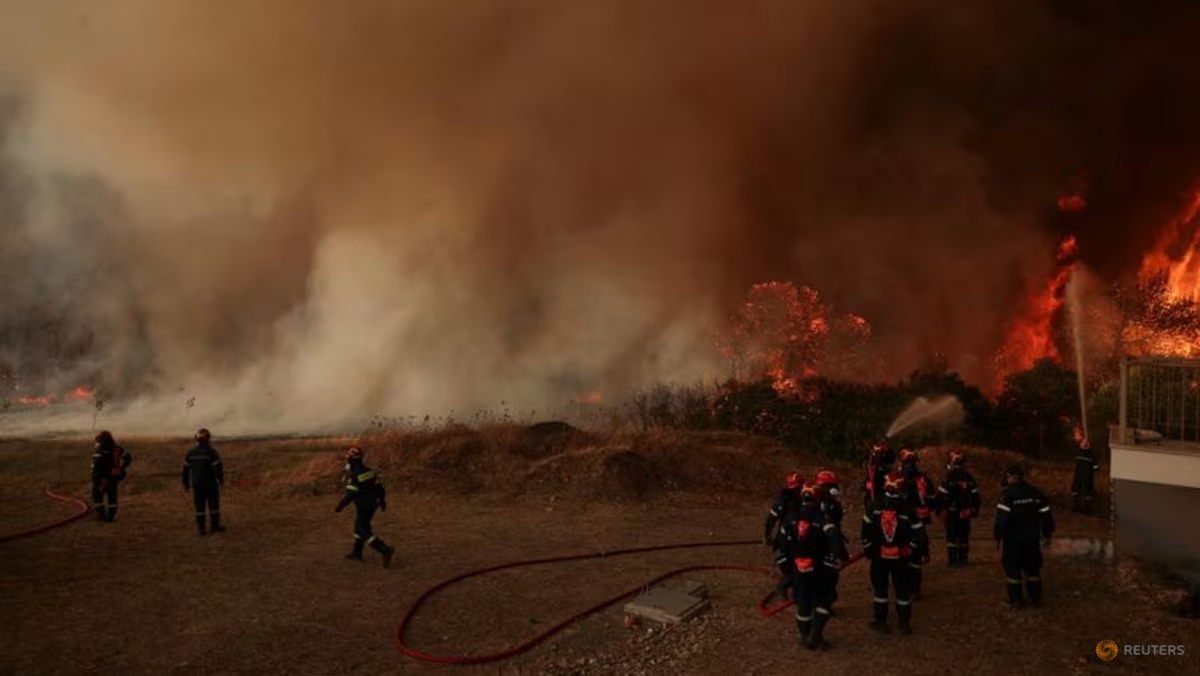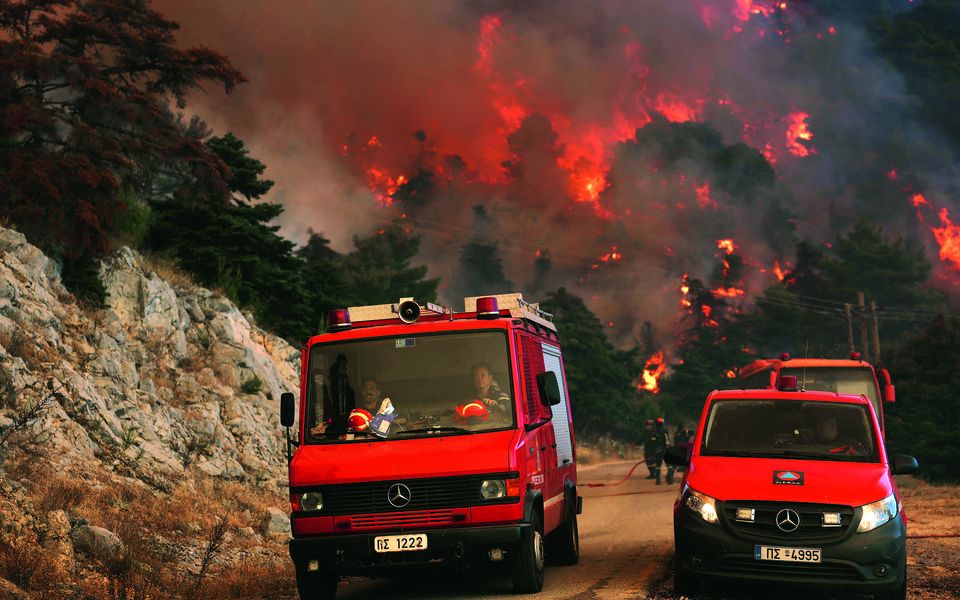
Firefighters work as a wildfire burns on Mount Kithaironas, Greece, on August 3, 2026. [Stelios Misinas/Reuters]
Investigators examining a massive wildfire that spread from Viotia into Attica are focusing on electrical infrastructure near the fire’s point of origin, while scientists warn that repeated blazes are pushing parts of Greece toward ecological degradation and exposing residents to long-term health risks.
The July 31 fire near the settlement of Agios Vasileios in Viotia burned more than 10,000 hectares and destroyed homes after crossing into Attica. Two Bell firefighting helicopters collided during suppression efforts near Psatha, killing a Danish pilot and a Greek liaison-translator.
According to investigators from the Fire Service’s arson crimes unit, the blaze appears linked to a spark caused by oscillating cables on a private electricity transmission network connected to the Aioliki Spithari wind park. Authorities found no evidence of arson devices, smoking materials or other debris at the ignition site. The investigation follows an earlier fire on the same line in late June that was reportedly attributed to a short circuit between conductors and burned about six hectares.