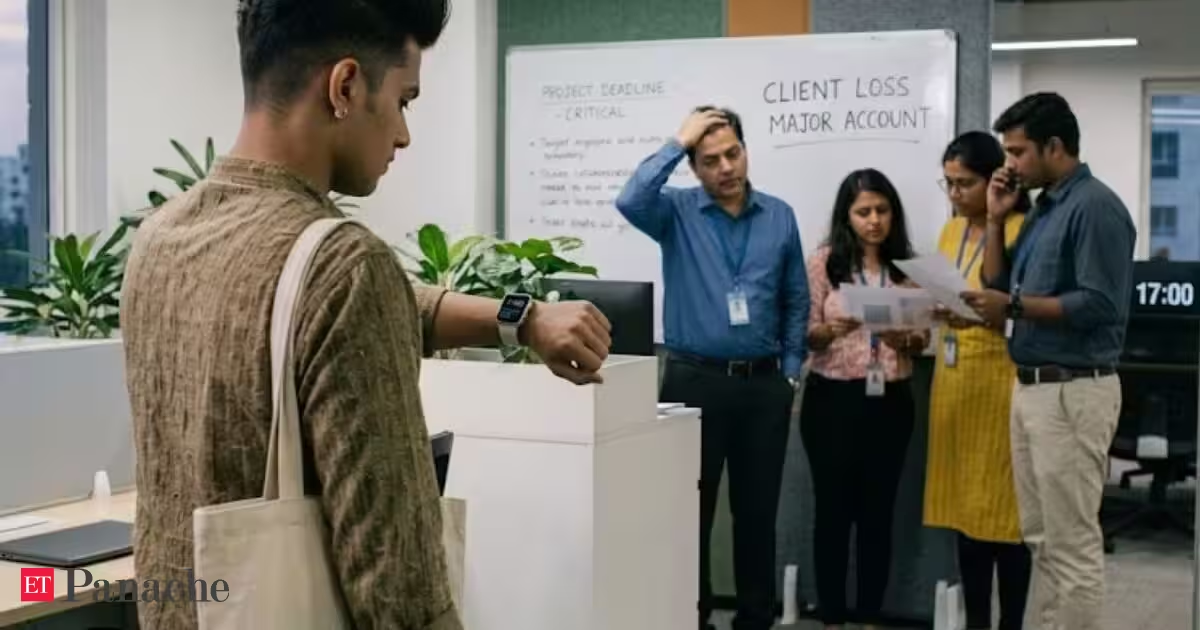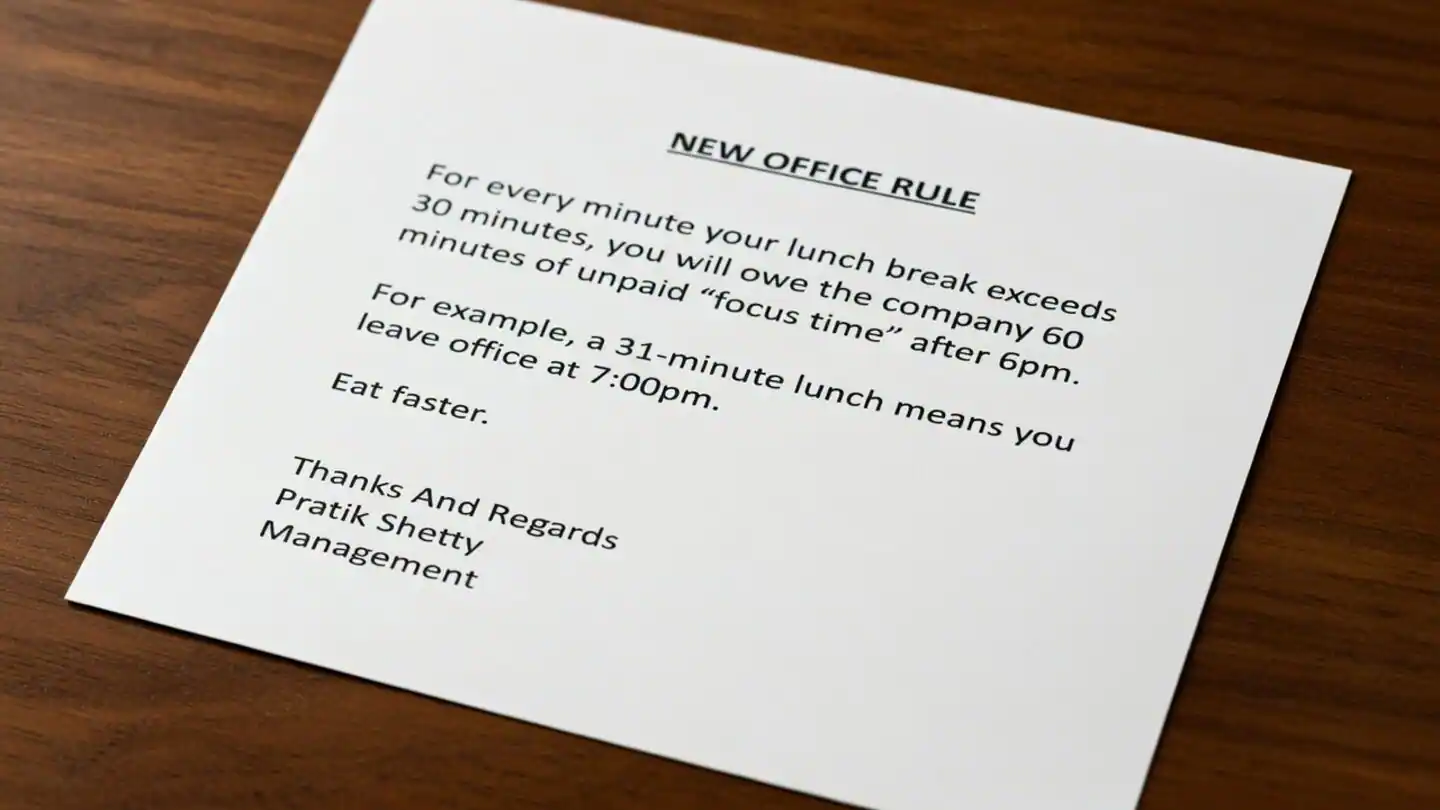
A manager thought a strict new lunch policy would make employees more productive. Instead, it ended up raising a very different question about workplace rules and employee rights. According to career coach Simon Ingari, most employees accepted the directive when they were told they could no longer leave the office during lunch. But one Gen-Z employee decided to check what his employment contract actually said. His simple question reportedly put the manager on the spot, and the controversial lunch rule soon disappeared.Manager introduces strict lunch ruleAccording to Simon Ingari, a manager introduced a new workplace rule that prevented employees from leaving the office during their lunch break. Under the new arrangement, employees were expected to preorder their meals, have them delivered to the office and eat inside the workplace. They were also expected to continue working while having lunch. The manager reportedly justified the decision by saying it would improve productivity and efficiency. Most employees apparently accepted the new rule without questioning it.Gen Z employee checks his employment contractOne Gen-Z employee, however, decided to look beyond the manager's announcement. Instead of simply accepting the new policy, he requested a copy of his signed employment contract. He then pointed out that there was nothing in the agreement requiring employees to spend their lunch breaks inside the office.Screenshot of the postThe employee reportedly asked the manager whether he intended to amend everyone's employment contracts or was simply “making up rules” as he went along. That question appears to have changed the situation quickly.Lunch rule disappears almost immediatelyAccording to Ingari's account, the controversial policy disappeared “almost immediately” after the Gen-Z employee challenged it. The episode highlights how workplace policies can sometimes be accepted simply because employees assume management has the authority to introduce them. But checking the terms of an employment agreement can reveal whether a new workplace expectation is actually part of an employee's contractual obligations.In this case, the Gen-Z employee's decision to ask questions rather than quietly follow the new rule reportedly forced the manager to reconsider the policy.
Manager bans employees from leaving office during lunch. One Gen-Z employee's blunt question ends the rule
Career coach Simon Ingari shared a story about a manager who banned employees from leaving the office during lunch, requiring meals to be preordered, delivered and eaten while working. Most employees accepted the rule, but one Gen Z employee checked his signed contract and found no requirement to remain inside during lunch. He asked whether the manager would amend everyones contracts or was simply making up rules. According to Ingari, the lunch policy disappeared almost immediately, highlighting Gen Zs willingness to question workplace norms.
338 words~2 min read