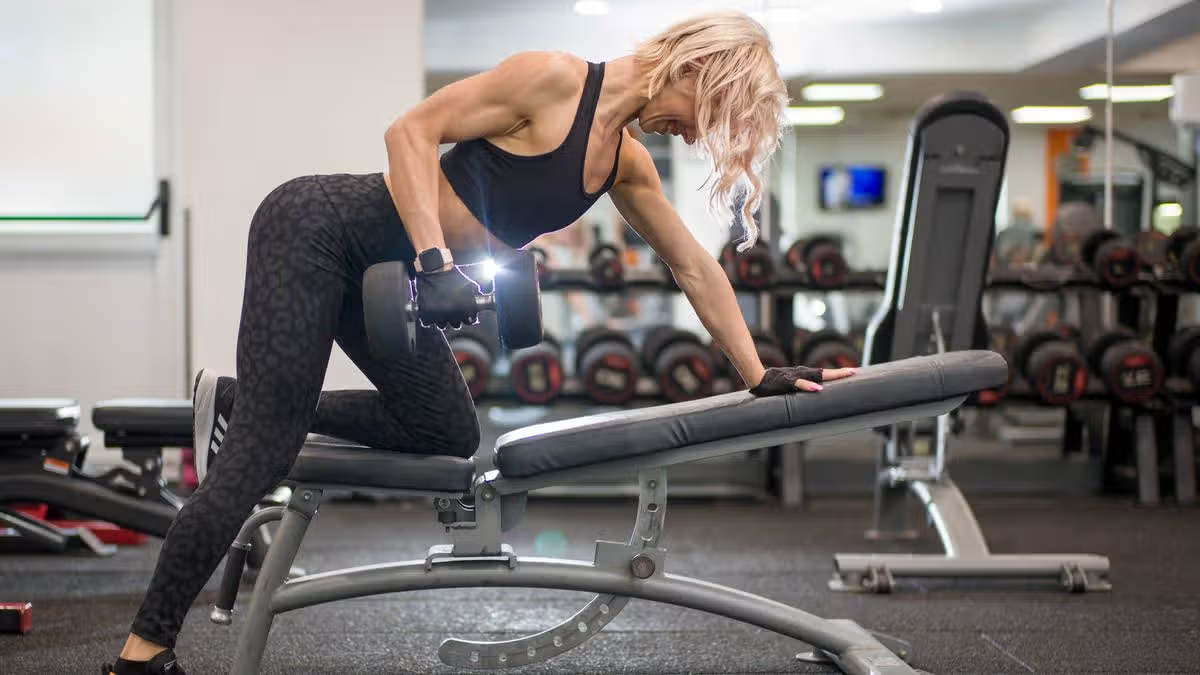
How you treat your body and brain in your midlife years, loosely defined as 40 to 60, can hugely influence how you age in the decades to come.The seeds for many age-related diseases, including cardiovascular disease, diabetes, cancer and dementia, are sown in middle age, so it’s important to start thinking about prevention early. And it takes a lifetime of healthy habits, not just a few weeks, to move the needle on your longevity.“Midlife is the ideal time to make changes, not only to benefit you in the present but also in the future,” says Margie Lachman, a psychology professor and the author of, Primetime: A New Vision for Midlife. After all, she says: “What happens in midlife doesn’t stay in midlife.”We spoke with experts about some small habits that can make a big difference.1) Interval trainingCardio-respiratory fitness is one of the best predictors “of longevity and being able to be active and mobile in the later years of your life”, says Dr Guillem Gonzalez-Lomas, an associate professor of orthopaedic surgery.He says one way to improve your cardio-respiratory fitness is to incorporate interval training into your workouts a few times a week. For example, rather than logging 30 minutes on a treadmill or a stationary bike at a steady pace, try alternating sprinting for 30 seconds and then resting for 30 seconds, 10 times through. It will be a shorter workout but ideally also a harder one, because to get the biggest benefit, “you actually have to really push yourself”.2) Errands with a friendSeveral experts emphasise the importance of social relationships for people’s long-term health and wellbeing.People often “don’t think of social interaction as a wellness intervention”, says Dr Ezekiel Emanuel, a professor of medical ethics and health policy and the author of, Eat Your Ice Cream: Six Simple Rules for a Long and Healthy Life. But it may be “the most important wellness intervention”.The reality of midlife is that it can be hard to carve out time for yourself, let alone co-ordinate schedules with another busy friend. Lachman suggests taking a “two birds, one stone” approach and joining up with someone to complete tasks on your to-do lists. Those could include going for a walk or a workout together or even a trip to the grocery store.3) Fermented foodsWhen you’re thinking about the health of your body, don’t forget about the trillions of organisms that live inside you – your microbiome – says Dr John Beard, a professor of productive ageing.A healthy gut microbiome, in particular, is associated with healthy ageing. It is closely tied to the immune system and helps to control inflammation in the body, a big factor in many age-related diseases.Research is preliminary, but experts are starting to think one of the best ways to care for your microbiome is to feed it fermented foods, which add more good microbes to the mix. You could start your day with a bowl of yoghurt, or incorporate kimchi, kombucha, kefir or sauerkraut into your diet.4) WeightsWhile aerobic fitness is essential for healthy longevity, research is mounting that muscle strength may be just as important. Having strong muscles is associated with greater longevity and independence in old age, while losing too much muscle increases the risk of frailty.Along with its practical benefits, resistance training causes your muscles to release signalling molecules called myokines, some of which help to tamp down inflammation in the body.If you’ve spent time around a dumbbell rack, don’t be afraid to challenge yourself with heavier weights, says Gonzalez-Lomas. But if you’re just starting out, “anything that you do that’s resistance training is going to make a difference”. The goal is to “get to a point where you’re feeling like your muscles are under stress” and starting to fatigue.[ Your Fitness Ireland’s hybrid fitness movement: ‘I just thought, I’m going to be bigger than everyone else’Opens in new window ]5) A little proteinPeople begin losing muscle mass in their 30s, a process that accelerates in their 60s. Eating enough protein, especially in combination with resistance training, can help to offset that loss.This doesn’t mean you need to start protein maxxing – the general guideline of 0.8 to 1.2 grams of protein per kilogram of body weight is sufficient, says Dr Elena Volpi, director of the Institute for Longevity and Aging Studies at UT Health San Antonio.To ensure that you’re getting enough protein every day and that your body can process it optimally, Volpi suggests including some protein in every meal.6) The stairsExperts talk about the importance of incorporating regular movement into your day-to-day life, not just during dedicated gym sessions. “I wouldn’t call it exercise; I would call it physical activity,” Volpi says.Several studies have found that taking roughly 7,000 steps a day significantly decreases people’s risk of death and diseases associated with ageing. You can get in that daily movement in all sorts of ways: by taking the stairs instead of the elevator, walking instead of driving somewhere or, if you do have to drive, parking far away from the entrance. Over time, those extra steps add up and can make a difference for your health.[ Can a €60 smartwatch do a good job monitoring your workouts and general health?Opens in new window ]7) Shingles vaccineThere is growing evidence that the vaccine to prevent shingles also protects against dementia, reducing the risk of cognitive decline by roughly 20 per cent. Other vaccines, specifically the influenza, pneumococcal and Tdap vaccines, may also offer some benefit.Scientists don’t know exactly why this is, but one hypothesis is that by preventing infections, the vaccines protect against major causes of inflammation in the brain and body. “It’s the easiest thing to be done because, unlike almost all wellness, it’s one and done,” Emanuel says.In Ireland, the shingles vaccine is only available privately. You have to pay to get it.8) Your parents’ chronic health conditionsWhile lifestyle affects people’s risk for age-related diseases, genetics also play a role. Volpi advises finding out which diseases run in your family and then talking to your doctor about how best to manage your risk over time.Ask which signs or symptoms you should watch out for and what you can do about them.9) Go to bed at the same timeGetting too little sleep is associated with several health conditions, including obesity, diabetes, heart disease and dementia. Perhaps unsurprisingly, it’s also linked to a shorter life span.The advice to get seven to eight hours of sleep a night is easier said than done. So rather than focusing on a number, experts recommended doing what you can to set yourself up for success. Perhaps most important is trying to stick to a consistent bedtime.One study from 2024 found that sleep regularity – going to bed and waking up at roughly the same time every day – was an even stronger predictor of mortality than sleep duration. – This article originally appeared in the New York Times
Health in midlife: Nine tips from experts that can make a big difference
Incorporating these small habits can help move the needle on your longevity
1,148 words~5 min read