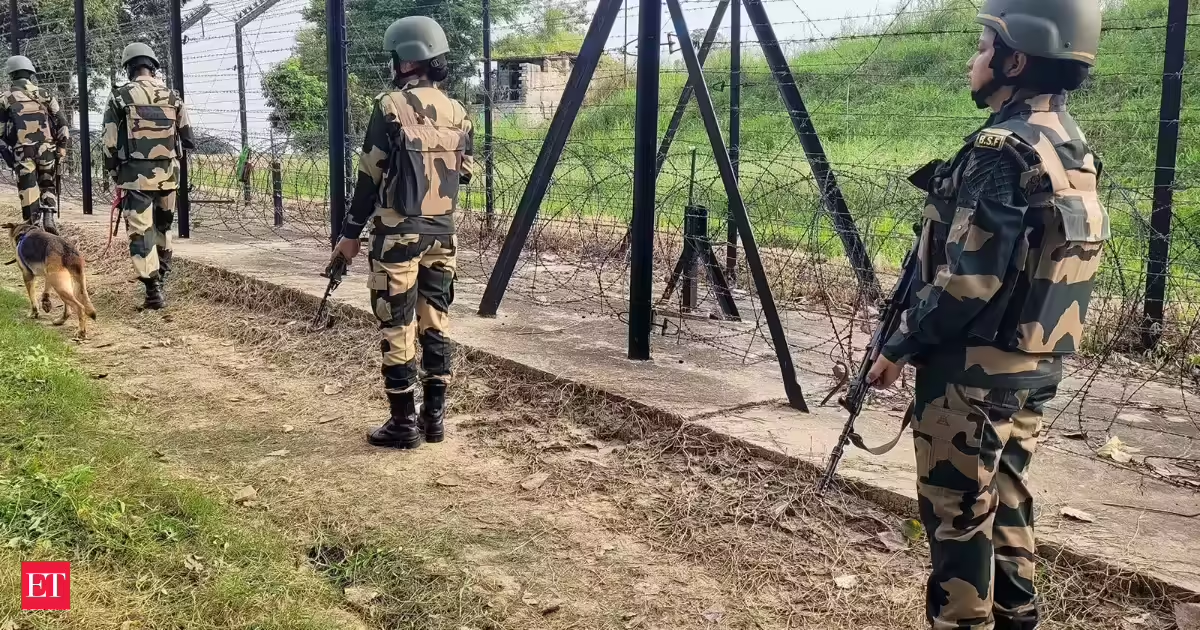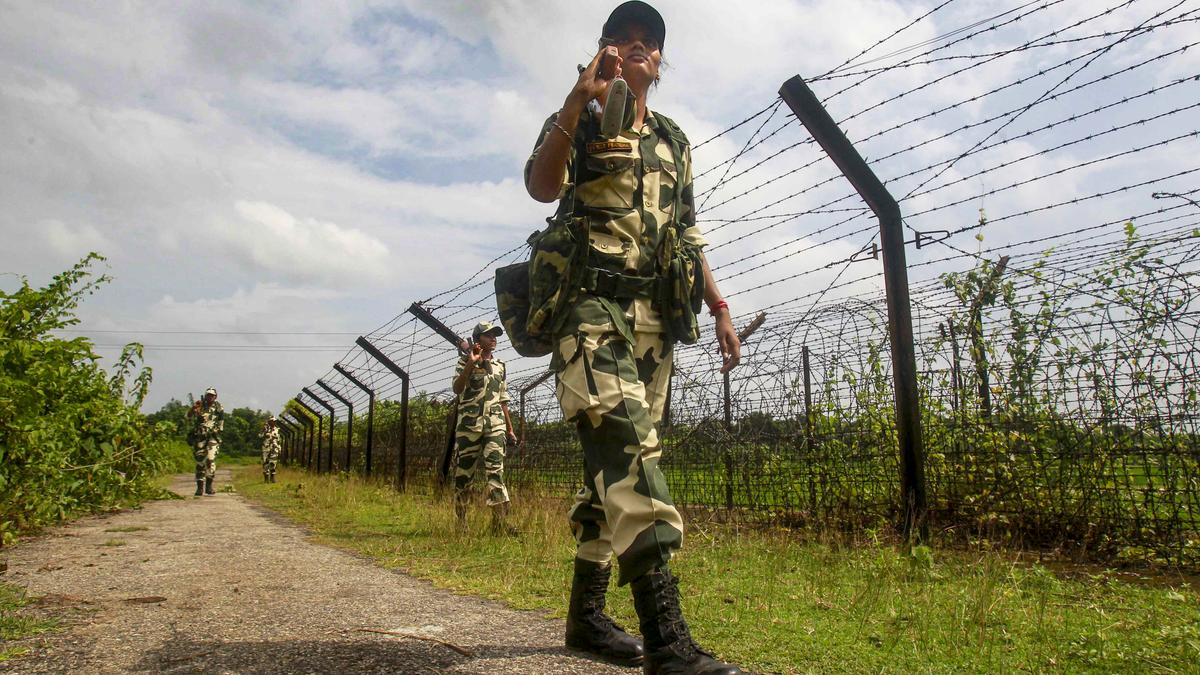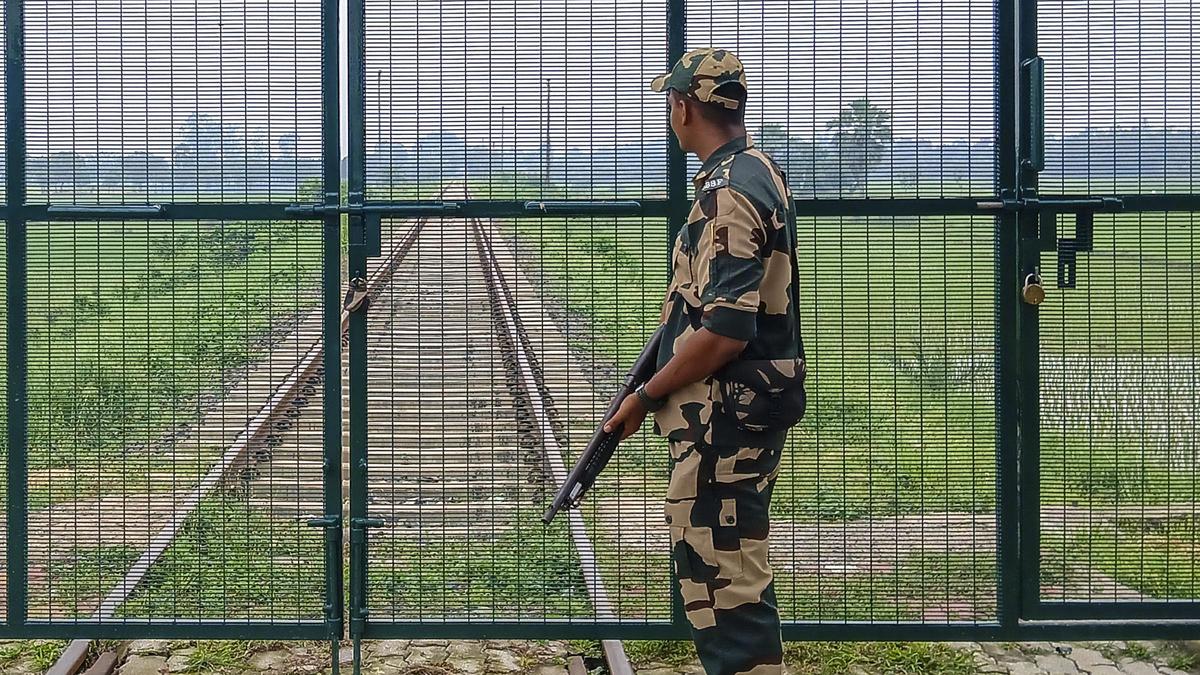
The story so far:The West Bengal Cabinet has approved the permanent transfer of 31.905 acres at nine locations to the Border Security Force (BSF) for border fencing and related security infrastructure, along with 1.53 acres for three new Border Outposts in Malda, Nadia and Cooch Behar. Reported in early June 2026, the decision was presented as part of the State government’s efforts to strengthen surveillance and infrastructure along the India-Bangladesh border. The decision does not represent a new border policy but the release of land that had remained pending despite repeated administrative and judicial intervention. It removes a major State-level bottleneck in a long-delayed border infrastructure project affected by land acquisition disputes, difficult terrain, and legal and political complications. The move also follows the Calcutta High Court’s order of January 2026, delivered by Chief Justice Sujoy Paul and Justice Partha Sarathi Sen in WPA (P) 45 of 2025, Lt. Gen. (Retd.) Dr. Subrata Saha v. Union of India & Others, directing the State government to hand over acquired land in nine border districts to the BSF by March 31, 2026, observing that land already acquired or compensated should not remain unused for border fencing.Why is Bengal central to the project?West Bengal occupies a pivotal position because it shares the longest international border with Bangladesh among Indian States. According to the Ministry of Home Affairs, India’s 4,096.70-km border with Bangladesh includes 2,216.7 km in West Bengal, which is approximately 54% of the entire frontier. As of August 2025, 1,647.696 km had been fenced, while 569.004 km remained to be covered by fencing or other border infrastructure. Of this, 112.780 km was classified as non-feasible for conventional fencing, while 456.224 km remained technically feasible but pending completion.Why has the project been delayed?The delays reflect a combination of geographical, administrative and legal constraints. Nationally, the MHA reported that 3,232.218 km of the India-Bangladesh border had been fenced by August 2025, leaving 864.482 km unfenced across West Bengal (2,216.7 km), Tripura (856 km), Meghalaya (443 km), Mizoram (318 km) and Assam (263 km).Of the remaining unfenced stretch, 174.514 km has been categorised as non-feasible for conventional fencing because of riverine channels, marshlands, floodplains, shifting river courses, densely inhabited settlements and the ecologically sensitive Sundarbans, where fencing is technically difficult and seasonally constrained. Other pending stretches require land acquisition, compensation, environmental clearances and completion of bilateral border management procedures. In densely populated border districts, even narrow strips of land generate disputes over compensation, access rights and local livelihoods.How is the border managed?The BSF is responsible for guarding the entire India-Bangladesh border, while border infrastructure is developed under the Comprehensive Integrated Border Management System (CIBMS) and the government’s Border Infrastructure Programme. These combine physical fencing with floodlighting, border roads, observation posts, floating Border Outposts, river patrols, surveillance cameras, sensors and other smart technologies in vulnerable sectors, particularly where continuous fencing is impractical.What governs India-Bangladesh border fencing?According to the Ministry of External Affairs, India undertakes border fencing and related security measures in accordance with bilateral agreements and operational protocols between the BSF and the Border Guard Bangladesh (BGB). The border is governed by the 1975 Joint India-Bangladesh Guidelines for Border Authorities, the Coordinated Border Management Plan (CBMP), 2011, and the 2015 Land Boundary Agreement (LBA), which implemented the 1974 Land Boundary Agreement and its 2011 Protocol, resolved enclave and adverse-possession disputes, and enabled the exchange of 162 enclaves, 111 Indian enclaves in Bangladesh and 51 Bangladeshi enclaves in India. India has also reiterated its expectation that these understandings will continue to support cooperation against cross-border crimes, including smuggling, human trafficking, illegal migration, arms trafficking and counterfeit currency networks.What are the policy challenges?This is a challenge of balancing national security with the livelihoods of communities living along the border. In districts such as Malda and Nadia, agriculture, informal trade and long-standing social ties extend across the frontier, meaning that fencing can improve surveillance while also affecting access to farmland, mobility and local commerce. As the largest unfinished segment of the India-Bangladesh border lies in West Bengal, progress and development in the State remain central to the completion of the national fencing programme. In many sectors, particularly riverine terrain, the future of border management is likely to depend not on continuous fencing alone but on an integrated combination of physical barriers, Border Outposts, surveillance technology and coordinated action between the Union and State governments.(Saee Pande is a freelance writer with a focus on current affairs, international relations and geopolitics)
Why has West Bengal cleared land for the BSF now? | Explained
West Bengal's recent land transfer to the BSF aims to enhance border security and address longstanding fencing project delays.
740 words~3 min read