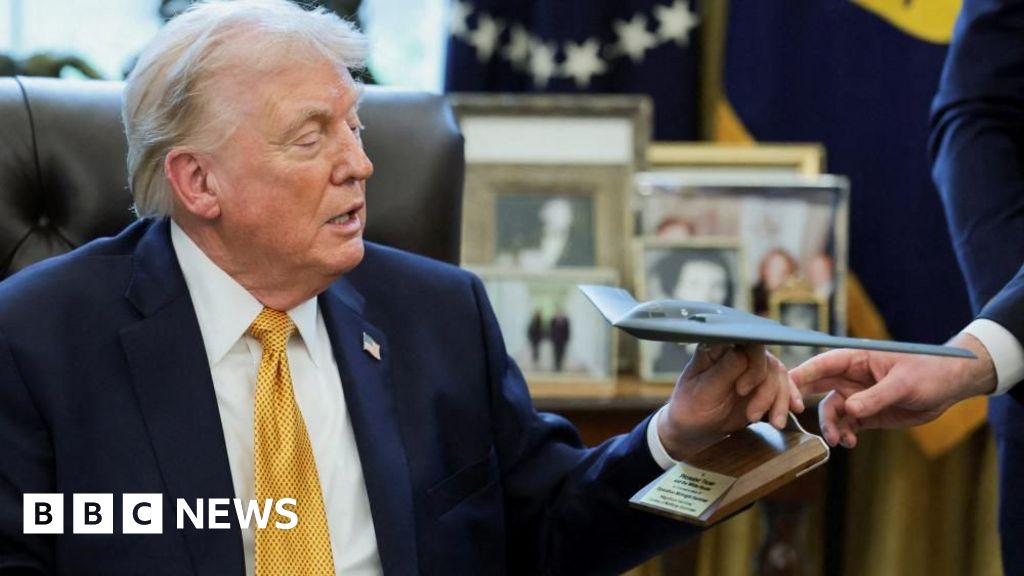
Opinion: The US president wants a quick diplomatic victory and hopes to avoid another war, but renewed strikes, restraint and prolonged indecision each carry major strategic, regional and political risksEldad Shavit|The sharp shift in U.S. President Donald Trump’s position over the weekend was met with puzzlement in Israel. After days in which the United States appeared poised to resume strikes on Iran, Trump announced that he was calling off the operation to give negotiations another chance.In Israel, officials have been quick to describe the move as another zigzag by an unpredictable president, leaving Jerusalem unable to determine where he is headed. But that explanation misses the main point: Trump is not struggling to understand what he wants. He is struggling to decide how to achieve it because every choice could have far-reaching strategic, regional and political consequences.US President Donald Trump (Photo: Jacquelyn Martin/AP)Trump’s preference is clear. He does not want to resume the war. He wants to reach an agreement quickly and present it as an American victory. But there is a deep gap between that desire and reality. After the administration created expectations of a broad strike, it announced diplomatic progress even though no clear Iranian agreement had been presented. Tehran denied accepting the American terms, while Trump declined to set a deadline for reaching a deal.In doing so, he created a credibility problem — not because he chose diplomacy, but because the gap between the threat and the subsequent retreat from it remained unexplained.For Israel, that uncertainty also carries a practical cost. It is difficult to plan policy, prepare for action or assess the limits of Israel’s freedom of operation when Washington moves within days from preparations for a strike to declarations of diplomatic progress. Yet even if Israeli frustration is justified, that does not mean the shift stems from presidential whim or a failure to understand the situation.The president must decide whether to resume the fighting. Even a massive American strike on Iranian military, nuclear and economic infrastructure would not guarantee that the objective would be achieved. The United States could inflict enormous damage on Iran, but there is no certainty that such damage would force Tehran to open the Strait of Hormuz, surrender its leverage or accept American terms on the nuclear issue.The opposite may happen. A broad strike could renew attacks on American bases, tankers, energy facilities and Gulf states, expand the confrontation to the Red Sea and other arenas and draw the United States into a prolonged campaign with no clear endpoint.The Gulf states, led by Saudi Arabia, understand the risk and are pressing Washington to favor diplomacy. From Trump’s perspective, another war could increase the damage without necessarily improving the prospects for an agreement.Nor does a middle course guarantee a solution. A limited strike might demonstrate resolve and ostensibly restore deterrence, but an Iranian response would force Trump to choose again between restraint and escalationNor does a middle course guarantee a solution. A limited strike might demonstrate resolve and ostensibly restore deterrence, but an Iranian response would force Trump to choose again between restraint and escalation. An operation intended to solve the credibility problem could become the first step in the very war he is trying to prevent.In practice, another use of force would not necessarily resolve the dilemma. It could simply confront Trump with the same choice again, under worse conditions.Avoiding action also carries a price. Every threat that goes unfulfilled allows Iran to test the limits of the American response, improve its negotiating position and establish a new reality in the Strait of Hormuz. Israel’s concern is therefore understandable.The mistake is not in concluding that the zigzag is eroding American credibility. It is in assuming that it stems from Trump not knowing what he wants. In reality, his conduct reflects a struggle between two dangers: a war that offers no guarantee of success and avoiding one in a way that could appear to be capitulation.Only about one-third of Americans support the war, and most believe the president has not adequately explained its goals. With the midterm elections approaching, renewed fighting could carry a political cost because of higher energy prices, potential casualties and fears of another U.S. entanglement in the Middle East.Eldad Shavit Photo: INSSAt the same time, every unfulfilled threat reinforces the acronym TACO — “Trump Always Chickens Out” — and damages his image as a decisive president.The question, then, is not when Trump will understand what he wants. He already knows. The question is when he will conclude that the political and strategic cost of indecision is greater than the risk involved in resuming the fighting.That moment may never come. It may come only after the negotiations clearly fail, after an extraordinary Iranian action, amid mounting domestic criticism or perhaps only after the midterm elections.Until then, Israel should not ask only why Trump keeps changing course. It should also understand the alternatives before him and the enormous price attached to each one.He knows where he wants to go. The problem is that he has no safe way to get there.Col. (res.) Eldad Shavit is a senior researcher in the U.S. Research Program at the Institute for National Security Studies. He previously served as head of the Mossad’s research division and as assistant for assessment to the head of the IDF Military Intelligence Directorate’s research division.
Trump knows what he wants on Iran — but every path carries a dangerous price
Opinion: The US president wants a quick diplomatic victory and hopes to avoid another war, but renewed strikes, restraint and prolonged indecision each carry major strategic, regional and political risks
886 words~4 min read