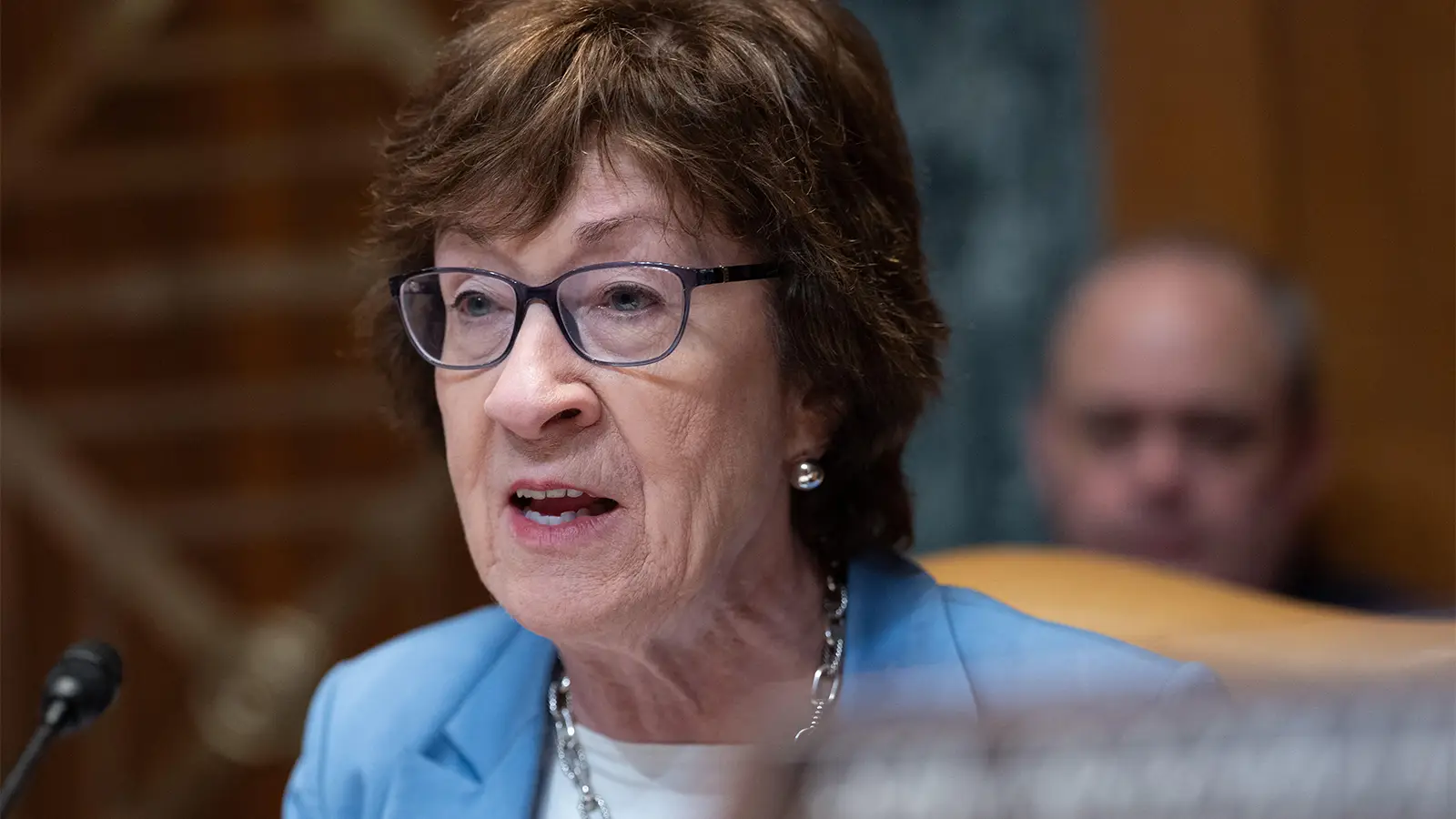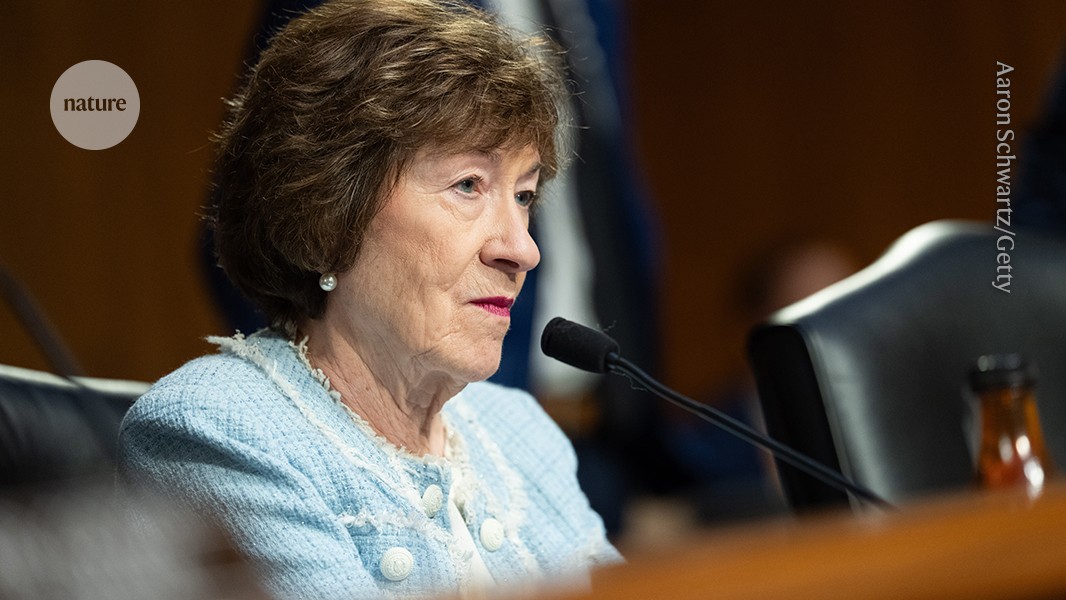
Susan Collins, a Republican senator from Maine, has expressed opposition to a proposal from the White House that would give political appointees control over research grants.Credit: Aaron Schwartz/GettyUS senators from both sides of the political aisle released a draft spending bill on 2 August that, if passed, would temporarily halt a far-reaching and controversial proposal by the White House to overhaul federally funded science. The proposal, which states that its goal is to improve “transparency, accountability, and oversight” of federal funds, contains provisions that would reshape US science, including putting political appointees in charge of federal grant review and restricting collaboration between US and international scientists. If finalized, the White House rule could go into effect on 1 October.White House proposes vast overhaul of US science funding: what you need to knowThe overarching goal of the latest bill from the US Senate Committee on Appropriations, which oversees federal spending, is to prevent a government shutdown. US agencies, including funders such as the National Science Foundation (NSF), might have to furlough workers and shut down certain operations after 1 October, when the 2026 fiscal year ends, if Republican and Democratic members of the US Congress haven’t agreed on future spending levels. This bill would instead extend funding for agencies through 11 December, keeping it at existing levels while politicians continue to negotiate. As a condition of keeping the government open with this bill, lawmakers included a section that would prevent the White House proposal on federal grants from taking effect until the December extension date.Science advocacy organizations have lauded the Senate committee’s bill. “It would not only keep the government open, but it would safeguard scientific progress,” Russ Paulsen, president of Research!America, a non-profit health research advocacy group in Arlington, Virginia, said in a statement.Last year, an impasse between Democrats and Republicans over government spending led to a record 43-day government shutdown during which science-funding agencies, including the National Institutes of Health, halted operations such as issuing research grants.Optimism risesMany Democratic members of Congress are strongly opposed to the proposal to overhaul federally-funded science, issued by the White House Office of Management and Budget (OMB) on 29 May. One-hundred and twenty-five Democrats in the US House of Representatives sent a letter to the head of the OMB, Russell Vought, in June saying that “undoing the peer review process in favor of political grantmaking will delay and disrupt health care research that millions of Americans depend on”.Inside the new political screening that’s stalling NIH grantsSome Republicans have also shown discontent with the proposal. The OMB rule would “undermine scientific and biomedical research, and conflict with Congress’ control over the federal funding process”, Susan Collins, a Republican senator from Maine who chairs the appropriations committee, said in a statement last month.For the OMB proposal to be blocked through 11 December, the Senate committee’s bill would have to be approved by the entire Senate, then find support in the US House of Representatives. Both chambers of Congress would need to pass the legislation before it could be signed into law by Republican President Donald Trump.Although this outcome is not certain, some policy watchers are optimistic because many members of Congress are on the ballot in November’s US mid-term elections. Not only do lawmakers want to avoid a government shutdown — viewed poorly by voters — the OMB rule has also been widely unpopular with the public. The OMB’s proposal to put political appointees in charge of research and development is a “disaster for American scientific leadership”, says Asad Ramzanali, director of artificial intelligence and technology policy at Vanderbilt University’s Policy Accelerator in Nashville, Tennessee. The fact that the Senate effort is bipartisan is “promising”, he says. “But nothing is done until a bill passes both chambers and is signed into law.”An unpopular proposal
Controversial White House plan to overhaul US science funding faces Senate opposition
Proposal to put political appointees in charge of research grants could be temporarily halted if lawmakers’ efforts are successful.
629 words~3 min read