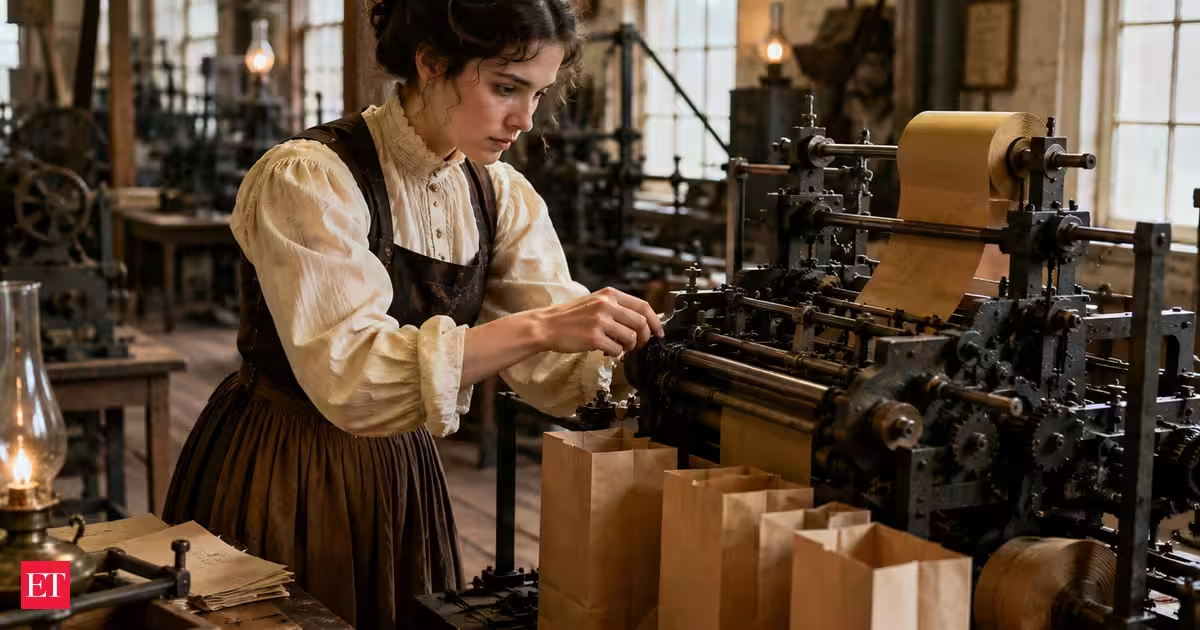
In 1868, an American woman inventor created a machine that changed the future and led to the mass manufacture of flat-bottom paper bags still widely used to carry groceries all around the world. That inventor was Margaret E. Knight. She designed a machine that made square-bottom paper bags through an automated process instead of manual work. Her invention changed how paper bags were manufactured and supplied to stores. Knight also created many other inventions during her lifetime. She received many patents and continued inventing throughout her career. Her work influenced manufacturing, retail businesses, and industrial production in the United States.How Margaret E. Knight changed paper bag manufacturing?Margaret E. Knight was born on February 14, 1838, in York, Maine, United States. She died on October 12, 1914, in Framingham, Massachusetts, at the age of 76. She became known for creating machines designed for industrial production and everyday use. Her best-known invention was a machine that made flat-bottom paper bags. Before her invention, these bags had to be made by hand. Her machine helped manufacturers produce them in large numbers. Today, flat-bottom paper bags continue to be used for groceries, shopping, food packaging, and carrying lunches.Early interest in tools and machinesKnight showed an interest in making things from an early age. Instead of playing with dolls, she liked working with tools. She often built or improved toys for her brothers and other children. When she was around 12 years old, she started working in cotton mills after her family moved to Manchester, New Hampshire. Her father had died, and her mother and brothers also worked in the mills.While working there, Knight saw a steel-tipped shuttle fly from a loom and seriously injure a worker. Such accidents happened often. She designed a shuttle-restraining safety device to stop the shuttle from flying out of the loom. The device was installed on the looms in her mill. Other mills in the area later adopted the same safety system.Moving into different industriesKnight later left mill work because of poor health.You Might Also Like:She worked in several fields, including:UpholsteryPhotographyEngraving workshopsHome repairEach job helped her understand machines, manufacturing, and industrial processes. These experiences later supported her work as an inventor. Around 1867, she began working at the Columbia Paper Bag Company in Springfield, Massachusetts. There she noticed that paper bags with flat bottoms were still made by hand. The process required considerable time and labor. She decided to develop a machine that could perform the work automatically.Building the paper bag machineKnight spent more than two years developing her invention.Her machine could:Cut paperFold paperPaste paperForm square-bottom paper bagsShe first built a wooden prototype. After improving the design, she hired a machinist to build a working metal model that could be used during the patent process. The machine made large-scale production possible and reduced the amount of manual labor needed. Its design helped paper bag manufacturers meet increasing demand from stores and businesses.Patent dispute over the inventionWhile Knight's working model was being built, another machinist named Charles Annan copied her design. Annan submitted the design to the U.S. Patent Office as if it were his own invention. Knight challenged his claim through a patent interference lawsuit. She hired a lawyer and presented evidence proving that she was the true inventor.Her evidence included:Engineering drawingsWritten notesPersonal diary entriesTestimony from her landladyTestimony from her former employerTestimony from the machinist involved in building the machineAnnan argued that a woman could not understand such a complex machine. Knight answered by explaining every part of the machine and describing how each component worked. The judge ruled in her favor and awarded her the patent in 1870.Starting a businessKnight combined her technical knowledge with business planning. She formed the Eastern Paper Bag Company in Hartford, Connecticut, with a business partner. She licensed her machine to the company.The agreement included:An upfront payment of $2,500Royalties that eventually totaled $25,000The earnings allowed Knight to become a full-time inventor.More inventions and patentsKnight did not stop after the paper bag machine. She continued creating new devices for different industries.Her inventions included:Dress and skirt shield, patented in 1883Clasp for robes, patented in 1884Spit, patented in 1885Machines used in shoe manufacturingNumbering machine, patented in 1894Window frame and sash, patented in 1894Devices related to rotary engines, patented between 1902 and 1915By the end of her life, Knight claimed 89 inventions. She received about 27 patents and held more than 20 patents across several industries. Her final patent was granted after her death in 1915.Recognition and legacyMargaret E. Knight was not the first woman to receive a patent in the United States. However, she became one of the country's most productive women inventors. She never tried to hide that she was a woman while promoting her inventions.Her work earned recognition from women's rights supporters. Although she did not become wealthy from her inventions, she lived independently until her death. After she died, a local obituary referred to her as the "woman Edison."Her paper bag machine changed manufacturing and helped make flat-bottom paper bags common across stores, markets, schools, and workplaces. The invention remains part of everyday life because paper bags continue to be used around the world for shopping, groceries, food packaging, and carrying lunches.
In 1868, an American woman inventor created a machine that changed the future and led to the mass manufacture of flat-bottom paper bags still widely used to carry groceries all around the world: How Margaret E. Knight changed paper bag manufacturing?
In 1868, an American woman inventor created a machine that changed the future and led to the mass manufacture of flat-bottom paper bags still widely used to carry groceries all around the world. Margaret E. Knight developed a machine that changed paper bag production. Her invention reduced manual work and helped businesses produce square-bottom paper bags on a large scale. She later earned many patents and became one of the most productive women inventors in American history.
859 words~4 min read