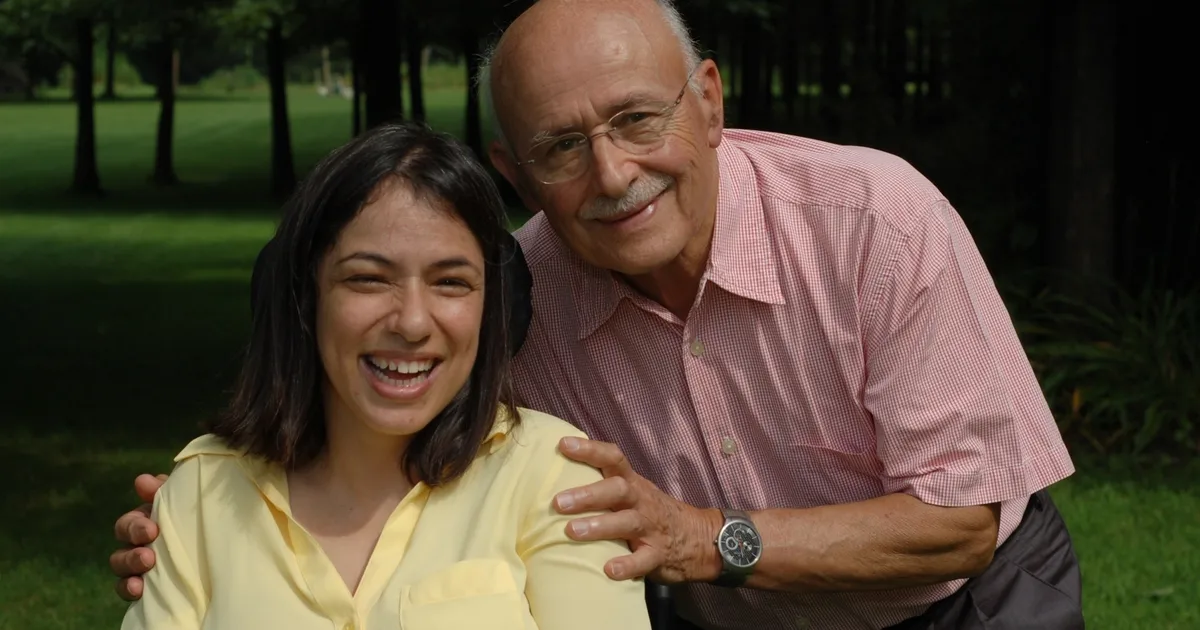
“You’re not joining the God Squad, are you?” asked my dad, with gentle sarcasm, as I began my journey into Christianity at age 18. In our close-knit family, two topics remained off-limits: my disability’s emotional toll, and faith. As Middle Eastern immigrants of different spiritual beliefs, my parents never forced a specific religion on my siblings and me. Instead, they built a home rooted in hospitality, regularly inviting in friends of varied backgrounds.Accepting others came naturally to my parents, and I’d like to believe I played a role in that. I entered the world three months early, and it took nearly two years of their advocating before receiving my cerebral palsy diagnosis. With unwavering resolve, they faced the news that I’d navigate the world using a wheelchair.I understood my dad’s anxiety about me exploring Christianity. He feared that it would lead me to abandon our family’s deep-seated respect for and openness toward others.“Don’t worry, Dad. That’ll never happen,” I reassured him — and, silently, myself.Throughout college and graduate school, my faith grew. I attended church, developed relationships, and served my community. While pursuing my second master’s degree, an internship in Washington, D.C., paved the way for a 22-year career across three federal departments. As a senior policy adviser, I shaped disability-related policy and programs.But I soon faced a realization. While my colleagues respected my professional contributions, my faith community — with some exceptions — treated me like a project. I’ve spent nearly four decades navigating multiple congregations in the American church. Responses to my disability have ranged from acceptance to patronization. I’ve developed decades-long friendships and experienced seasons of deep belonging. Friends have invited me into their homes, advocated with me for the removal of disability-related barriers, and helped me with daily activities.Still others rely on awkward humor, consistently asking, “Do you have a license to drive?” in reference to my power wheelchair. “Nope!” I say with a half-hearted chuckle and move on. The most anxiety-producing interactions begin with a simple question: “Can I pray for you?”I’ve learned to respond respectfully, “No thanks, I’ve settled things with God.” I’d rather offend someone than endure the toxic theology that attributes unanswered prayers to my “lack of faith.”When well-meaning meal invitations never moved beyond the table, it left me feeling like a project. My friend Karen’s wise words, shared years earlier, sustained me during those challenging times. “The church doesn’t always reflect the heart of God,” she explained. There are those who see disabled people as consistently angry. I can’t speak for the whole community, but I offer this: Perceived anger may be masked sadness or frustration at constantly being misunderstood or dismissed. When considering the historical, systemic barriers we’ve faced—in the pews and public square—the sadness becomes understandable.It’s taken decades for the disability community to secure the rights to learn, live and lead alongside our peers. The primary civil rights law prohibiting discrimination against people with disabilities — the Americans with Disabilities Act (ADA) — celebrates its 36th anniversary this year. You’d expect us to be moving steadily toward broader inclusion, not facing devastating pushback.While some more conservative churches opposed the ADA’s early drafts, fearing government overreach and structural upgrade costs, I believe that the attitudes of most churches were inclusive and embracing of disabled people. First Amendment protections and the law’s religious exemption addressed their early concerns. Religious institutions still must comply with the ADA’s employment provisions and other federal, state, and local laws around accessibility. Despite this legal framework, the Trump administration has spread harmful misconceptions and is methodically dismantling our national safety net. In June 2026, the U.S. Department of Justice issued a memorandum followed in July by additional steps to limit disability rights, contradicting longstanding interpretations of federal laws. At the same time, special education and rehabilitative services face shifts out of the Department of Education. Secretary Linda McMahon insists these changes will reduce bureaucracy. The disability community and its allies maintain they’ll cause widespread confusion, delay claims and water down civil rights protections and enforcement.The stakes are incredibly high. The educational disparities disabled students experience follow them directly into adulthood. And people with disabilities face an unemployment rate more than double that of their nondisabled peers, with only 38% of non-institutionalized disabled Americans working. As the systems step back, families bear the burden. Millions of Americans serve as unpaid caregivers, absorbing the massive financial, physical and emotional costs of a failing system.All of this leaves me wondering: As the government pulls back, who steps in?At some points in history, the church bridged the gap. When wealth and status defined worth in Greco-Roman times, the first-century church proclaimed that every human holds value because each reflects God’s image. From hospitals to orphanages, faith communities cared for the vulnerable long before government social programs.Yet, the church seems to have lost its way. Only one of the eight churches I’ve attended has had a disability ministry. A 2019 study suggests a shift inward, with congregations across a wide faith spectrum spending, on average, nearly 70% of their budgets on personnel and operations alone. In my experience, institutions measure what they value. It’s telling that the major entities tracking the nation’s congregational activities and giving — such as the National Congregations Study — survey churches on their views on hot-button issues and political affiliations, but not disability. In a time when megachurches are growing and political tensions are high, it seems we’ve allowed social and political ideology, rather than the church’s community values, to shape our priorities — including our response to the disability community.But the deficit isn’t simply financial and administrative; it’s pastoral and systemic. Research from Baylor University tells us that many pastors aren’t prejudiced against disability; they feel unequipped. A contributing cause appears to be the classroom. It’s reported that less than a quarter of seminary leaders believe their graduates leave school equipped to integrate people with disabilities into church leadership. If training institutions recognize this deficit, no wonder the pastors feel it, too. Misaligned priorities and unpreparedness have caused broad fractures in the church. Sadly, nearly one-third of families impacted by disability have left a place of worship due to exclusion, and just under 47% avoid religious activities altogether for the same reason. With 1 in 4 Americans living with a disability and the likelihood of disability increasing with age, it’s time we view disability as an ordinary aspect of our communal life rather than a problem to be managed.Amid the misconceptions, ableism and systemic failure, I sometimes wonder why I stay in the church. I persevere because the core message of God’s sovereign mercy, grace and restorative love remains true, regardless of the institution’s failures. Our security doesn’t rest on government mandates or perfect institutional budgets. It’s grounded in a radical love that demands we dismantle the barriers keeping the marginalized out. It’s up to the church to lean on the skills and talents of those impacted by disability and their allies to move forward. And there is reason for great hope. A growing number of organizations and programs across the country continue to highlight the important intersection of faith and disability. A handful of theological programs have introduced disability into their curricula, and students with disabilities interested in theological education can now find resources to help them navigate the process. There are conferences dedicated to educating leaders and congregants about disability, and the list of Christian churches with disability ministries keeps expanding. My dad passed away in 2023, but he didn’t leave this earth concerned about my faith. Over the years, he watched me navigate the messy church lobbies without abandoning my upbringing. Slowly and steadily, he became one of the most accepting supporters of my spiritual journey. He knew, perhaps better than some in the church, that true love doesn’t build walls. It tears them down.RelatedChristianitydisabilityAmericans with Disabilities Act Voices of Disabled People
My Dad Was Worried When I Started Going To Church — But This Is What He Understood Better Than Most
The most anxiety-producing interactions begin with a simple question: “Can I pray for you?”
1,310 words~6 min read