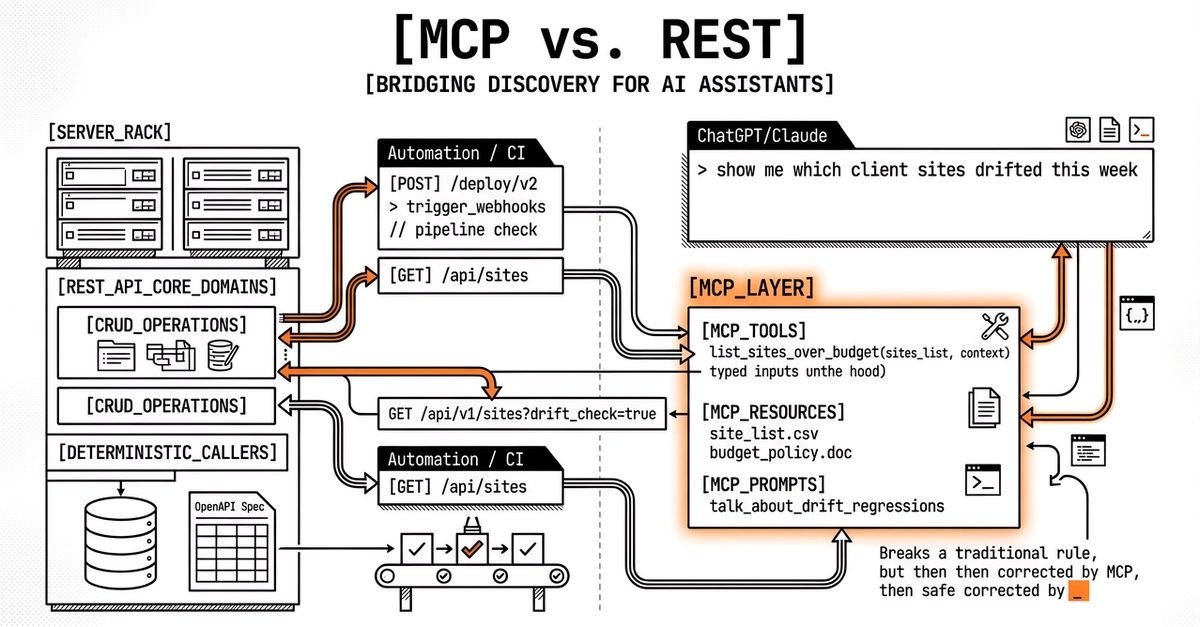
Enterprise data architecture is undergoing a fundamental transformation as AI-native systems become the new standard. The Model Context Protocol (MCP) joins established protocols like REST and GraphQL as a critical integration layer. Understanding when and why to use each protocol is essential for architects building the next generation of enterprise data systems.
Protocol Overview: REST, GraphQL, and MCP
REST (Representational State Transfer) has been the backbone of web services since the early 2010s. Built on HTTP verbs (GET, POST, PUT, DELETE), REST provides a resource-oriented architecture where each endpoint represents a specific data entity. Its simplicity, ubiquity, and massive ecosystem make it the default choice for most API integrations. REST excels at CRUD operations, caching through HTTP infrastructure, and stateless request-response patterns.
GraphQL emerged in 2015 as Facebook solution to mobile data fetching challenges. It provides a flexible query language that lets clients request exactly the data they need in a single request, eliminating over-fetching and under-fetching problems inherent in REST. GraphQL uses a typed schema, supports real-time subscriptions, and excels in scenarios with complex, nested data relationships.