Alibaba just introduced its most powerful AI model to date, sending a fresh shiver down the spine of every American tech leader who fears their Chinese counterparts gaining the upper hand. The model, called Qwen3.8-Max, comes with 2.4 trillion parameters and specializes in long-horizon agentic tasks, extending over as long as several days and “with minimal human involvement,” as Alibaba put it in its announcement. In one internal test, the model worked autonomously for around 125 hours (close to five days) to replicate an experiment laid out in a research paper; it was given just the paper itself and from there had to create all of the code from scratch to analyze the data, run the experiment, and report the results—“exactly the type of work that takes skilled engineers days,” Alibaba wrote. Meet Qwen3.8-Max: A New Bar for Coding and Cowork. pic.twitter.com/mJaA8vr6xT — Qwen (@Alibaba_Qwen) August 3, 2026 According to test results published in the announcement, Qwen3.8 Max is neck-and-neck with OpenAI’s GPT-5.6 Sol and Anthropic’s Fable 5 on several benchmarks, and surpasses them on two: one for visual reasoning and another for agentic computer use. It will be released as open weights next week, Alibaba said. In both Silicon Valley and the U.S. government, fears of an impending Chinese lead in the AI race have been ratcheting up in recent months as Chinese models—many of them open source—inch closer to parity with the most advanced models from U.S. developers like OpenAI, Anthropic, and Google. Last week, Chinese AI lab Moonshot debuted its latest model, Kimi K3, indicating in published test results that it too closely trailed behind the capabilities of the most advanced American-made models. Many users in the U.S., meanwhile, have been ditching their OpenAI and Anthropic subscriptions in favor of cheaper alternatives from China. Fable 5, for example, costs $10 per million input tokens and $50 per million output tokens; Qwen 3.8-Max will cost just $2 per million input tokens and $6 per million output tokens, according to Alibaba.
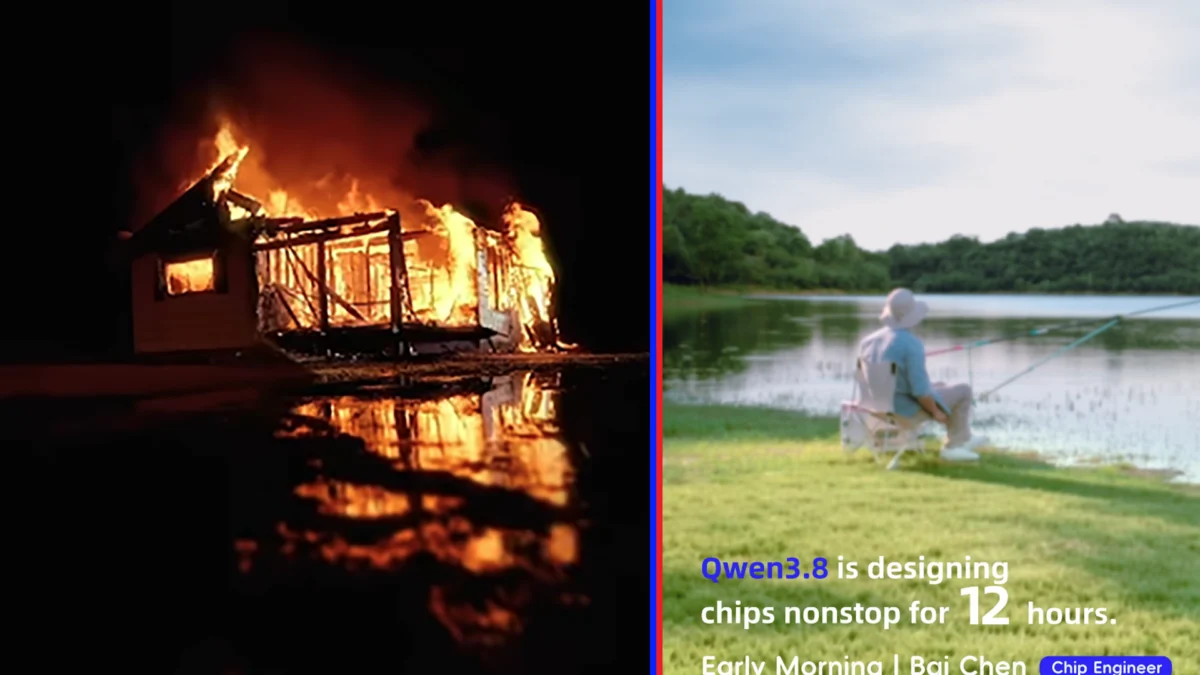
Anthropic Says the House Is on Fire. China Says AI Will Set You Free
To get a feel for just how different the public moods are towards AI between the U.S. and China, just look at the marketing.
TL;DRAI
Alibaba's Qwen3.8-Max matches GPT-5.6, costs 4× less ($2-6 per token), open weights. Chinese parity drives U.S. enterprises to cheaper solutions; divergent messaging (Anthropic: AI risk, Alibaba: AI liberation) signals competing adoption and stack strategies.
775 words~4 min read