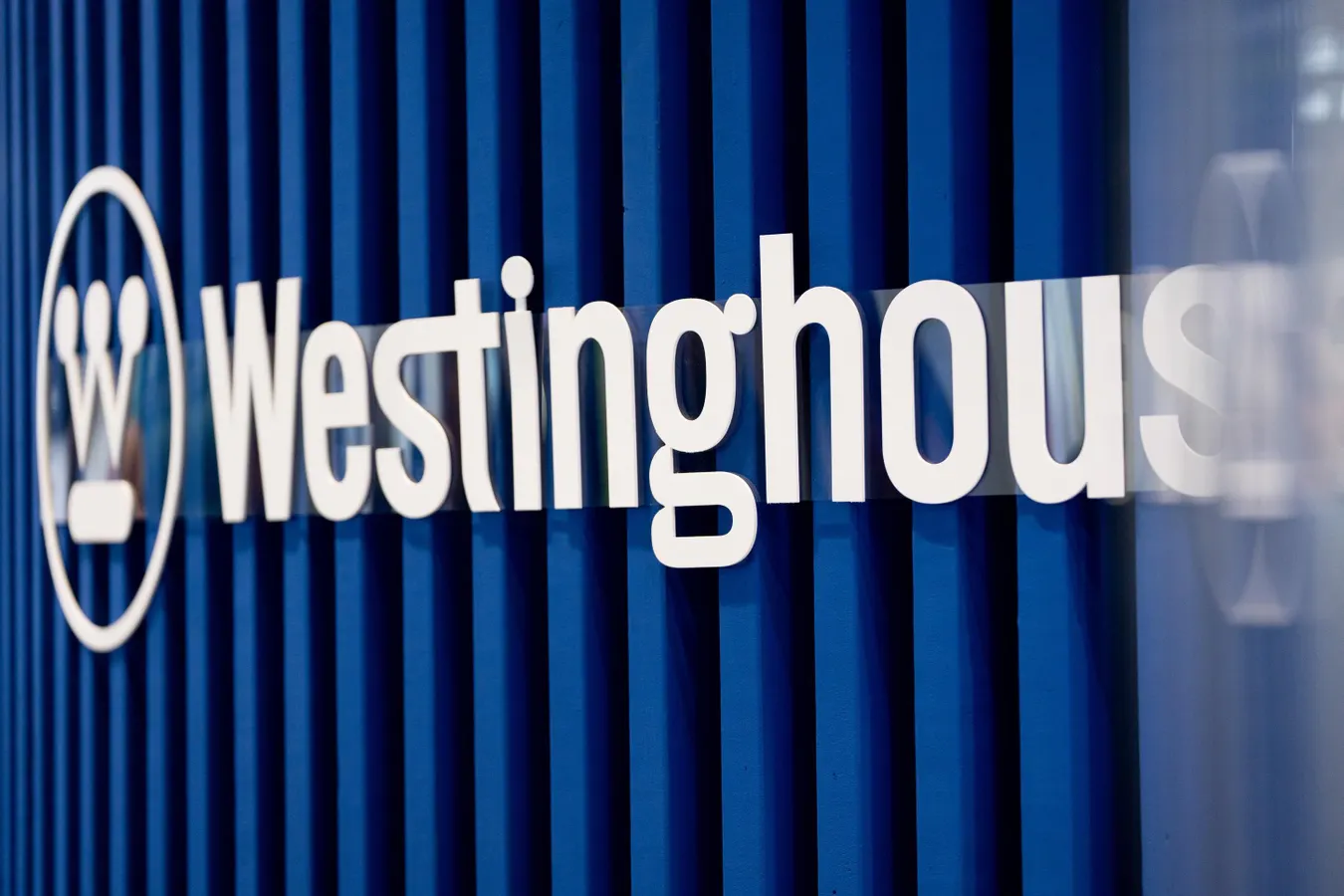
A Westinghouse Electric Co. LLC logo during the World Nuclear Exhibition (WNE) conference in Paris, France, on Tuesday, Nov. 4, 2025. The conference gathers key figures of the international nuclear sector from Nov. 4-6. Photographer: Nathan Laine/Bloomberg© 2025 Bloomberg Finance LPPublic investors are being invited into Westinghouse at a very different moment from the one that produced Brookfield’s six‑times return. The nuclear revival is now obvious, the business has been reshaped, and the risks that once defined the company have largely been removed. The question for the IPO is how much of the opportunity remains for the next shareholders.Electricity demand is rising, artificial intelligence has turned access to power into a strategic issue, and governments are once again treating nuclear energy as an essential part of national energy policy. Westinghouse appears positioned to benefit. Its technology supports reactors around the world, its services are embedded across the nuclear fleet, and its AP1000 reactor has become central to several proposed new-build programs.But public investors are not being offered the Westinghouse that Brookfield acquired from bankruptcy. They may receive a company after restructuring the liabilities, improving earnings and clarifying the nuclear story. That does not make the Westinghouse IPO unattractive. It does mean investors need to understand how much of the opportunity has already been captured by the owners bringing it back to market.As I argued when looking at Jersey Mike’s and SpaceX IPO stories, the company and the security being sold are not always the same investment. Investors can admire the business and still overpay for the stock. The most important questions often concern ownership, valuation and the use of proceeds rather than the quality of the brand or the popularity of the industry.Westinghouse has filed confidentially, so the proposed valuation, number of shares, debt structure and selling intentions of its owners remain unknown. Brookfield currently owns 51% of the company, while Cameco owns 49%. Until those details emerge, investors can understand the ownership history, but they cannot yet judge the stock.MORE FOR YOUHow Brookfield Engineered The TurnaroundBrookfield acquired Westinghouse after fixed-price construction contracts on two American nuclear projects helped push the company into bankruptcy. The opportunity was more than just nuclear energy becoming unpopular. Brookfield was able to acquire a different version of the business from the one that had failed. The bankruptcy process separated Westinghouse from much of the construction exposure that damaged the company. What remained was a valuable collection of nuclear technology, intellectual property, fuel operations and service relationships tied to a large global installed base.Brookfield acquired Westinghouse for approximately $4 billion, using roughly $900 million of equity alongside debt. It then improved business and held the investment while the political and economic case for nuclear energy strengthened.The best structural investments often come when the market focuses on the failure surrounding an asset rather than the value that may remain inside it. Brookfield did not simply wait for sentiment toward nuclear energy to improve. It changed the risk it was willing to take on.By the time Westinghouse moved into the Brookfield-Cameco partnership in 2023, Brookfield said the original investment had generated approximately six times its capital and an internal rate of return of around 60%. That was an unusually successful restructuring and piece of capital allocation.Public investors should therefore be clear about where they are entering the story. Brookfield bought Westinghouse when the company was associated with bankruptcy, construction overruns and nuclear pessimism. The IPO may arrive after those risks have been reduced and the strategic importance of nuclear power has become far easier to recognize.Brookfield and Cameco may retain substantial ownership, and Cameco has strong strategic reasons to remain involved. Its investment expands its position beyond uranium production and into a broader nuclear platform. Even so, the first disclosure I will look for is how much stock Brookfield and Cameco intend to sell. That will say more about the purpose of the offer than the launch-day enthusiasm around nuclear energy.Why Westinghouse Has A Real Business Behind The NarrativeWestinghouse should not be grouped with speculative nuclear companies built around technology that may take years to generate commercial revenue. The company supports more than half of the world’s operating nuclear reactor fleet. It has six AP1000 reactors operating, 14 under construction and another five under contract.That installed base is valuable because a nuclear plant requires fuel, maintenance, engineering, components, and technical support over a working life that can extend for decades. These are not products that customers replace casually. Technology is embedded inside critical infrastructure, and the supplier relationships can be extremely durable.When Cameco completed its investment in Westinghouse, it expected that more than 95% of adjusted EBITDA would come from the company’s core recurring operations.That is an important distinction. Westinghouse has customers, recurring cash flow, and intellectual property already deployed across the global nuclear fleet. It is not asking investors to fund a laboratory experiment and wait for commercialization. The danger is that the market may value the dependable existing business based on the excitement surrounding future reactor construction.The recurring fuel and service operations can be assessed through margins, contracts, customer retention, and cash conversion. New reactor projects require a different analysis. They depend on financing, political support, permitting, supply chains, and the ability to execute complex projects over many years. Investors should separate the earnings Westinghouse already produces from the growth they hope it will eventually capture.Recent results suggest that the operating business is improving. Westinghouse’s adjusted EBITDA reportedly increased 30% in 2025, while Cameco’s share of Westinghouse adjusted EBITDA rose to $122 million in the first quarter of 2026 from $92 million a year earlier.Those figures are encouraging, but the public filing will need to show what drove the growth. Investors need to understand how much came from recurring services, contract timing, pricing, or new projects. The nuclear story may be powerful. The financial disclosure still must support it.Why The IPO Cannot Be Valued On An $80 Billion HeadlineThe United States government announced a strategic partnership with Westinghouse, Brookfield, and Cameco involving at least $80 billion of proposed new reactors using Westinghouse technology. The number is large enough to dominate the IPO narrative. It should not dominate the valuation.Government support can improve access to financing and, of course, accelerate approvals, which will give customers greater confidence that nuclear power will remain part of long-term energy policy. That could be enormously valuable for Westinghouse. That said, investors should be cautious that an $80 billion development program is not the same as $80 billion of Westinghouse revenue. The program ultimately depends on customer commitments, regulatory approvals, government funding, financing, and final investment decisions. Nuclear construction remains hugely difficult even when political support is strong. Government backing can improve the probability that projects move forward. It cannot remove execution risk or turn a long-duration opportunity into immediate cash flow.The partnership also contains an unusual provision connected to a potential public offering. Under certain conditions, the government may have the right to require an IPO if Westinghouse is expected to receive a valuation of at least $30 billion. There is no public evidence that this provision caused the current confidential filing, and the relevant conditions may not have been met. But the threshold provides investors with a useful reference point. Brookfield and Cameco acquired Westinghouse at an enterprise value of approximately $8.2 billion in 2023. A valuation approaching $30 billion would represent a dramatic re-rating in less than three years.The business may deserve to be worth substantially more. Earnings have improved, the installed base remains valuable, and the strategic importance of nuclear energy has increased. The question is how much future success the public market will be asked to pay for in advance.Valuation Will Determine What Remains For InvestorsThe first number I will examine in the registration statement is not projected revenue growth. It is how much stock Brookfield and Cameco plan to sell. The second is how much debt Westinghouse will bring after the offering. Those disclosures will help determine whether the IPO is financing the company’s next stage of growth or monetizing the success of the previous one.The split between primary and secondary shares will be particularly important. An IPO that raises capital for the balance sheet, manufacturing capacity, or new investment offers public shareholders a different proposition from an offering primarily designed to provide liquidity to existing owners.Governance will also matter. Brookfield and Cameco may continue to control the company after the listing. Their involvement could provide valuable discipline and strategic stability, but minority shareholders will need to understand how much influence they have over capital allocation, related-party transactions, and future disposals.Westinghouse may be one of the strongest nuclear businesses to enter the public market. It has a genuine operating history, recurring revenue, valuable technology and an industry position that would be difficult to replicate.The business may be exceptional, and the offering may still leave too little upside for new shareholders. Brookfield earned its returns by investing in complex situations before the narrative changed. Public investors may now receive a cleaner company with better earnings and stronger political support. That is a safer proposition in some respects, but safety and value are not the same thing.The Westinghouse IPO could become an attractive opportunity. The valuation must leave enough of the nuclear revival for the next investors. Investors will hear plenty about data centers, energy security and the return of nuclear power. The most important disclosure will be how much of that return has already been captured by the owners bringing Westinghouse back to market.
Westinghouse IPO May Put Public Investors Last In The Nuclear Revival
Westinghouse’s IPO arrives after a major turnaround. Investors must judge how much of the nuclear revival Brookfield and Cameco already captured.
TL;DRAI
Westinghouse IPO si posiziona dopo che Brookfield ha catturato 6x il capital (60% IRR) dal turnaround; il nucleare è ormai strategico (AI demand), ma gli investitori pubblici entrano post-opportunity. La valutazione dipenderà dal selling intent di Brookfield/Cameco e dalla struttura di ownership, non dalla narrative nucleare.
1,578 words~7 min read