Russian spies turn public Wi-Fi into malware delivery systems
Keyloggers, audio-visual surveillance, and token theft on CaptivePortal's agenda as hospitality sector put on alert
Conference-goers may want to think twice about connecting to public Wi-Fi after Microsoft disclosed that Russian foreign intelligence operatives (SVR) are compromising captive portal networks to deliver infostealers, keyloggers, and other malware.With the help of ReliaQuest's earlier work, Redmond fingered Storm-2945, a subdivision of the SVR's Midnight Blizzard (aka Nobellium), in an attack campaign targeting users of public Wi-Fi networks at places like hotels, conference centers, and other shared venues in the hospitality sector.Microsoft is still trying to determine how the hackers initially compromise captive-portal networks. The broader AI-assisted operation dates to February 2026, with traffic manipulation observed since early May.
After gaining control of the network layer, Storm-2945 manipulates DNS and HTTP traffic to reroute users through attacker-controlled infrastructure, Microsoft said. The crew also abuses operating systems' connectivity checks to trigger malicious prompts and redirects.
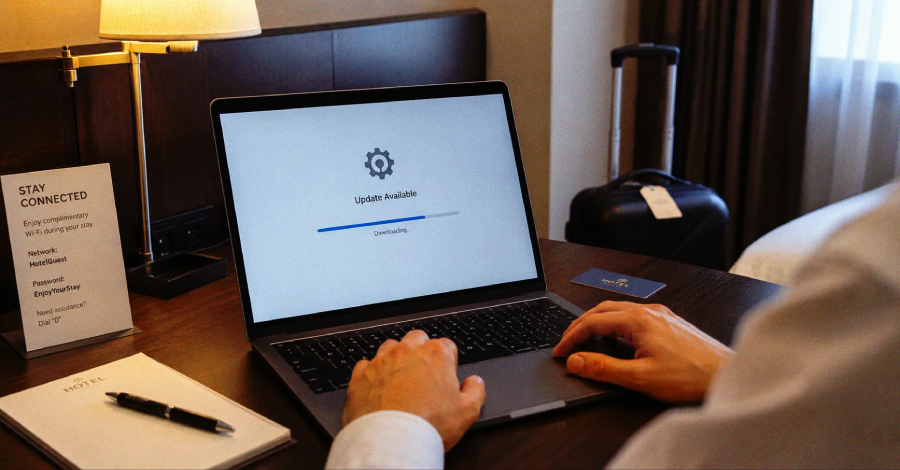
This gives the attackers an adversary-in-the-middle (AitM) position.Such prompts adopt ClickFix-style methods, which in some cases try to convince public Wi-Fi users to install malware under the guise of OS updates, driver repairs, and web verification failures.Users who follow through on the instructions provided in the prompts may then find their device infected with malware. Microsoft calls the campaign "CaptiveCrunch." One of the malware strains it delivers is CornFlake.Described as "a full-featured Windows RAT" written in Go, CornFlake is the SVR's go-to persistent implant in these hospitality network attacks. After presenting users with a "convincing" fake Windows update progress window, it provides attackers with a wealth of capabilities once installed.These include:KeyloggingClipboard monitoringScreenshot captureAudio surveillanceVideo surveillanceBrowser credential theftFile exfiltrationUSB drive monitoringSecurity posture sweepRemote shellMicrosoft also said that CornFlake exposes a localhost HTTP API server to transform the malware into a modular platform, delivering additional payloads such as ChocoShell, a PowerShell-based infostealer.